

Why Choose Heavyweight Cotton for Recovery Apparel
Table of Contents
- Why Heavyweight Cotton Belongs in Recovery Apparel
- Heavyweight Cotton vs Lightweight Cotton: What Changes
- Heavyweight Cotton vs Polyester: Moisture, Heat, and Feel
- Heavyweight Cotton T-Shirt Benefits for Everyday Wear
- How to Care for Heavyweight Cotton Shirts So They Last
- Fit, Seams, and Skin Sensitivity: Practical Selection Criteria
- Pieces Built for the Long Haul
- Conclusion
- Frequently Asked Questions
Last Updated: October 19, 2026
Why Heavyweight Cotton Belongs in Recovery Apparel
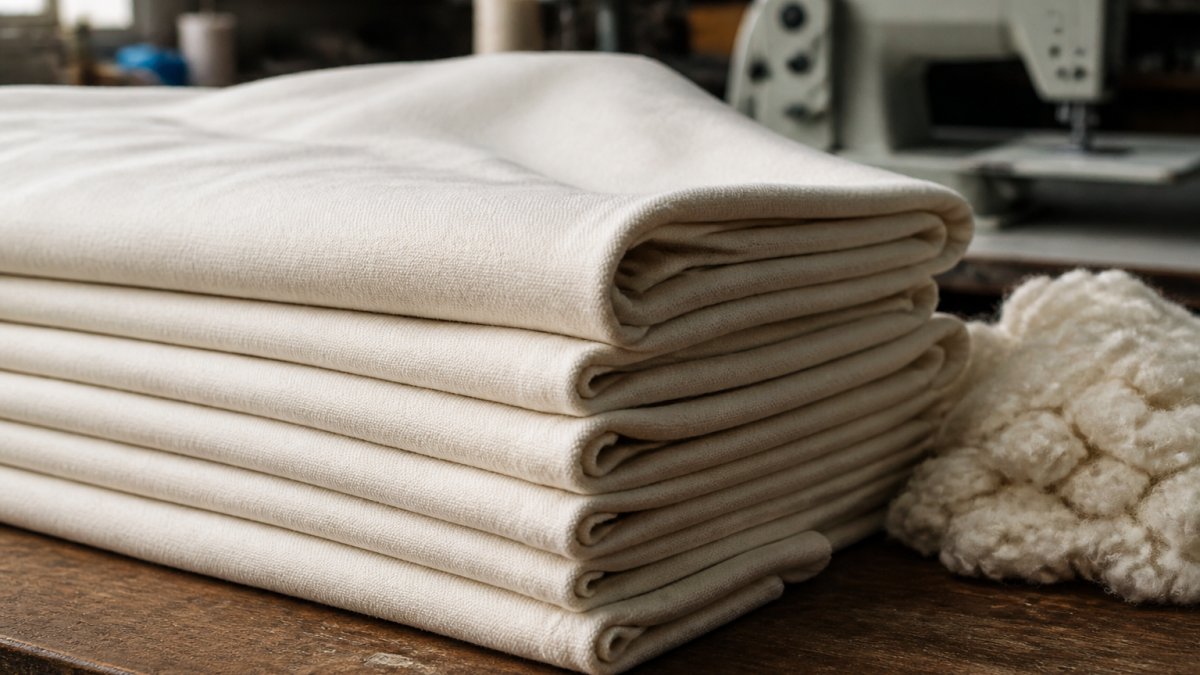
Heavyweight cotton is a dense, thicker cotton fabric, usually measured by weight per square yard or in GSM (grams per square meter), that holds its shape and resists wear far better than standard tee fabric.
Most "recovery apparel" online is a lightweight cotton tee with a slogan printed on it.
Below, we'll show you exactly what heavyweight cotton does differently, where it beats polyester, and how to pick a shirt you'll still be wearing years from now.
Heavyweight Cotton vs Lightweight Cotton: What Changes
Heavyweight cotton and lightweight cotton differ in three measurable ways: fabric weight, fabric density, and how the garment behaves after repeated wear.
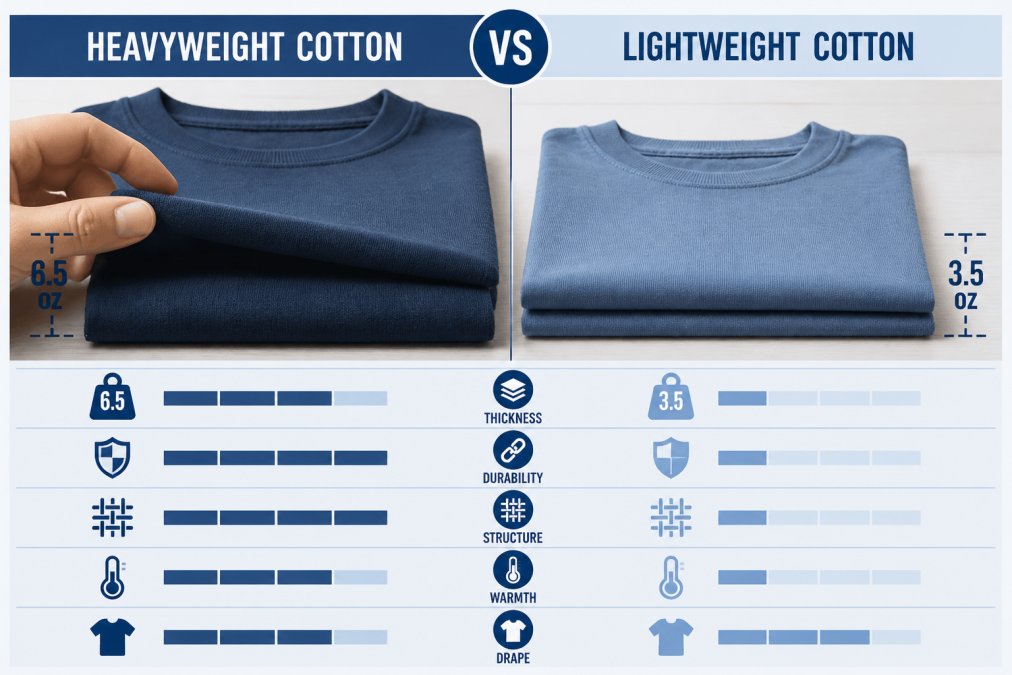
Here's what actually changes:
- Fabric weight: measured in GSM or ounces per square yard. Higher numbers mean more cotton per square inch.
- Fabric density: a tight weave with thicker yarns blocks light, resists stretching, and feels crisp rather than flimsy.
- Shape retention: heavyweight jersey knit holds its shoulder line and hem. Lightweight fabric sags at the neck and droops at the bottom.
- Drape and fit: heavier cotton falls in a structured line instead of clinging.
- Softness: it starts slightly firmer and softens with washing, rather than starting thin and getting thinner.
The trade-off is real: heavyweight cotton costs more, takes longer to dry, and feels warm in summer. But for a garment you plan to wear for years, those costs buy something a lightweight tee cannot: time.
Heavyweight Cotton vs Polyester: Moisture, Heat, and Feel
Heavyweight cotton and polyester solve different problems, and the recovery window is where that difference matters most. Polyester moves sweat away from skin and dries fast, which is why it dominates training apparel. Heavyweight cotton absorbs moisture, breathes through a dense weave, and feels soft and non-clinging against tired skin. Neither is universally better; each fits a different part of the day.
The honest comparison:
| Factor | Heavyweight Cotton | Polyester Performance Fabric |
|---|---|---|
| Sweat absorption | Absorbs and holds moisture in the fiber | Wicks moisture to the surface to evaporate |
| Drying time | Slow, especially in a thick knit | Fast |
| Behavior when damp | Feels heavier and can cling or cool the skin | Stays light but can feel slick or clammy |
| Breathability | High in a breathable jersey or French terry | Varies widely by knit and treatment |
| Skin feel | Soft, natural, non-clinging | Smooth, sometimes slick |
| Heat retention | Warmer at rest | Cooler during exertion |
| Odor over repeated wear | Generally less prone without treatment | Can hold odor without antimicrobial finish |
| Durability | Strong, resists wear and pilling | Strong, but can pill and snag |
What happens during the recovery window
The hours after a workout are not the same as the workout. During training, the priority is moving sweat off the skin fast so the body can cool.
The trade-off is moisture.
A common pattern among people who wear recovery apparel all day is to treat heavyweight cotton as the post-shower layer, not the immediate post-set layer. Performance fabric handles the transition; heavyweight cotton handles the hours after.
Blends and the middle ground
Cotton blends split the difference. An 80% cotton / 20% polyester French terry, like the fabric in our heavyweight hoodies, keeps the soft hand and structure of cotton while adding resilience and shape memory.
What most guides miss is that "performance" fabric is not automatically better. It is better for one job. Recovery is a different job, and the right answer is often to own both: performance fabric for the session, heavyweight cotton for the hours after.
Heavyweight Cotton T-Shirt Benefits for Everyday Wear
A heavyweight cotton T-shirt delivers four everyday benefits: it resists sagging, keeps its shape through washing, feels substantial without feeling stiff, and holds a print or graphic far longer than thin fabric. Those benefits compound over months of wear.
The everyday wins stack up like this:
- Durability and wear resistance: thicker yarns and a tight weave take friction without thinning.
- Shape retention: the neckline, shoulders, and hem stay where they started.
- Fit and drape: a boxy cut in heavyweight fabric hangs cleanly instead of collapsing.
- Comfort and softness: it breaks in rather than breaking down.
- Fabric lifespan: you replace it far less often, which matters if the shirt carries a message you care about.
That last point is underestimated: a graphic on lightweight fabric cracks and fades within a season, while a graphic on heavyweight fabric has a surface that holds ink and survives the wash cycle.
How to Care for Heavyweight Cotton Shirts So They Last
Caring for heavyweight cotton shirts comes down to four habits: wash cold, turn inside out, skip the dryer, and never iron directly over a print. Do those and a quality heavyweight cotton tee keeps its shape and color for years.
The full routine:
Oversized Heavyweight Streetwear Tee – Built Stronger →
- Turn the shirt inside out before washing
- Use cold water on a normal or gentle cycle
- Skip fabric softener, which coats fibers and reduces breathability
- Hang dry or lay flat; avoid high heat
- Do not bleach
- Do not iron directly over the graphic
- Store folded rather than on a hanger to protect the shoulder line
Shrinkage is the other concern.
The lifecycle math is simple. A heavyweight cotton shirt costs more up front and lasts several times longer than a fast-fashion tee. Over a few years, the cost per wear drops well below the cheap option.
Fit, Seams, and Skin Sensitivity: Practical Selection Criteria
The best recovery apparel fits well, uses flat or single-needle seams at friction points, and puts soft fabric against sensitive skin. But fabric weight alone is a poor decision tool: a 10 oz tee in a hot climate and a 16.5 oz hoodie in a cold one are both "heavyweight" and serve different recovery settings. Use a framework, not a single number.
A practical selection framework
Work through these criteria in order. Each one narrows the field before you look at the graphic.
- Intended recovery setting: Are you wearing this at home, in bed, at appointments, or out in public? Rest wear favors softness and low friction; public wear favors structure and shape retention.
- Climate and season: Heavyweight cotton runs warm. In a hot, humid climate, a midweight jersey or a blend is more comfortable than a 16.5 oz French terry. In a cool climate, the heavier fabric earns its place.
- Activity level during recovery: If you are mostly at rest, prioritize skin feel and breathability. If you are moving around, prioritize shape retention and a relaxed cut that does not cling.
- Fabric weight (GSM or oz/yd²): Look for a stated number. Vague "premium cotton" claims mean nothing. As a rough guide, 6 to 8 oz reads as midweight, 9 to 12 oz as heavyweight, and above 12 oz as super-heavyweight.
- Fiber content: 100% cotton is softest and most breathable. A cotton blend adds shape memory and durability. Neither is wrong; match it to the setting.
- Seams and labels: Single-needle topstitching at the neckline and flat seams at the shoulders reduce rubbing. Tagless labels or printed neck labels matter for anyone wearing the piece for long stretches.
- Collar and shoulders: A wide ribbed collar resists stretching better than a thin one. Raglan or dropped-shoulder construction can reduce seam pressure across the shoulder.
- Fit: A relaxed, boxy cut sits away from the body, which cuts friction and heat. A slim cut in heavyweight fabric can feel restrictive.
- Skin feel: Looped fleece or soft jersey interior is gentler than a scratchy brushed back.
What heavyweight cotton can and cannot do
Heavyweight cotton offers coverage, structure, warmth, and a soft hand. It does not accelerate physiological recovery. No fabric does. Claims that a garment speeds healing, reduces inflammation, or improves circulation are not supported by evidence, and you should be skeptical of any brand that makes them.
Recovery apparel is a comfort and dignity product, not a medical one. The fabric should feel good, hold its shape, and not irritate skin, real benefits even if they are not clinical ones.
Seams, labels, and friction for extended wear
Recovery apparel is often worn for longer stretches than training apparel, so friction points matter more. The common trouble spots are the neckline, shoulder seams, side seams, and label.
If you are early in recovery and not ready for a bold message, choose a piece with a subtle graphic or a clean front. The fabric quality is the same. The statement is yours to make when you are ready.
Pieces Built for the Long Haul
At EVRMORE, we build recovery apparel from heavyweight fabric because the garment should carry the same weight as the story it represents. Our Oversized Heavyweight Streetwear Tee uses a 9 oz ring-spun cotton/poly blend with dropped shoulders and a wide ribbed collar, so the neckline holds and the fit stays relaxed. The What Broke Me Heavyweight Hoodie runs 16.5 oz / 560 GSM heavyweight 3-end French terry with raglan sleeves, a double-layer hood, and single-needle topstitching at the neckline. For a quieter option, the Rescued Redeemed Restored Christian Heavyweight Shirt pairs a super-heavyweight fabric with a relaxed oversized cut.


The Federal Trade Commission's guidance on textile labeling requires accurate fiber content and origin disclosure on clothing, which is why a stated fabric weight and fiber blend are the first things worth checking on any product page.
What separates a durable piece from a disposable one is construction: pre-shrunk fabric, reinforced necklines, and clean stitching decide whether the garment survives year three.
Conclusion
The hardest part of rebuilding is trusting that the new foundation will hold. Your clothes should not test that trust.
Heavyweight cotton gives you a garment with weight, structure, and a lifespan that matches the work you've put in. EVRMORE builds heavyweight tees and hoodies with pre-shrunk fabric, reinforced necklines, and a relaxed streetwear fit, made for everyday wear and designed to last. When you're ready to wear your story, add to cart and put on something built as strong as you are.
Frequently Asked Questions
What makes cotton heavyweight?
Heavyweight cotton is defined by fabric weight, usually measured in ounces per square yard or GSM. A standard tee sits around 5 to 6 oz, while heavyweight styles start near 8 oz and climb past 12 oz. EVRMORE's 9 oz ring-spun cotton/poly tee and 16.5 oz French terry hoodie show how thicker yarns and a tighter weave create a denser, more substantial fabric that holds its shape.
Is heavyweight cotton more durable than lightweight cotton?
Yes. The thicker yarns and tighter weave in heavyweight cotton resist abrasion and wear better than lightweight fabric. That density also helps the garment resist sagging at the neckline and shoulders. A 16.5 oz French terry hoodie, for example, is built to handle repeated washing and daily wear without thinning out the way a fast-fashion tee does.
How does heavyweight cotton compare with polyester blends?
Heavyweight cotton breathes and absorbs sweat, while polyester tends to trap heat and hold odor. Cotton feels softer against the skin and drapes naturally. Polyester dries faster, which matters during workouts. For recovery apparel worn after training or on rest days, heavyweight cotton offers better comfort and a more grounded feel, especially in a cotton-rich blend like 80% cotton / 20% polyester.
How do you care for heavyweight cotton apparel?
Machine wash cold and inside out to protect the print and fabric surface. Hang dry when possible; high heat breaks down cotton fibers over time. Avoid bleach and do not iron directly over graphics. Pre-shrunk heavyweight cotton like EVRMORE's hoodies limits shrinkage, but cold washing and air drying keep the fit and shape retention intact for years.


Leave a comment
This site is protected by hCaptcha and the hCaptcha Privacy Policy and Terms of Service apply.