

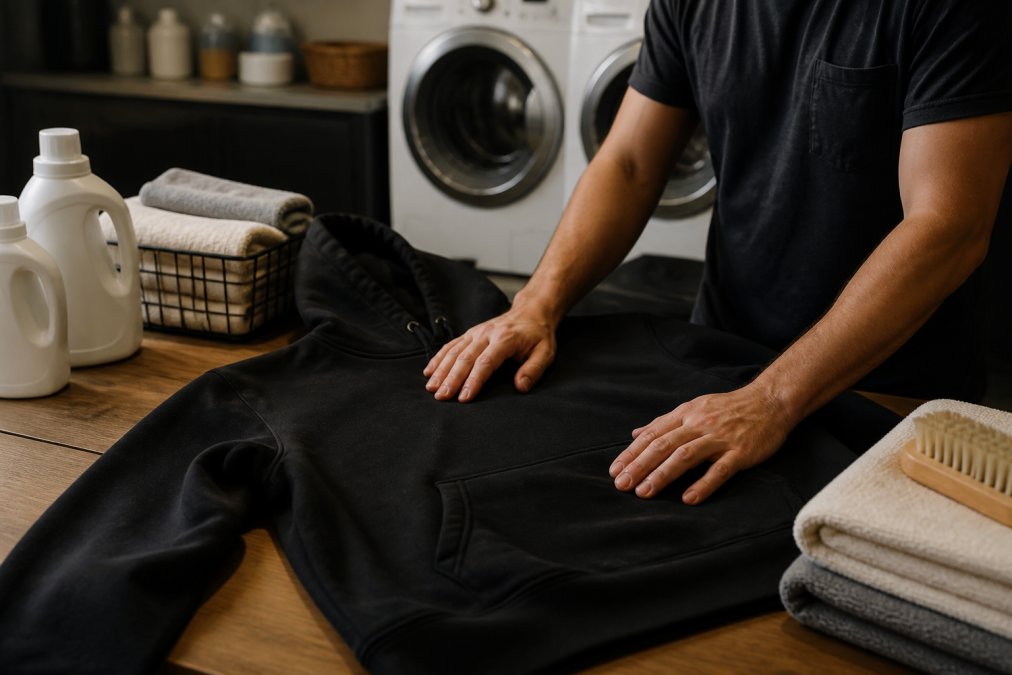
How to Care for Screen Printed Heavyweight Hoodies
Table of Contents
- Why Heavyweight Hoodies Need Different Care
- Step-by-Step: How to Wash Screen Printed Hoodies
- How to Wash Streetwear Without Shrinking
- Drying Your Heavyweight Hoodie Safely
- How to Prevent Screen Print Cracking
- Removing Stains from Heavyweight Hoodies
- Repairing Damaged Prints and Eco-Friendly Care Alternatives
- Frequently Asked Questions
Last Updated: September 16, 2026
Why Heavyweight Hoodies Need Different Care
A 16.5 oz screen printed heavyweight hoodie is not built like a standard fleece, and treating it like one is the fastest way to wreck the print. Heavier cotton blends hold more water, dry slower, and trap heat longer during tumble drying, which is exactly what degrades the ink sitting on top of the fabric. This guide from EVRMORE on how to care for screen printed heavyweight hoodies walks through washing, drying, stain removal, and print repair so your hoodie keeps its shape and its message for years, not months.

The core tension here is simple: heavyweight fabric is more durable than lightweight fleece, but the screen print on it is not. Plastisol ink and water-based ink sit on or bond with the surface fibers, and every wash cycle, spin speed, and dryer setting either preserves that bond or breaks it down. Most care guides treat "heavyweight hoodie" and "screen printed" as separate problems. They're not.
Step-by-Step: How to Wash Screen Printed Hoodies
Wash heavyweight hoodies inside out, in cold water, on a delicate cycle, with a bleach-free detergent, and skip the fabric softener entirely. That single sentence covers 90% of what keeps a screen print intact.
Here's the full sequence:
- Turn the hoodie inside out and zip or button anything that could snag the fabric
- Set the machine to cold wash and a delicate cycle
- Add a small amount of bleach-free liquid detergent
- Skip fabric softener and dryer sheets, both coat the print and speed up peeling
- Wash with similar colors and lightweight items, not heavy denim or towels
- Remove immediately after the cycle ends
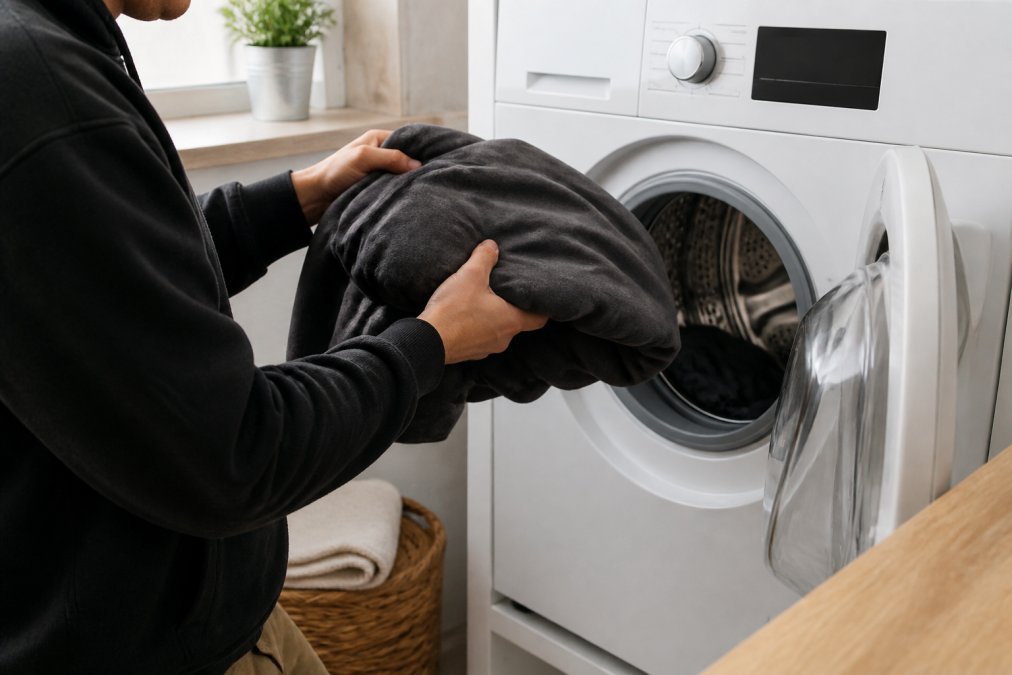
Mechanical agitation is the quiet killer here. A normal wash cycle spins the drum hard enough to rub the printed surface against other garments, and over time that friction causes print cracking and fading even if the temperature is fine.
Water Temperature and Wash Cycle Settings
Cold water is non-negotiable for screen printed garments. Heat softens plastisol ink and stresses the bond between ink and fabric, which is where cracking starts. A cold wash with a low spin speed protects both the print and the cotton blend's shape.
Set your machine to the lowest spin speed available. High spin speeds wring the fabric aggressively and can distort the neckline and cuffs on a heavyweight hoodie faster than anything else in the wash cycle.
Detergent Selection and What to Avoid
Use a mild, bleach-free liquid detergent. Powder detergents can leave residue trapped in the fleece backing, and bleach attacks both the dye and the ink bond.
Avoid these entirely:
- Fabric softener, which coats fibers and lifts the print
- Dryer sheets, same problem with added heat exposure
- Bleach and oxygen boosters on printed areas
- Harsh stain removers applied directly to graphics
How to Wash Streetwear Without Shrinking
Cold water and air drying are the two habits that prevent shrinkage in heavyweight cotton blends. Heat is what shrinks cotton, whether it comes from the wash or the dryer, so controlling temperature at both stages solves the problem.
If you must use a machine dryer, choose the lowest heat setting and pull the hoodie out while it's still slightly damp. A cotton blend with recycled polyester content, like the fabrics used in EVRMORE's Built Stronger Fleece Hoodie line, tends to hold its shape better than 100% cotton because the synthetic fibers resist the felting that causes shrinkage.
Drying Your Heavyweight Hoodie Safely
Air drying is the safest method when you learn how to care for screen printed heavyweight hoodies, but heavyweight fabric changes the math on how you do it. A 16.5 oz cotton blend holds substantially more water than an 8 oz sweatshirt, and that extra water weight is what deforms necklines, stretches shoulders, and slows drying to a crawl if you handle it the same way you'd handle a lightweight fleece.
Why heavyweight fabric dries slower. The same dense loop structure that makes heavyweight fleece durable and warm also traps moisture deep in the backing. Surface fabric can feel dry to the touch while the interior is still damp, which is why a heavyweight hoodie that seems done after two hours on a rack can still be clammy at the seams six hours later. The print side is a separate issue: plastisol ink is a plastic film that does not absorb water, so it dries at the surface while the cotton underneath it stays wet longer.
Air drying, done right for heavyweight garments:
- After the wash, run an extra low-spin cycle or press the hoodie between two towels to pull out standing water. Do not wring it, twisting the fabric stresses the ink bond at the print edges.
- Lay it flat on a drying rack, reshaping the shoulders, cuffs, and hem by hand. Flat drying is the only method that puts zero stress on the neckline.
- If you hang instead, use a wide-shoulder hanger and hang by the body, never by the hood. A saturated heavyweight hoodie can weigh several pounds, and that load is what stretches a neckline out of shape permanently.
- Keep it out of direct sunlight. UV fades both the garment dye and the ink pigment, and heavyweight cotton blends are not exempt.
- Expect 12 to 24 hours for a full air dry in a normally ventilated room. A damp, cool room can push that past 36 hours, which is long enough for mildew to start in the fleece backing. If your space is humid, point a fan at the rack.
If you tumble dry anyway. Use the lowest heat setting your machine offers, and treat the dryer as a finisher, not a dryer. Pull the hoodie when it is still faintly damp at the seams and let it finish flat. Heavyweight fabric needs roughly double the tumble time of a standard sweatshirt, so check every 15 minutes rather than setting a timer and walking away. The heat that finally dries the interior is the same heat that softens plastisol ink and stresses the ink-to-fabric bond.
A note on dryer balls and fabric softener sheets. Wool dryer balls are fine and can shorten tumble time by separating layers of fabric. Dryer sheets are not, the coating that reduces static also deposits a film on the print that accelerates peeling.
How to Prevent Screen Print Cracking
Preventing screen print cracking comes down to three things: low heat, minimal agitation, and never ironing directly on the graphic. Cracking is a mechanical and thermal problem, not a mystery.
- Wash cold, always
- Skip the dryer or use low heat only
- Turn the garment inside out before every wash
- Never iron directly on the print
- Avoid dry cleaning solvents, which can break down ink curing
If you need to iron the fabric around the print, turn the hoodie inside out and use a low setting with no steam.
Removing Stains from Heavyweight Hoodies
Blot stains immediately with a clean cloth, then treat with a mild, bleach-free stain remover before washing.
Repairing Damaged Prints and Eco-Friendly Care Alternatives
Most care guides stop at prevention.
Repairing Minor Cracking and Lifting Prints
Plastisol ink is thermoplastic: it softens with heat and re-adheres to fabric when pressed.
What you can fix at home:
What you cannot fix at home:
Eco-Friendly Care That Also Protects the Print
The habits that protect a screen print overlap almost entirely with the habits that cut a laundry load's energy and chemical footprint.
Frequently Asked Questions
Can you put screen printed hoodies in the dryer?
You can, but use low heat or air dry to protect the print. High heat breaks down plastisol ink and causes cracking or peeling over time. Tumble dry on the lowest setting for 10-15 minutes, then hang to finish. For heavyweight 16.5 oz hoodies, expect 20-30 minutes on low heat to fully dry. Air drying flat or on a line is safest for both the screen printed design and the fabric.
How do you wash a heavyweight hoodie without shrinking it?
Wash in cold water on a delicate cycle to prevent shrinkage. Hot water causes cotton fibers to contract, especially in heavyweight blends. Turn the hoodie inside out, use a bleach-free detergent, and avoid overloading the machine. After washing, air dry or tumble on low heat. Following these steps keeps your heavyweight hoodie true to size and preserves the screen printed design.
Does hot water ruin screen printed designs?
Hot water speeds up ink degradation and can cause screen printed designs to crack, fade, or peel. It also increases the risk of shrinkage in cotton and cotton-blend fabrics. Cold water is the safest choice for washing any screen printed garment. If you must use warm water for stain treatment, keep it below 90°F and spot-test first.
How often should you wash a heavyweight hoodie?
Wash your heavyweight hoodie every 5-7 wears, or sooner if it has visible stains or odors. Overwashing causes mechanical agitation that wears down both the fabric and the screen printed design. Between washes, air it out and spot-clean small marks. This routine extends fabric longevity and keeps the print looking sharp for years.
Your hoodie carries a message you earned, and it deserves care that keeps that message intact. EVRMORE builds heavyweight hoodies with reinforced construction and 16.5 oz fabric designed to hold up wash after wash, so the graphic on your back stays as strong as the story behind it. Browse the What Broke Me Heavyweight Hoodie in Slate or the Built Stronger Fleece Hoodie in Sandstone, and add to cart knowing you're buying something built to last.

Leave a comment
This site is protected by hCaptcha and the hCaptcha Privacy Policy and Terms of Service apply.