

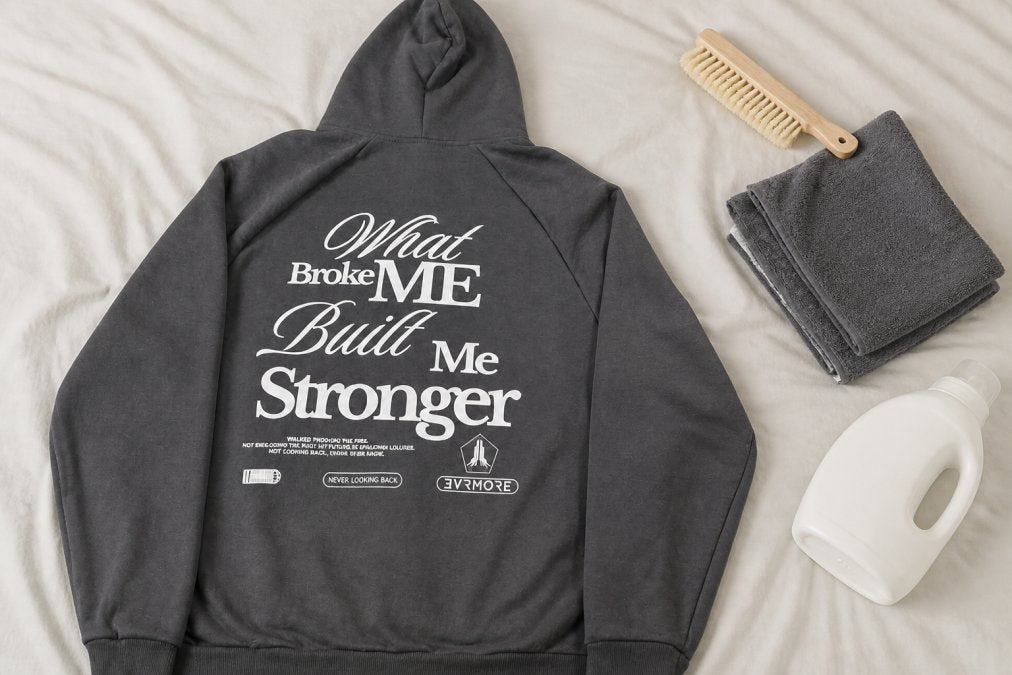
How to Prevent Hoodie Neckline Stretch
Table of Contents
- Why Hoodie Necklines Stretch and Lose Shape
- How to Wash Premium Streetwear Without Damaging the Neckline
- Drying Techniques That Protect Neckline Integrity
- How to Store Hoodies to Maintain Shape
- Long-Term Reinforcement: Sewing and Alteration Techniques
- How to Shrink a Stretched Hoodie Neck Back to Shape
- Visual Troubleshooting: Identifying and Addressing Neckline Problems Early
- Conclusion
Last Updated: August 27, 2026
Why Hoodie Necklines Stretch and Lose Shape
The neckline is the most vulnerable part of any hoodie. Every time you pull the garment over your head, you're stretching the ribbed collar beyond its natural elasticity. Wash it incorrectly, dry it the wrong way, or store it carelessly, and that elastic fiber gradually loses its ability to recover.
How fabric elasticity breaks down over time
Fabric elasticity depends on elastic fibers woven into the neckline facing or ribbing. These fibers, typically spandex or elastane mixed with cotton or polyester, can only stretch and recover so many times before they fatigue. After dozens of cycles, they begin to hold a slight memory of that stretched position. After hundreds of cycles, they no longer fully recover.
Heat accelerates this process dramatically. High temperatures cause elastic fibers to relax permanently, which is why tumble drying on hot settings destroys necklines faster than any other single factor (peer-reviewed research). Chlorine in tap water also degrades elastic fibers, as does excessive agitation in the washing machine. Preventing neckline stretch is about minimizing unnecessary stretching cycles, every time you pull the hoodie over your head, you're adding wear to that neckline.
Fabric-specific vulnerabilities: cotton blends versus fleece
Cotton-blend hoodies, typically 100% cotton or cotton-polyester blends, have necklines more prone to stretching because pure cotton has minimal natural elasticity. Once the elastic fibers fatigue, the neckline has no backup structure to maintain shape. Premium heavyweight hoodies often use reinforced necklines with interfacing or extra stitching.

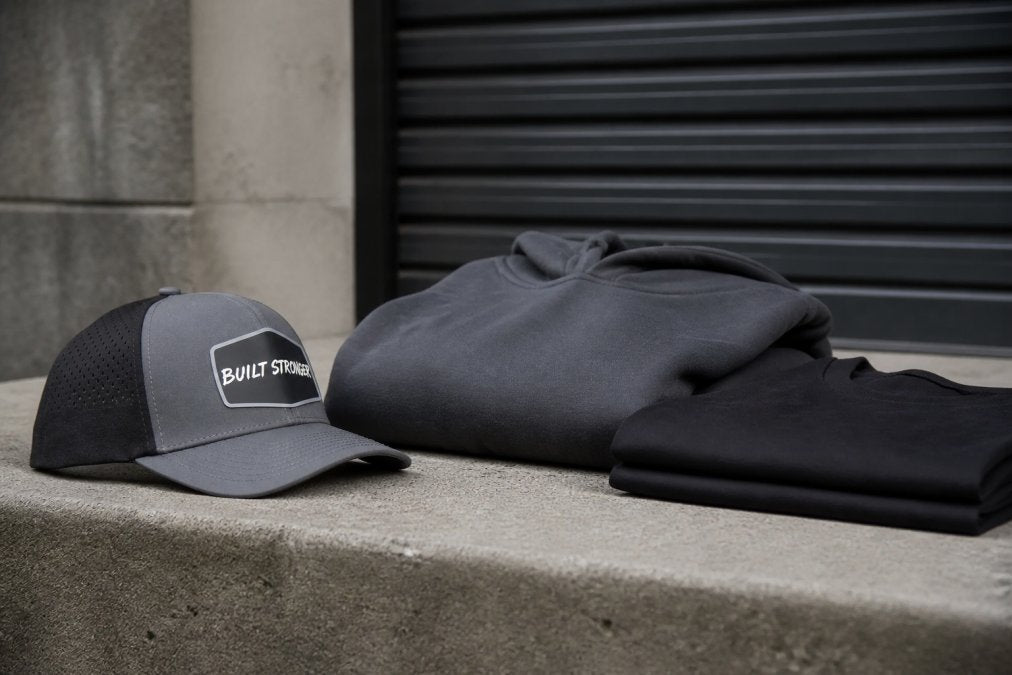
Fleece hoodies, typically made from 70/30 combed ring-spun cotton and recycled polyester blends, offer slightly better shape retention because the fleece itself has more body and structure. EVRMORE's Built Stronger Fleece Hoodie uses a structured drape and ribbed neckline specifically designed to resist stretching. The combination of fabric weight and reinforced facing means the neckline maintains its shape even with regular wear.
How to Wash Premium Streetwear Without Damaging the Neckline
Washing is where most people accidentally destroy their hoodies. The wrong settings, water temperature, and detergent choices can degrade elastic fibers in a single cycle.
Cold water washing and spin speed settings
Cold water is non-negotiable for preventing neckline stretch. Hot water relaxes elastic fibers permanently, even during a single wash. Cold water, ideally below 60°F, preserves the structural integrity of the elastic fibers and minimizes fiber fatigue (the FTC).
The spin speed matters just as much as water temperature. A standard washing machine spin cycle can reach 1,200 RPM or higher, which stretches the neckline facing and can permanently deform it (aham.org). Use a delicate or low-spin cycle (400-600 RPM) when washing hoodies.
Here's the specific sequence:
- Select cold water temperature
- Choose delicate or gentle cycle
- Use low spin speed (400-600 RPM if available)
- Add mild detergent only; avoid fabric softeners, which degrade elastic fibers
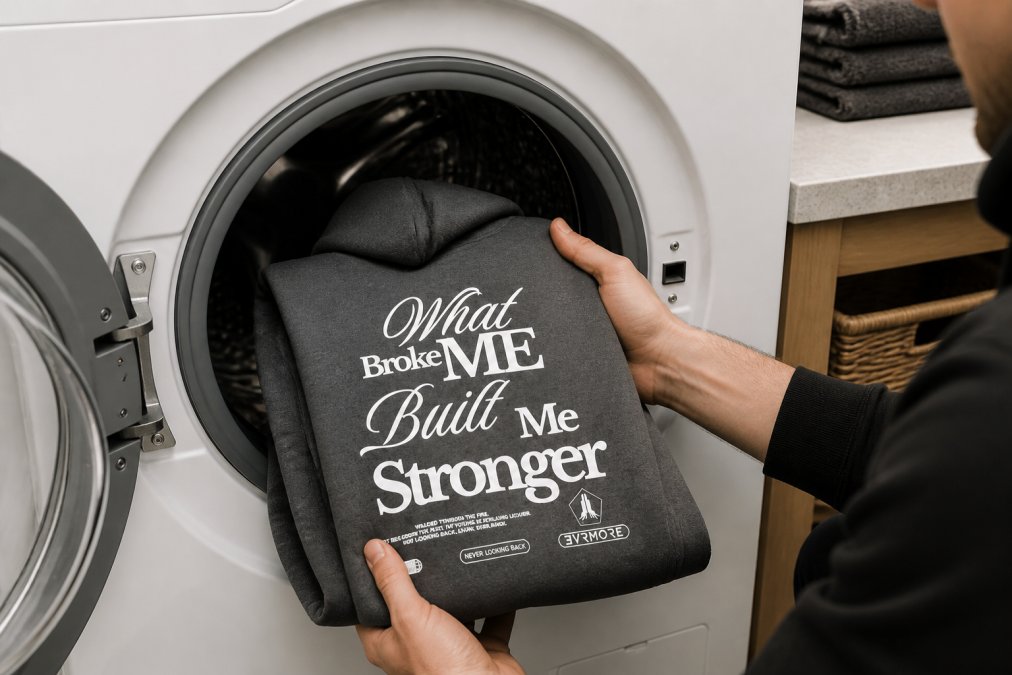
- Never overload the machine; hoodies need room to move freely
If your washing machine doesn't have a low-spin option, hand washing is preferable.
Hand wash versus machine wash: when each matters
Hand washing is the gold standard for preserving necklines. Hand wash if the hoodie is brand new, has visible stains, shows signs of stretching, or you wear it multiple times per week. Machine wash (delicate cycle, cold water, low spin) is acceptable if you wear it occasionally and it's made from durable fabric with reinforced neckline construction.
The hand wash process takes about five minutes:
- Fill a sink with cold water
- Add one tablespoon of mild detergent
- Submerge the hoodie and gently agitate for 2-3 minutes
- Rinse thoroughly with cold water until soap is gone
- Gently squeeze out excess water; do not wring or twist
- Proceed to drying
Hand washing eliminates the risk of excessive agitation and high spin speeds that damage the neckline. For a premium hoodie, hand washing is the insurance policy that keeps it looking new for years.
Drying Techniques That Protect Neckline Integrity
How you dry a hoodie determines whether the neckline recovers its shape or sets into a permanently stretched position.
Air drying versus tumble dry: which prevents gaping
Air drying is the only method that truly prevents neckline stretch. Tumble drying, even on low heat, accelerates elastic fiber degradation and causes the neckline to relax into a stretched position while still damp.
Lay the hoodie flat on a clean, dry surface or hang it on a padded hanger. Flat drying is preferable because hanging can stretch the shoulders and body. If you must hang, use a wide padded hanger that distributes weight evenly.
Position the neckline carefully while the fabric is still damp. Smooth the neckline facing so it sits flat and natural. As the fabric dries, it will set into that position. Air drying takes 12-24 hours depending on humidity and air circulation. For a premium hoodie that costs $85-$90, spending a day on air drying is a worthwhile investment.
Steam iron and fabric recovery methods
If your neckline has already started to stretch, steam can help restore some shape. Steam works by temporarily relaxing the elastic fibers, allowing them to recover their original shape if they're not permanently fatigued.
Use a garment steamer or iron on the steam setting. Hold the steamer 6-8 inches from the neckline and apply steam for 10-15 seconds. Immediately after steaming, smooth the neckline into its proper shape and let it air dry completely. The elastic fibers will set into that position as they cool and dry.
This method works best on hoodies showing early signs of stretching. For hoodies with advanced stretching, steam provides temporary improvement but won't fully restore the original fit.
How to Store Hoodies to Maintain Shape
Storage is where many people accidentally damage their hoodies during the off-season. The way you store directly impacts long-term shape retention.
Folding versus hanging: structural integrity impact
Folding is superior to hanging for preserving neckline shape. When you hang a hoodie, the weight pulls downward on the shoulders and neckline, stretching both. Over weeks or months, this constant pull permanently deforms the neckline.
The correct folding method:
- Lay the hoodie flat on a clean surface
- Fold it in half lengthwise (sleeve to sleeve)
- Fold the sleeves in toward the center
- Fold the entire garment in thirds from the bottom up
- Store in a drawer or on a shelf
If you must hang the hoodie, use a padded hanger specifically designed to distribute weight across the shoulders. Never use a thin wire or plastic hanger.
Storage conditions and long-term shape retention
Store hoodies in a cool, dry environment. Ideally, temperatures should stay between 60-70°F and humidity between 40-50%. High heat and high humidity cause elastic fibers to relax and lose their recovery ability.
Avoid storing hoodies in plastic bags or airtight containers, which trap moisture and create environments where mold and mildew can develop. Use breathable fabric storage bags or open shelving in a climate-controlled closet. Cedar blocks or lavender sachets can provide natural moth protection without chemical smell.
Long-Term Reinforcement: Sewing and Alteration Techniques
If prevention alone isn't enough, or if your hoodie already shows signs of neckline stretching, sewing reinforcement can restore structure and extend the garment's life significantly.
Adding elastic tape and twill tape to the neckline facing
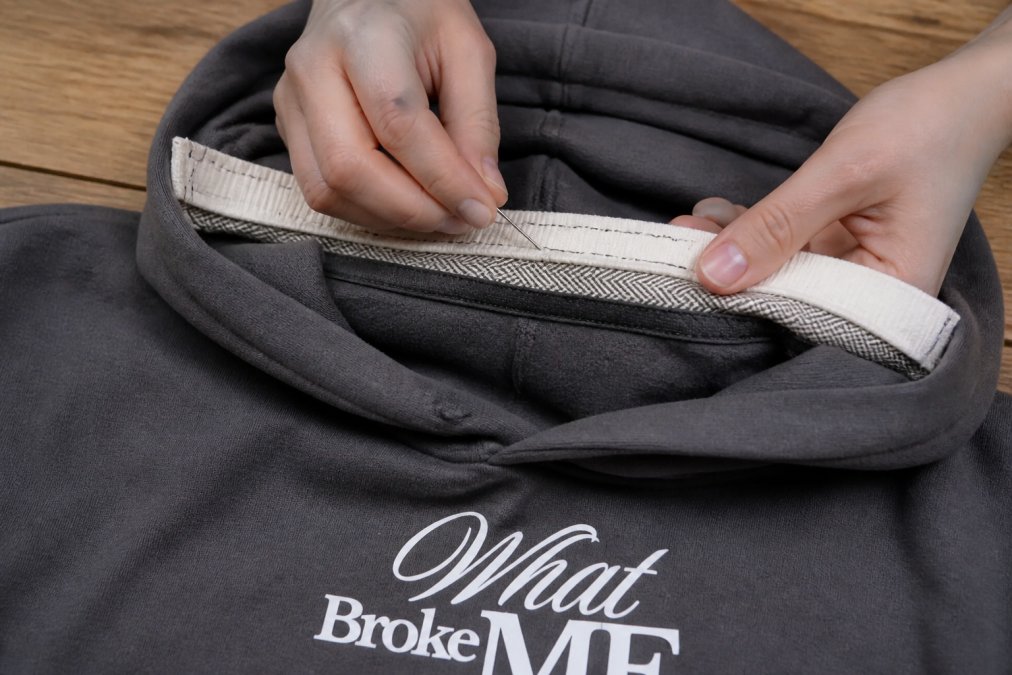
Elastic tape and twill tape are the two primary methods for reinforcing a stretched neckline. Elastic tape adds new elastic fibers that provide recovery and shape retention. Twill tape is a non-elastic reinforcement that adds structural rigidity and prevents further stretching.
The process for adding elastic tape:
- Turn the hoodie inside out
- Measure the neckline circumference
- Cut elastic tape to match that measurement (slightly less, as elastic will stretch)
- Pin the elastic tape to the inside of the neckline facing
- Sew it in place using a zigzag stitch to allow for stretch
This reinforcement is permanent and will last the life of the hoodie.
Reinforcing stitches and interfacing for scoop neck hoodies
Scoop neck hoodies are more prone to stretching because the neckline circumference is larger and the fabric is under more tension. Reinforcing the stitches and adding interfacing provides structural support that prevents future stretching.
Interfacing is a fabric layer added to the back side of the neckline facing. It adds weight and rigidity, preventing the facing from stretching as easily. Fusible interfacing bonds directly to the existing facing, while sew-in interfacing is stitched in place.
The reinforcement stitch process:
- Turn the hoodie inside out
- Locate the existing stitching line where the neckline facing is attached
- Sew a second parallel line of stitching 1/4 inch away from the original
- Use strong thread (polyester or nylon) and a short stitch length (2.0mm)
For scoop neck hoodies, this double-stitching technique combined with interfacing can reduce stretching compared to standard construction.
How to Shrink a Stretched Hoodie Neck Back to Shape
If your neckline has already stretched and you want to attempt recovery before resorting to sewing alterations, there are two methods that can help restore some of the original fit.
Steam and heat recovery for fiber relaxation
Steam heat can temporarily relax elastic fibers and allow them to recover some of their original shape. This method works best on hoodies where the stretching is mild to moderate.
The process:
- Fill a garment steamer with water
- Hold the neckline facing taut (gently, not forcefully)
- Apply steam to the entire neckline for 20-30 seconds
- While still damp, smooth the neckline into its proper shape
- Allow it to air dry completely
Steam can restore some of the original fit on mildly stretched hoodies. For severely stretched necklines, steam provides temporary improvement but won't fully restore the original fit.
Washing and drying strategies to restore original fit
A careful wash-and-dry cycle can sometimes help a slightly stretched neckline recover. Use this specific process:
- Hand wash in cold water with mild detergent
- Gently squeeze out excess water without wringing
- While still damp, smooth the neckline into proper shape
- Lay flat to air dry, keeping the neckline positioned correctly
- Allow 24 hours for complete drying
This method is most effective on hoodies made from premium fabrics like those used in EVRMORE's collection. For severely stretched necklines, sewing reinforcement techniques are the only permanent solution.
Visual Troubleshooting: Identifying and Addressing Neckline Problems Early
Catching neckline stretching early is the key to preventing permanent damage. Learning to recognize early warning signs allows you to intervene before the problem becomes severe.
| Warning Sign | What It Means | Action to Take |
|---|---|---|
| Slight gapping when wearing | Elastic fibers beginning to fatigue | Switch to hand washing and air drying |
| Neckline sits visibly lower than when new | Moderate stretching has occurred | Add steam treatment and careful reshaping during drying |
| Visible wrinkles or folds in neckline facing | Severe stretching; facing is bunching | Consider sewing reinforcement or professional alteration |
| Neckline feels loose immediately after wearing | Elastic has lost most recovery ability | Sewing techniques necessary for permanent fix |
Early intervention matters. A neckline showing slight gapping can be preserved with improved care practices. Inspect your hoodies monthly, especially ones you wear frequently. If you notice any early warning signs, adjust your care routine immediately.
Neckline stretching doesn't have to be inevitable. The hoodies that maintain their shape for years are cared for intentionally from day one. Cold water washing, air drying, proper folding, and careful storage create a compounding effect that preserves the structural integrity of the neckline.
EVRMORE's premium hoodies like the What Broke Me Heavyweight Hoodie start with reinforced neckline construction and premium 16.5 oz fabric that resists stretching better than standard hoodies. But even the best construction requires proper care. Follow the prevention methods in this guide, and your hoodie will maintain its shape and fit for years of wear.
Frequently Asked Questions
Q: Why does my hoodie neckline lose its shape?
A: Hoodie necklines stretch due to repeated pulling over your head, friction during washing, and heat exposure that breaks down fiber elasticity. Cotton-blend and fleece fabrics lose shape faster than reinforced necklines with elastic tape or interfacing. Improper drying and storage, especially hanging, accelerates gaping. Premium hoodies like EVRMORE's heavyweight options use structured drape and quality rib construction to resist this, but even durable fabrics need proper care to maintain shape retention long-term.
Q: What's the best way to wash a hoodie to prevent neckline damage?
A: Use cold water on a gentle cycle with low spin speed to minimize agitation and tension on the neckline. Hand wash if your hoodie shows early signs of gaping. Turn the hoodie inside out before machine washing to protect the graphic and neckline facing. Avoid fabric softener, which breaks down elasticity. Wash with similar colors and weights, heavy items tumbling against a lightweight neckline cause stretching. Air dry flat or on a rack rather than tumble drying, which applies heat and mechanical stress that degrades fiber recovery.
Q: How can I prevent my hoodie from hanging and stretching the neckline?
A: Fold your hoodie instead of hanging it. Hangers create constant downward tension that stretches the shoulders and neckline over time, especially with heavyweight fabrics. Store folded hoodies in a drawer or shelf in a cool, dry place. If you must hang, use a wide, padded hanger and ensure the hoodie sits flat without bunching. For long-term storage, fold and wrap in acid-free tissue to maintain shape. This is especially important for premium streetwear designed to last, proper storage protects your investment.
Q: Can I fix a neckline that's already stretched out?
A: Yes. Try steam and heat recovery first: use a steam iron on low heat held above the neckline to relax fibers back into shape, or run a hot wash followed by air drying flat. For permanent results, add elastic tape or twill tape to the neckline facing using a sewing machine. This reinforces the scoop neck and restores structural integrity. These alterations work best on quality hoodies with solid construction, exactly what EVRMORE heavyweight hoodies are built for.
This article was written using GrandRanker

Leave a comment
This site is protected by hCaptcha and the hCaptcha Privacy Policy and Terms of Service apply.