

Fashion for Personal Transformation and Growth
Table of Contents
- How Personal Style Reflects Personal Transformation
- Mindset Shifts for Personal Style That Actually Stick
- Resilient Clothing for Personal Growth: What to Look For
- Meaningful Streetwear Brands That Back Up Their Message
- Budget-Conscious Transformation: Building a Capsule That Works
- Style as a Tool for Career Pivots and Life Stage Transitions
- Frequently Asked Questions
Last Updated: September 16, 2026
How Personal Style Reflects Personal Transformation
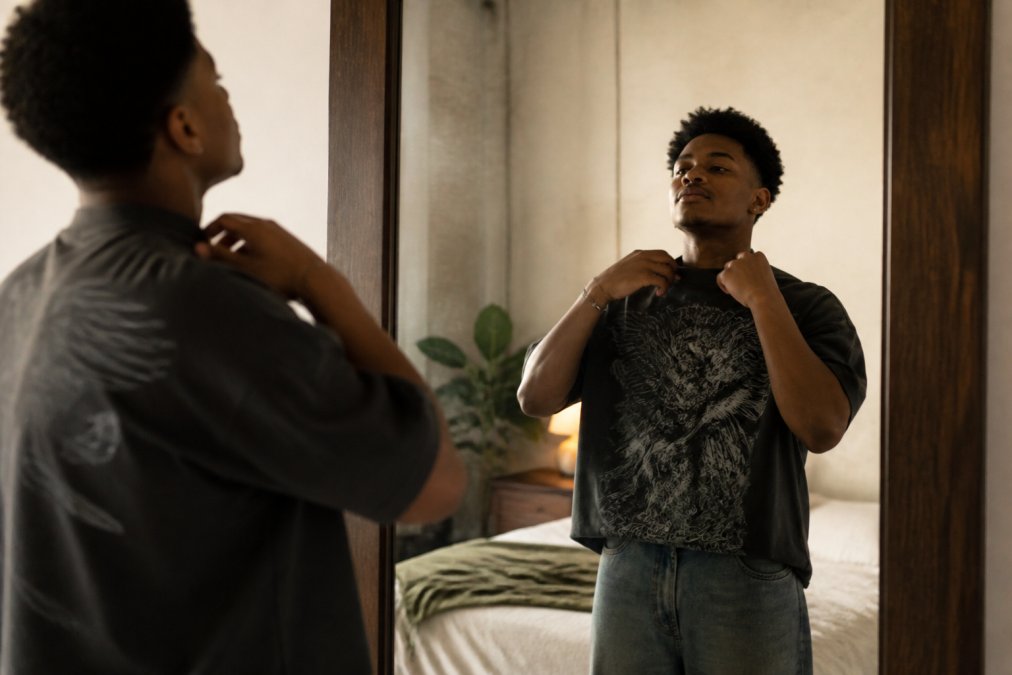
Fashion for personal transformation and growth works because clothing is not decoration, it is a decision about who you are becoming. At EVRMORE, we build heavyweight streetwear for people who have rebuilt themselves, and customers treat a single garment as the marker of a new chapter. What you put on in the morning sets the tone for the day.
The Psychology Behind What You Wear
Researchers call it enclothed cognition: clothing carries symbolic meaning and changes how the wearer thinks and performs. A lab coat worn by a scientist produces different focus than the same coat described as a painter's smock. The fabric is identical. The meaning is not.
Why Your Closet Tells Your Story
A closet is a timeline. The suit from the job you left, the shirt from a relationship that ended, the hoodie you wore through the worst of it. Most people never audit that timeline, so they keep dressing for a version of themselves that no longer exists.
Mindset Shifts for Personal Style That Actually Stick
Mindset shifts for personal style start with one reframe: you are not finding your style, you are building it. Style is a practice, not a personality trait. The difference between people who transform their look and people who keep buying the same three shirts is not taste. It is a repeatable mental loop.
The Enclothed Cognition Loop, Explained
Enclothed cognition is the two-part effect clothing has on the wearer: the symbolic meaning of a garment plus the physical experience of wearing it. Both halves must be present. A lab coat only sharpens attention when the wearer knows it is a lab coat and is actually wearing it, not when it is described as a painter's smock, and not when it is folded in a drawer.
- Name the meaning. Decide what the garment signals to you, not to strangers. "This is the shirt I wore to the interview that changed things."
- Wear it into the task. Put it on before the hard thing, the pitch, the workout, the first day back, not after.
- Log the outcome. One line in your notes app. Did the meaning hold up under pressure, or did it feel like a costume?
- Keep or retire. Garments that survive the loop become anchors. Garments that do not get released.
From 'Who Am I Now?' to 'This Is Who I'm Becoming'
The question "who am I now?" keeps you stuck in the present tense, asking you to define yourself before you have evidence. Swap it for "who am I becoming?" and the pressure drops. You stop needing a finished identity and start making small, visible choices that point in a direction.
Overcoming the Fear of Dressing for Your Future Self
The fear is real and usually sounds like this: people will think I'm pretending. Most people are not tracking your wardrobe closely enough to accuse you of anything. The discomfort you feel is the gap between your old self-image and your new behavior closing.
The 30-Day Style Experiment
Mindset shifts stick when attached to a schedule. Try this:
- Days 1-7: Wear one piece you already own but rarely reach for. Note how often you think about it during the day.
- Days 8-14: Add one new piece that points at the person you are becoming. Keep everything else the same.
- Days 15-21: Wear the new piece into one situation that actually matters, a meeting, a date, a hard conversation.
- Days 22-30: Review your notes. Keep what worked. Release what did not, without judgment.
Resilient Clothing for Personal Growth: What to Look For
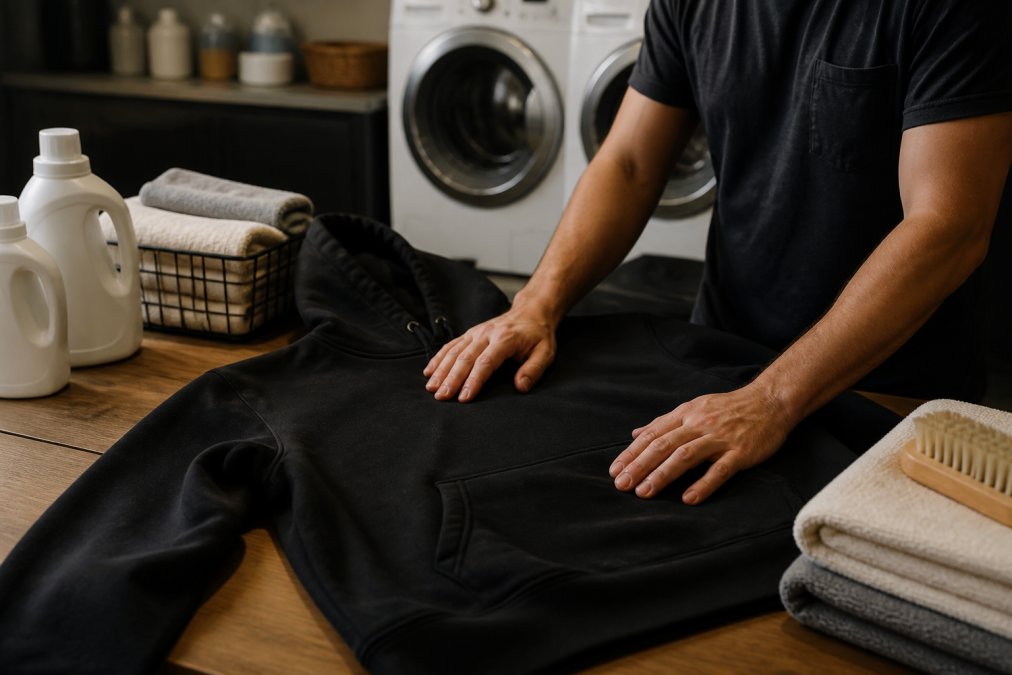
Resilient clothing for personal growth is built to survive repeated wear, because transformation is a daily practice, not a one-time event. Look at construction before the graphic.
- Fabric weight. Heavier cotton and French terry hold their shape and drape instead of collapsing after a few washes.
- Collar construction. A wide, ribbed collar with single-needle topstitching resists the stretch that ruins most tees.
- Print method. A print that is properly cured and applied survives the wash cycle without cracking.
- Fit intent. A boxy cut with dropped shoulders is deliberate, not accidental. It should sit wide, not hang shapeless.
The Wardrobe Audit: What to Keep and What to Release
Run this audit once, in about an hour. Pull everything out, then sort each item into one of three piles.
| Pile | Test Question | Action |
|---|---|---|
| Keep | Does this fit the person I am now? | Return to closet |
| Repair | Is the problem a loose seam or a missing button? | Fix within two weeks |
| Release | Does wearing this pull me back to an old identity? | Donate or discard |
Meaningful Streetwear Brands That Back Up Their Message
Meaningful streetwear brands earn trust through construction, not slogans. A message printed on a shirt that falls apart in three months is a marketing claim, not a statement.
Budget-Conscious Transformation: Building a Capsule That Works
Most style-transformation guides assume you have a few hundred dollars for a reset, leaving out everyone rebuilding after a layoff, a divorce, a medical bill, or a move. A budget-conscious transformation is not a compromise version of the real thing. It is often better, because scarcity forces you to be deliberate.
Oversized Heavyweight Streetwear Tee →
The Cost-Per-Wear Math
Cost per wear is the purchase price divided by the number of times you actually wear the item. A $45 heavyweight tee worn twice a week for a year lands under fifty cents per wear. A $15 thin tee that pills after six washes lands closer to a dollar per wear, and you buy it three more times.
Building the Capsule on a Real Budget
Build around a neutral base, then add one statement piece. A workable starting capsule:
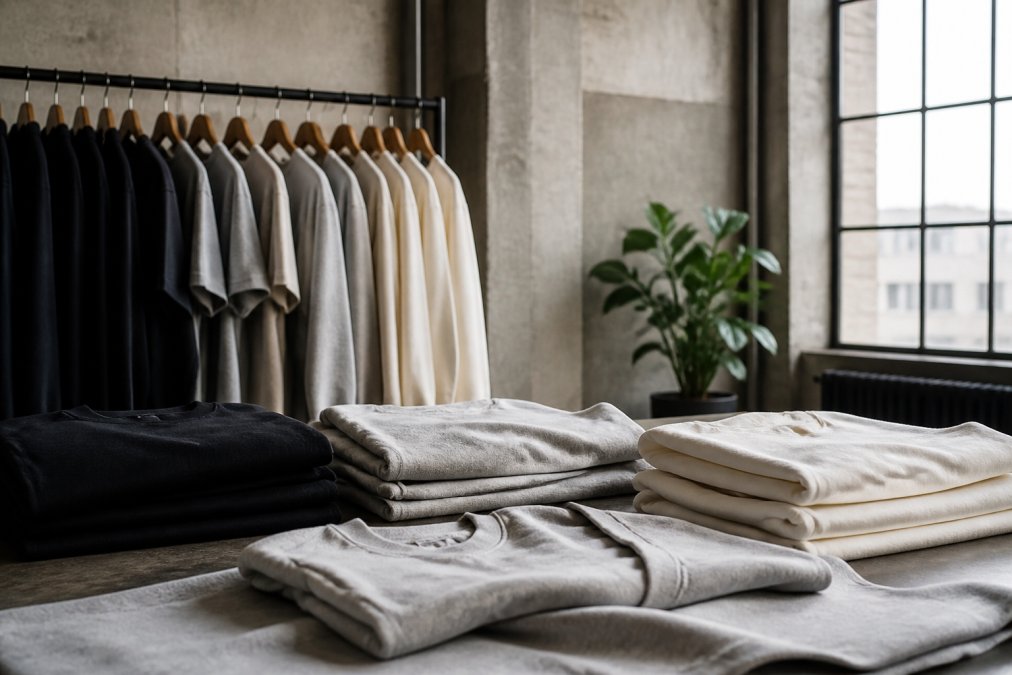
- Two heavyweight tees in a neutral colorway
- One heavyweight hoodie for layering
- One pair of denim that fits the current you
- One message-driven piece that means something specific to your story
Where to Spend and Where to Save
Not every slot in the capsule deserves the same budget. A simple allocation:
| Slot | Spend level | Why |
|---|---|---|
| Message-driven piece | Highest | It carries the emotional weight and gets worn most |
| Hoodie or outer layer | Mid-to-high | It is the piece people see most often |
| Denim | Mid | Fit matters more than brand; get it hemmed |
| Neutral tees | Mid | Construction matters, logo does not |
| Accessories | Lowest | A belt or a cap can shift a whole outfit for very little |
Sourcing Without Overpaying
Three habits that stretch a transformation budget further:
- Buy off-season. Heavyweight cotton and French terry move slowest in spring. That is when the markdowns land.
- Check the secondary market first. Resale platforms carry lightly worn heavyweight pieces at a fraction of retail. Inspect collar construction and print condition before you commit.
- Repair before you replace. A loose seam or a missing button is a fifteen-minute fix, not a reason to rebuy. Learning one basic stitch pays for itself in a single season.
The One-Piece Rule
If the full capsule feels out of reach, buy one piece. One well-made, message-driven garment worn into the situations that matter will do more for your sense of self than five cheap pieces bought in an afternoon. Transformation is a daily practice, and a daily practice only needs one thing to start.
Style as a Tool for Career Pivots and Life Stage Transitions
A career pivot or life stage transition changes what "professional" means for you, and your wardrobe has to catch up. Dressing for success in a new chapter often means dressing differently than you did in the last one.
Frequently Asked Questions
How does personal style reflect personal growth?
Personal style reflects growth because the choices you make about clothing shift as your identity shifts. When you stop dressing for who you were and start dressing for who you're becoming, your wardrobe becomes a visible record of that change. A person in recovery or rebuilding after a major transition often gravitates toward pieces that feel intentional, durable, and meaningful rather than trend-driven. That shift from reactive to intentional dressing is one of the clearest signals that personal transformation is happening.
Can changing your clothes change your mindset?
Research on enclothed cognition suggests that what you wear can influence how you think and perform. When you put on clothing that carries personal meaning, like a heavyweight tee with a message about resilience, it can reinforce the identity you're building. The effect works best when the garment matches your intention. Wearing a bold statement piece on a day you need courage is different from throwing on whatever's clean. The clothing doesn't do the work, but it can remind you that you already have.
What is resilient clothing for personal growth?
Resilient clothing for personal growth is apparel built to last physically and designed to carry meaning. That means heavyweight fabrics that hold their shape after repeated washes, structured construction that doesn't stretch out at the neckline, and messaging that reflects where you've been and where you're headed. EVRMORE's Built Stronger tee, for example, uses 9 oz ring-spun cotton and a bold chest graphic that serves as a daily reminder. The point is durability in both material and message.
How do I curate a wardrobe that represents my future self?
Start with a wardrobe audit. Pull everything out and sort into three piles: pieces that fit the person you're becoming, pieces that served a past version of you, and pieces that need replacing. Be honest about what you actually wear versus what you keep out of guilt. Then fill the gaps with intentional choices, like a capsule of heavyweight tees and a structured hoodie that work across settings. The goal isn't a full closet. It's a curated closet where every piece aligns with your direction.
What should I look for in meaningful streetwear brands?
Look for brands that back up their messaging with construction quality. A meaningful streetwear brand should use heavyweight fabrics, reinforce stress points like necklines and cuffs, and provide real sizing information so you know how the fit works on different body types. EVRMORE, for instance, cut and sews its heavyweight hoodie in Los Angeles using 16.5 oz French terry with single-needle topstitching at the neckline. The message matters, but so does whether the garment survives a year of regular wear.
How do I dress for a career change or life stage transition?
Dress for the role you're stepping into, not the one you're leaving. If you're pivoting from a corporate job to something more creative, your wardrobe can loosen without losing structure. A boxy heavyweight tee under a structured jacket works across both worlds. The key is to choose pieces that feel like you at your most capable, not like a costume. Start with two or three anchor pieces you feel genuinely good in, then build outward from there.

Leave a comment
This site is protected by hCaptcha and the hCaptcha Privacy Policy and Terms of Service apply.