

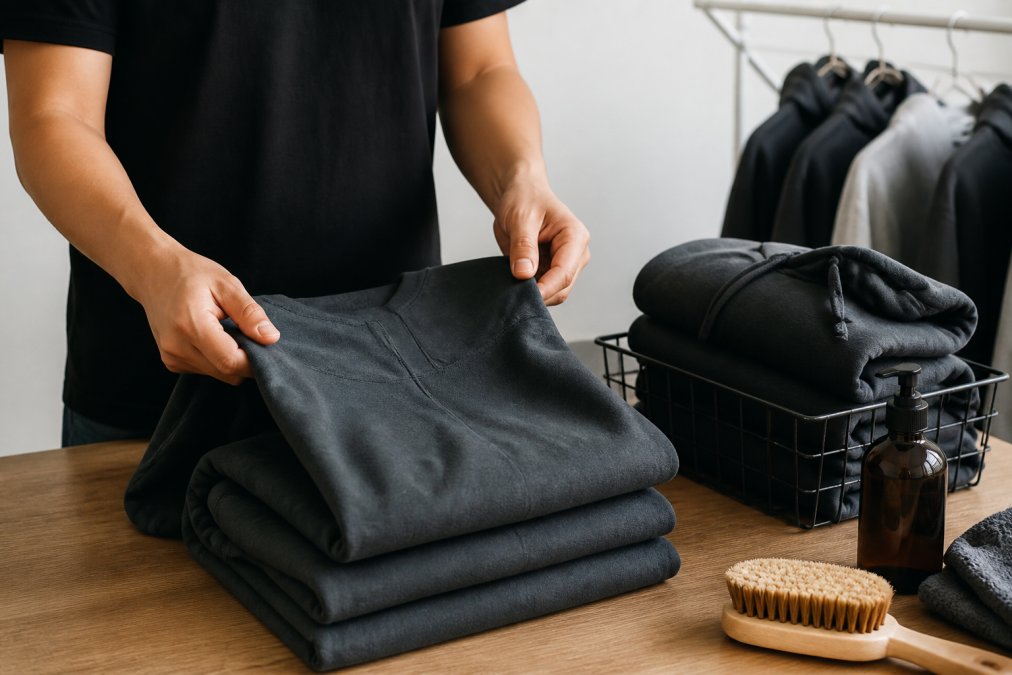
How to Maintain Heavy Cotton Hoodies: Complete Care Guide
Table of Contents
- Why Heavyweight Cotton Requires Different Care
- How to Wash Heavy Cotton Hoodies Without Shrinking
- Air Drying vs Machine Drying Hoodies
- How to Restore Softness to Stiff Hoodies
- Preventing Pilling and Maintaining Fabric Loft
- Storage and Long-Term Care for Heavy Cotton
- Spot Cleaning and Stain Removal Without Full Washes
- Conclusion
Last Updated: August 6, 2026
Why Heavyweight Cotton Requires Different Care
Heavyweight cotton hoodies demand a fundamentally different maintenance approach than standard apparel. The dense fiber structure that makes these garments durable and comfortable also traps moisture, resists quick drying, and becomes prone to matting if treated carelessly.
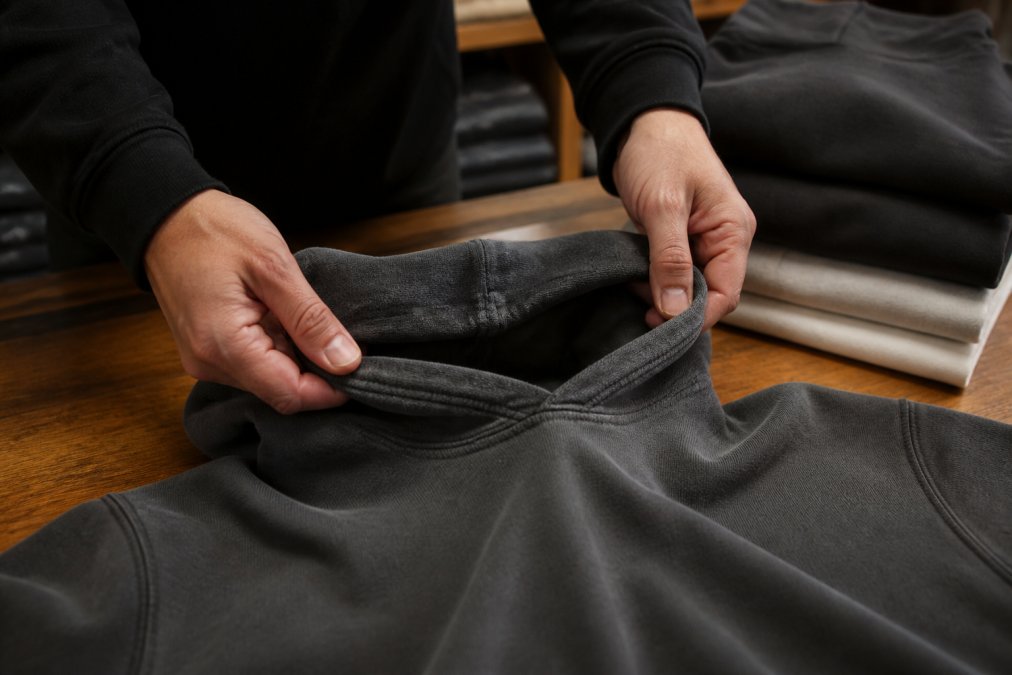
Heavy cotton hoodies, typically constructed from 12-14 ounce fabric or higher, are built to last. But this same density creates challenges: water takes longer to penetrate and exit, detergent residue accumulates more easily, and the weight of wet fabric strains seams and stretches necklines if not handled properly. At EVRMORE, we design our heavyweight hoodies with this reality in mind, which is why proper care becomes essential to maintaining their integrity.
A well-maintained heavy cotton hoodie improves with age, developing character and softness through proper washing and drying. Neglect it, and you're left with a stiff, pilled, discolored garment that no amount of rescue washing will fix.
How to Wash Heavy Cotton Hoodies Without Shrinking
The washing process sets the tone for everything that follows. One mistake, wrong water temperature, too much detergent, or an aggressive cycle, can permanently compromise your hoodie's fit and feel.
Water Temperature and Detergent Selection
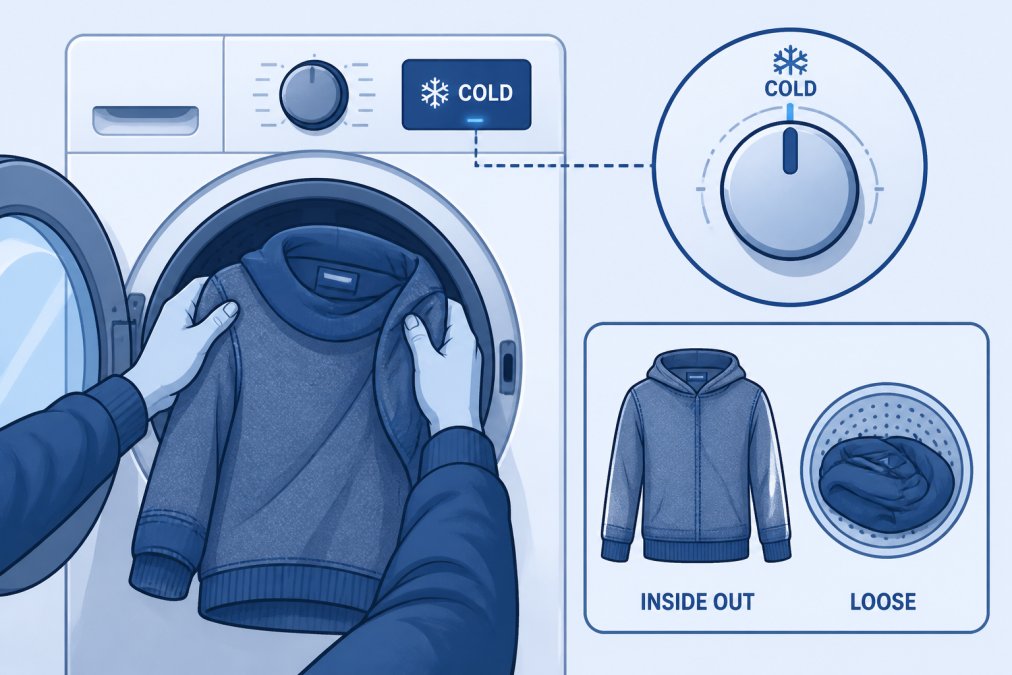
Cold water is non-negotiable for heavy cotton hoodies. Warm water opens the fiber structure, allowing dyes to bleed and fibers to relax and shift. Cold water (below 60°F) keeps fibers contracted, locks in color, and minimizes shrinkage.
Use a mild detergent specifically formulated for delicate or color-safe fabrics. Standard heavy-duty detergents strip the natural oils that keep cotton soft and supple, causing detergent buildup that makes your hoodie feel stiff and papery after multiple washes.
Dosage matters. Most people use twice the recommended amount. Heavy cotton requires less detergent than lightweight fabrics because the garment's weight itself helps distribute cleaning action. Use one-half to two-thirds the recommended dose.
Washing Frequency and Cycle Settings
Wash your heavy cotton hoodie every 4-6 wears, not after every wear. This extends garment life dramatically and reduces cumulative stress from repeated washing. Spot cleaning handles most situations unless you've sweated heavily or spilled something.
When you do wash, use the delicate or hand-wash cycle. These cycles use slower agitation and shorter spin times, reducing mechanical stress on fibers and seams. Turn the hoodie inside out before washing to protect the graphic design from fading and reduce pilling on the outer surface.
Wash alone or with similar colors only. Heavy cotton hoodies shed dye, especially in the first few washes, risking stains on lighter garments.
Air Drying vs Machine Drying Hoodies
This decision defines the lifespan of your hoodie more than any other factor.
Why Air Drying Protects Fabric Integrity
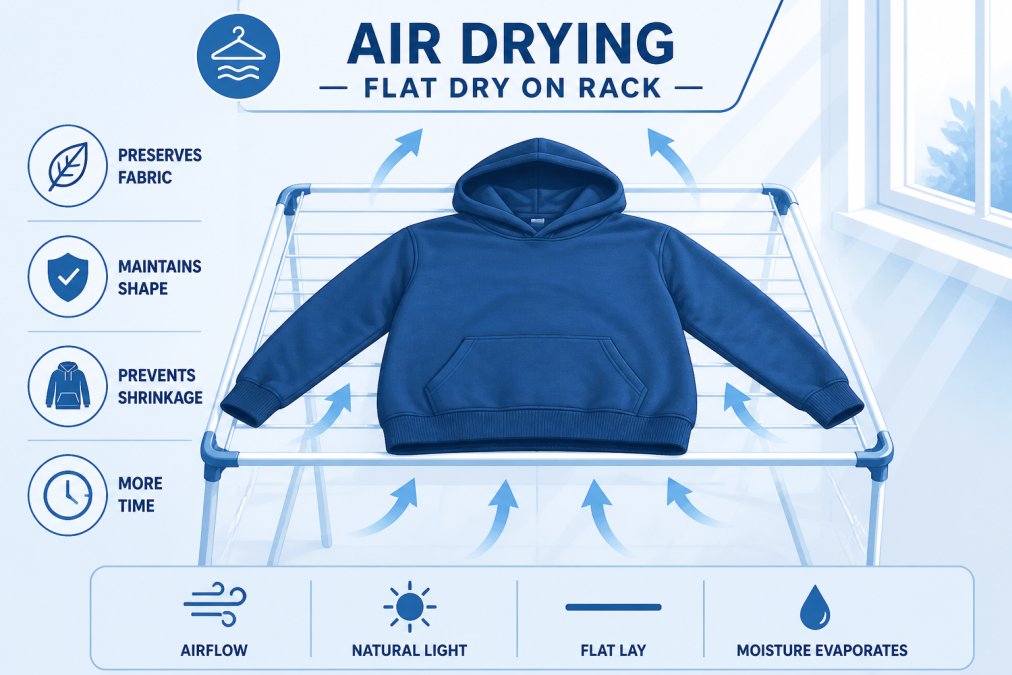
Air drying is the gold standard for heavy cotton hoodies. Heat accelerates fiber breakdown by causing cellulose chains to contract, cross-link, and become brittle, producing the stiff, papery texture associated with old clothing.
Air drying also prevents shrinkage. A wet heavy cotton hoodie is heavy; the water's weight pulls on fibers. If tumbled in a hot dryer, fibers relax under heat while stretched, then set in this contracted state when cooled. Air drying allows fibers to relax naturally without external heat forcing contraction.
The process takes 24-48 hours depending on humidity and air circulation. Lay the hoodie flat on a clean, dry surface or hang it on a padded hanger in a well-ventilated space. Avoid direct sunlight, which fades colors. Place a fan nearby to speed evaporation and prevent musty odor and mildew from moisture retention.
Machine Drying: When and How to Do It Safely
If you must use a dryer, use the lowest heat setting available, typically labeled "delicate" or "low heat." Dry for 20-30 minutes maximum, then remove the hoodie while still slightly damp to prevent over-drying and stiffness. The hoodie will finish drying on a hanger or laid flat.
Reserve machine drying for situations where you need the hoodie quickly, not as standard practice. Routine machine drying will make the hoodie noticeably stiffer within 6-12 months.
How to Restore Softness to Stiff Hoodies
If your hoodie has already become stiff, several approaches can restore some softness.
Wash with a fabric conditioner designed for cotton, adding it during the rinse cycle. The conditioner coats fibers, making them feel smoother and more supple, though this is temporary.
White vinegar removes detergent residue and mineral deposits that contribute to stiffness. Add one-half cup to the rinse cycle. The smell dissipates as the hoodie dries.
Glycerin offers another option. Mix one tablespoon of glycerin with one cup of water and spray lightly onto the damp hoodie after washing, then lay it flat to dry. Use sparingly to avoid a greasy feel.
Prevention through proper drying remains far more effective than restoration. Once fibers have been permanently altered by high heat, reversing that damage is nearly impossible.
Preventing Pilling and Maintaining Fabric Loft
Pilling, those small balls of fiber that form on the surface, is a natural response when loose fibers tangle together. Prevention is far easier than removal.
Pilling occurs most often on areas of friction: underarms, sleeve cuffs, and where the hoodie rubs against a backpack or belt. Minimize friction by wearing the hoodie over a smooth base layer.
Washing inside-out reduces pilling on the visible exterior. If pilling does occur, use a fabric shaver or pilling comb designed for this purpose. Avoid picking pills off by hand, which risks pulling threads and creating holes.
Fabric loft diminishes with repeated washing and drying. Air drying preserves loft far better than machine drying, as the gentle evaporation allows fibers to remain in their natural, expanded state.
Storage and Long-Term Care for Heavy Cotton
Store the hoodie in a cool, dry place away from direct sunlight. Sunlight fades colors gradually; heat accelerates fiber degradation even when the garment isn't being worn.
Fold the hoodie rather than hanging it long-term. Hanging stretches the shoulders and neckline, particularly with heavy cotton's weight. Folding distributes the garment's mass evenly and prevents permanent deformation.
Use cedar blocks or lavender sachets to deter moths and maintain freshness. Avoid mothballs, which can damage fibers and leave difficult-to-remove odors.
If you don't wear the hoodie for an extended period, wash it before storing it. Body oils, sweat, and residues attract insects and promote mildew. A clean garment stored in a dry environment remains in good condition indefinitely.
Spot Cleaning and Stain Removal Without Full Washes
Not every mark requires a full wash. Spot cleaning extends the time between washes and reduces cumulative stress on your hoodie.
For fresh stains, act immediately. Blot (don't rub) the stain with a clean, damp cloth. Rubbing pushes the stain deeper into the fabric. For liquid stains, use cold water. For oily stains, use a small amount of mild detergent on the damp cloth.
Let the spot air dry completely. If the stain remains, repeat the process. Most fresh stains disappear after 2-3 applications of cold water and blotting.
For set-in stains, mix a paste of cold water and mild detergent. Apply directly to the stain and let it sit for 15-30 minutes. Gently work the paste into the fabric with a soft brush, then rinse thoroughly with cold water. Air dry and assess.
Avoid heat when treating stains. Heat sets stains permanently. Always use cold water for stain removal. The dense fiber structure of heavyweight cotton actually helps with stain removal, as stains don't penetrate as quickly as in lighter fabrics, giving you a wider window to treat them before they set.
Maintaining a heavy cotton hoodie is straightforward once you understand the mechanics. Cold water washing, mild detergent, delicate cycles, and air drying aren't complicated, they're just different from how most people treat casual clothing. The reward is a garment that remains comfortable, vibrant, and structurally sound for years.
EVRMORE's Built Stronger Hoodie is constructed from premium French Terry heavyweight cotton specifically engineered to withstand years of wear. The strong seam construction and quality fabric deserve maintenance that honors that investment. Follow the practices outlined above, and your hoodie will develop character and comfort with age rather than deteriorating. [The Built Stronger Hoodie | https://www.evrmorebrand.com/products/ǝvrmore-french-terry-hoodie-never-looking-back] ($90.00) is built to last; proper care ensures it actually does.

| Maintenance Task | Frequency | Method |
|---|---|---|
| Full wash | Every 4-6 wears | Cold water, delicate cycle, mild detergent, inside-out |
| Spot cleaning | As needed | Blot with cold water, air dry |
| Air drying | After every wash | Flat or padded hanger, 24-48 hours |
| Fabric softening treatment | Monthly | Vinegar rinse or glycerin spray |
| Storage inspection | Seasonally | Check for moisture, odor, pest activity |
Frequently Asked Questions
How do you keep heavy cotton hoodies soft after washing?
Avoid fabric softeners, which leave residue that stiffens heavyweight fabrics over time. Instead, use cold water, a mild detergent, and air dry flat or hang-dry to preserve the fabric's natural loft and softness. If stiffness develops, soak the hoodie in cool water with a small amount of white vinegar for 30 minutes to remove detergent buildup, then air dry. Proper washing technique prevents the need for chemical softeners.
Can you put heavy cotton hoodies in the dryer?
Heavy cotton hoodies can go in the dryer on a tumble dry low setting, but air drying is better for long-term durability. Machine drying generates heat that can weaken fibers, cause shrinkage, and create static cling. If you must use a dryer, use low heat, remove the hoodie while slightly damp, and lay it flat to finish drying. Air drying flat or on a rack eliminates these risks entirely and preserves the garment's structure.
How often should you wash a heavy cotton hoodie?
Wash your heavy cotton hoodie every 4-7 wears, or when visibly soiled. Frequent washing speeds fiber breakdown and causes color fading. Spot clean minor stains between full washes to extend the time between laundering. Store hoodies in a cool, dry place to prevent musty odor buildup, which may tempt you to wash more often than necessary. This approach keeps your hoodie fresh while maximizing its lifespan.
How do you prevent heavy cotton hoodies from shrinking?
Use cold water or warm water (never hot) with a mild detergent, and always air dry instead of machine drying. Heavyweight cotton-poly blends are less prone to shrinkage than 100% cotton, but heat is the main culprit. Wash inside-out to reduce pilling and color fading. If your hoodie does shrink slightly, avoid the dryer entirely and lay it flat to air dry, which allows the fibers to relax and recover some of their original dimensions.
This article was written using GrandRanker


Leave a comment
This site is protected by hCaptcha and the hCaptcha Privacy Policy and Terms of Service apply.