


Best Hangers for Heavy Cotton Hoodies
Table of Contents
- Why Heavy Cotton Hoodies Need the Right Hanger
- Heavy-Duty Clothes Hangers: What Makes Them Different
- Wide-Shoulder Hangers for Sweatshirts and Hoodies
- Material Choices: Wood, Metal, and Plastic Compared
- How to Hang a Hoodie on a Hanger Correctly
- Preventing Shoulder Bumps and Fabric Stretching
- Hanger Thickness, Closet Space, and Organization
- Common Mistakes That Damage Heavy Hoodies
- Frequently Asked Questions
Last Updated: October 13, 2026
Why Heavy Cotton Hoodies Need the Right Hanger
Heavy cotton hoodies demand more support than standard garments. The weight of thick fabric combined with the hood structure puts stress on shoulder seams that ordinary hangers weren't designed to handle. A flimsy hanger will create permanent shoulder bumps, stretch the neckline, and distort the garment's shape within weeks.
The best hangers for heavy cotton hoodies share specific characteristics: adequate width to support broad shoulders, sufficient thickness to distribute weight evenly, and surfaces that grip fabric without slipping.
The problem most people face is treating all hangers as interchangeable. A hanger that works fine for a lightweight t-shirt will fail under the weight of premium heavyweight cotton. The hood adds complexity too, improper placement can stretch the neckline or create creases that won't wash out. Understanding what separates a quality hanger from a mediocre one is the first step toward protecting your investment in durable streetwear.
Heavy-Duty Clothes Hangers: What Makes Them Different
Heavy-duty clothes hangers are engineered to handle garments that exceed 2-3 pounds. Standard plastic hangers typically support 5-8 ounces before bending or cracking. Heavy-duty models use reinforced materials and wider shoulder spans to distribute weight across a larger surface area, preventing the concentration of stress that damages delicate fabrics.
The key difference lies in construction. Heavy-duty hangers feature thicker cross-sections, wider shoulder widths (typically 17-19 inches for hoodies), and materials chosen specifically for load-bearing capacity. Metal hangers offer superior strength but require rust-resistant finishes. Wood hangers provide excellent weight distribution through their natural density. Plastic hangers designed for heavy garments use reinforced polymers rather than thin, brittle materials.
When you hang a heavy cotton hoodie on an inadequate hanger, the weight forces the fabric to stretch downward. Over time, this creates permanent shoulder deformation. Heavy-duty hangers prevent this by supporting the entire garment weight evenly across the shoulder area, not just at two narrow contact points. This is especially critical for hoodies, where the hood adds concentrated weight at the neckline.
Wide-Shoulder Hangers for Sweatshirts and Hoodies
Wide-shoulder hangers for sweatshirts and hoodies typically measure 17-19 inches across, compared to 14-16 inches for standard hangers. This extra width prevents the distinctive shoulder bumps that appear when narrow hangers compress the fabric at pressure points.
The shoulder shape matters as much as width. Curved shoulders that follow the natural contour of a hoodie distribute weight more evenly than sharp angles.
For hoodies specifically, the hanger's depth also plays a role. A deeper hanger (front to back) prevents the hood from sliding off the back or bunching up. Look for hangers with a minimum 8-inch depth to accommodate the hood's volume without distortion.
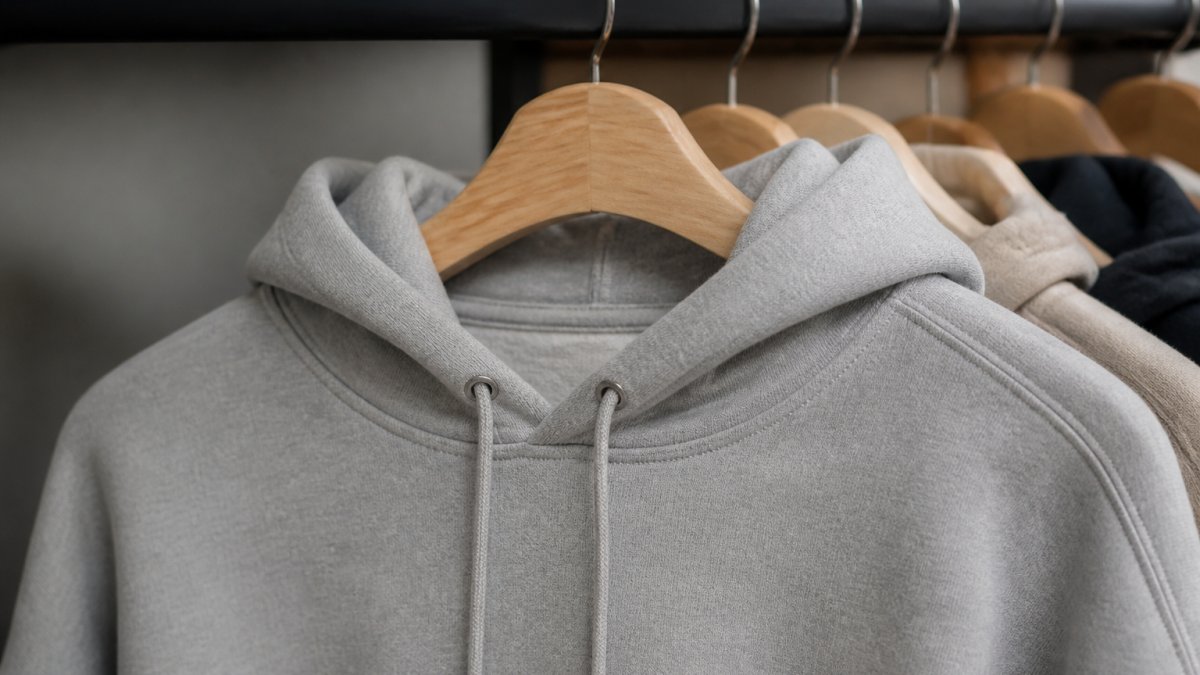
Wide-shoulder hangers work best when paired with proper hanging technique. The hood should rest naturally against the hanger's back, not be forced over the top. When these conditions are met, even premium heavyweight hoodies maintain their shape indefinitely.
Material Choices: Wood, Metal, and Plastic Compared
Wood Hangers for Premium Garments
Wood hangers represent the gold standard for heavy cotton hoodies. Hardwoods like maple, oak, and birch offer superior weight distribution because their natural density supports heavy garments without bending or sagging. The smooth surface won't snag delicate fabrics, and wood naturally resists moisture, making it ideal for closet environments.
Premium wood hangers typically cost more upfront but outlast plastic alternatives by years. They don't rust, don't crack under load, and actually improve with age as the wood develops a natural patina. For someone invested in durable streetwear, wood hangers justify their cost through longevity and garment protection.
The main drawback is weight. Wood hangers are heavier to handle and require sturdy closet rods to support multiple garments. In a crowded closet, this can become impractical. Some wood hangers also absorb moisture if exposed to humidity, though quality finishes minimize this issue.
Metal Hangers and Rust Resistance
Metal hangers, typically steel or aluminum, offer excellent strength-to-weight ratio. They support heavy garments without sagging and take up minimal closet space. The challenge is rust. Steel hangers rust quickly in humid environments, and rust stains transfer to fabric permanently.
Stainless steel hangers solve the rust problem but cost significantly more than standard steel or plastic alternatives. Aluminum hangers won't rust but are softer than steel and may bend under sustained load from multiple heavy hoodies. Chrome-plated hangers offer a middle ground: they resist rust better than bare steel while costing less than stainless steel.
Metal hangers work well for heavy cotton hoodies when they feature smooth, rounded shoulders and adequate width. The cold surface won't damage fabric the way sharp edges might. Many people prefer metal for closet organization because they're thin and stackable, maximizing space in crowded closets.
Velvet and Flocked Surfaces for Grip
Velvet and flocked hangers have a soft, textured surface that grips fabric without slipping. This prevents hoodies from sliding off during closet access or when the rod shifts. The soft surface also protects delicate fabrics from the scratches that bare metal or hard plastic can cause.
Velvet hangers come in various materials, some feature actual velvet, others use synthetic flocking. Both work well for heavy cotton hoodies. The trade-off is durability: the velvet or flocking layer can wear away with heavy use or rough handling, exposing the underlying plastic or metal. Once this happens, the hanger loses its grip advantage.
For a hoodie you wear frequently and move in and out of your closet often, velvet hangers reduce the friction that causes stretching. The soft grip means the hanger holds the garment securely without the pressure points that create shoulder bumps.
How to Hang a Hoodie on a Hanger Correctly
The correct technique for hanging a hoodie prevents stretching and distortion. Start by positioning the hanger horizontally in front of you. Drape the hoodie over the hanger with the hood facing away from you.
Let the hood rest naturally against the back of the hanger. Don't force it over the top or tuck it underneath. The hood's weight should be supported by the hanger's back edge, not compressed by the hanger's hook.
Ensure the neckline sits properly at the hanger's neck area without being stretched or compressed. If the hanger is too narrow, it will pinch the neckline and create permanent creases. If it's too wide, the hoodie may slip off. The fit should feel snug but not tight.
For long-term storage, hang the hoodie in a cool, dry closet away from direct sunlight. Sunlight fades colors and weakens fabric fibers over time. Air circulation matters too, cramming hoodies too tightly together traps moisture and promotes mildew. Space them at least 2-3 inches apart on the rod.
Preventing Shoulder Bumps and Fabric Stretching
Shoulder bumps form when hangers are too narrow or when weight concentrates at two small contact points. The fabric stretches downward under the hoodie's weight, and when you remove it, the stretched fibers don't fully recover. Wide-shoulder hangers prevent this by spreading the load across a larger area.
The hanger's shoulder angle also prevents stretching. Hangers with gentle curves and adequate width distribute weight evenly. Hangers with sharp angles or narrow shoulders create pressure points that stretch fabric faster.
Fabric stretching also occurs when hoodies are hung too tightly in a crowded closet. Each garment presses against its neighbors, and the combined weight pulls downward on shoulder seams. Spacing hoodies properly, with at least a few inches between each, allows air circulation and prevents pressure-related stretching.
The neckline is particularly vulnerable. A hanger that's too narrow will compress the neckline, stretching the ribbing and collar. Over time, this makes the hoodie's opening too loose and unflattering. Wide-shoulder hangers keep the neckline relaxed and properly positioned.
Hanger Thickness, Closet Space, and Organization
Hanger thickness affects both closet space efficiency and garment protection. Thin hangers maximize closet capacity, you can fit more garments on the same rod. Thick hangers take up more space but offer superior support and durability.
For someone with a small closet and multiple heavy hoodies, thin metal or plastic hangers might be necessary to fit everything. In this case, choose hangers with adequate width and strength despite their thinness. Velvet or flocked thin hangers still provide grip and some protection.
For larger closets or smaller wardrobes, thicker hangers offer better value. Wood hangers, typically 0.5-0.75 inches thick, provide excellent support and last indefinitely. Metal hangers vary widely in thickness, cheap ones bend easily, while quality stainless steel hangers maintain rigidity even when thin.
Organization benefits from consistent hanger thickness. Using the same hanger type throughout your closet creates visual uniformity and makes it easier to arrange and access garments. Mismatched hangers of different thicknesses create an uneven rod line and make it harder to slide garments along the rod.
| Hanger Type | Thickness | Space Efficiency | Support Quality | Durability |
|---|---|---|---|---|
| Plastic (standard) | Thin | Excellent | Poor | 1-2 years |
| Metal (steel) | Thin-Medium | Good | Good | 2-5 years |
| Stainless Steel | Medium | Good | Excellent | 10+ years |
| Wood | Thick | Fair | Excellent | 15+ years |
| Velvet/Flocked | Thin-Medium | Good | Good | 3-7 years |
Common Mistakes That Damage Heavy Hoodies
Using hangers that are too narrow is the most common mistake. People assume all hangers are similar and grab whatever is available.
Hanging hoodies in damp environments without proper ventilation is another frequent error. Moisture accumulates in the fabric, promoting mildew and weakening fibers. Hoodies should be hung in dry closets with good air circulation.
Forcing the hood over the hanger's hook stretches the neckline unnecessarily. The hood should rest naturally against the back of the hanger, not be pulled and twisted to fit.
Mixing wet and dry hoodies on the same rod can damage both. A wet hoodie's weight is much greater than when dry, and the moisture transfers to adjacent garments.
Storing hoodies in plastic bags for long periods traps moisture and promotes mildew. Fabric needs air circulation to stay fresh. If you must store hoodies seasonally, use breathable garment bags or cotton storage containers, not plastic.
Protecting a heavy cotton hoodie starts with the right hanger. The best hangers for heavy cotton hoodies combine adequate width, sufficient thickness, and surfaces that grip without damaging fabric.
Frequently Asked Questions
What is the best hanger for hoodies?
The best hangers for hoodies are wide-shoulder designs made from wood or velvet-flocked materials with a thickness of at least 0.5 inches. Wide shoulders distribute weight evenly across the garment, preventing the shoulder bumps and neckline stretching that narrow hangers cause. A swivel hook and solid construction support the weight of heavy cotton hoodies without bending or warping over time.
How do you keep a hoodie from getting shoulder bumps on a hanger?
Use a hanger with shoulders as wide as or wider than your hoodie's shoulder seams. Position the hanger so the shoulder points sit directly under the garment's seams rather than pushing into the fabric. Ensure the hood hangs freely at the back without bunching. Heavy-duty hangers with a thickness of 0.5 inches or more prevent the hanger from creating visible indentations in thick cotton fabric over weeks of storage.
Should heavy cotton hoodies be hung or folded?
Heavy cotton hoodies can be hung safely on the right hanger or folded for storage. Hanging on a proper wide-shoulder, heavy-duty hanger preserves the garment's shape and makes it easy to access. Folding works well for long-term storage or if closet space is limited, but repeated folding can create creases. For premium, message-driven hoodies you wear frequently, hanging on quality hangers is the better choice to maintain appearance and durability.
Are wooden hangers better for heavy hoodies?
Wooden hangers are an excellent choice for heavy hoodies because they're durable, won't bend under weight, and provide a refined aesthetic. Solid wood construction supports the weight of thick cotton garments without warping. However, wooden hangers can be more expensive and take up more closet space. Velvet-flocked metal or plastic hangers offer similar protection at a lower cost and thinner profile, so the best choice depends on your budget and closet organization needs.



Leave a comment
This site is protected by hCaptcha and the hCaptcha Privacy Policy and Terms of Service apply.