

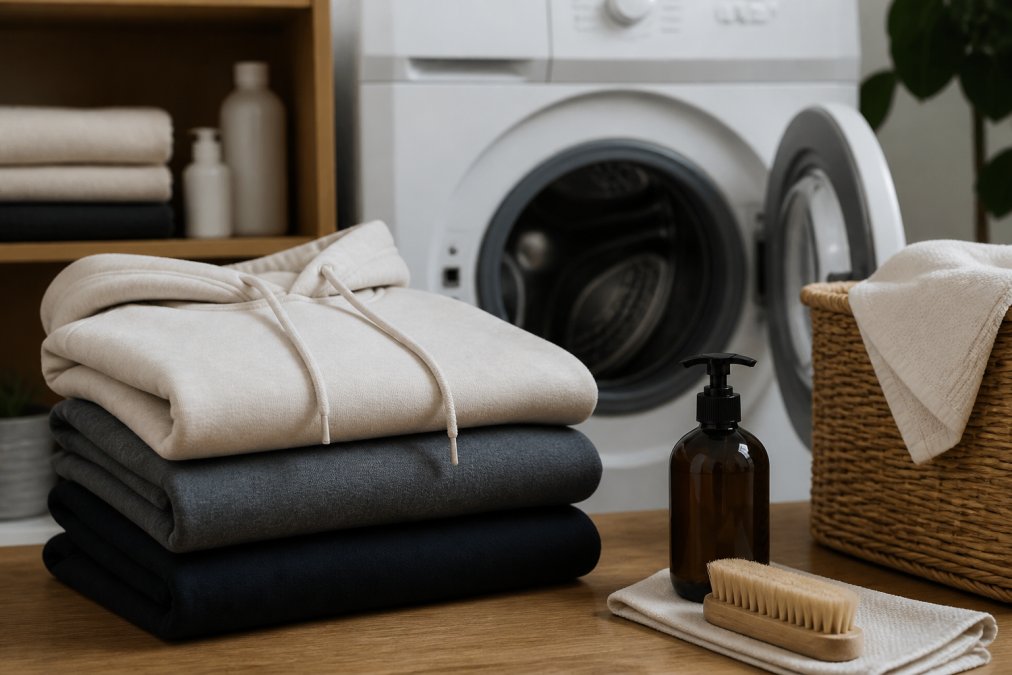
How to Care for Heavyweight Cotton: A Complete Guide
Table of Contents
- Why Heavyweight Cotton Demands Different Care
- How to Prevent Cotton Shrinkage Before It Starts
- The Right Wash Cycle for Heavyweight Cotton
- Air Drying vs. Machine Drying Cotton: Which Method Lasts Longer
- How to Remove Stains from Heavy Cotton Without Damage
- Storage and Long-Term Maintenance for Heavyweight Pieces
- Repair and Restoration to Keep Your Heavyweight Cotton Strong
- Conclusion
Last Updated: August 9, 2026
Why Heavyweight Cotton Demands Different Care
Heavyweight cotton's tighter weave and denser fiber structure make it durable but also more demanding to care for. The extended moisture exposure and weight of wet fabric create stress on fibers and seams if you're not careful. Washing, drying, and storing these pieces incorrectly can compromise the longevity that makes them worth investing in.
At EVRMORE, we design our heavyweight tees and streetwear pieces to withstand years of wear. That durability depends on how you treat them after purchase. A single aggressive wash cycle or high-heat dryer session can damage fibers that would otherwise last for years. The good news: caring for heavyweight cotton isn't complicated once you understand why these garments behave differently.
This guide breaks down exactly how to care for heavyweight cotton, from the first wash through storage and repair. You'll learn which detergents work best, why temperature matters, and when air drying is essential.
How to Prevent Cotton Shrinkage Before It Starts
Shrinkage is the biggest threat to heavyweight cotton garments, and most of it happens in the first three washes. Cotton fibers are cellulose and naturally contract when exposed to heat and agitation. Heavyweight cotton is more prone to shrinkage because the fibers are tightly packed, and the entire garment carries more weight when wet.
Cold Water Washing as Your First Defense
Cold water (below 60°F) is non-negotiable for preventing shrinkage. It prevents cellulose fibers from contracting. Hot water accelerates contraction, and even warm water creates measurable shrinkage over multiple washes.
Modern detergents are formulated to work in cold water. The agitation and detergent chemistry do the cleaning work, not the temperature. Cold water actually preserves color better, which matters for pieces like EVRMORE's Never Looking Back tees in Slate and Vintage Pearl.

If you're washing heavily soiled items, pre-treat stains before washing rather than relying on hot water to do the work.
Choosing the Right Detergent for Heavy Fabrics
Look for mild liquid detergents specifically formulated for delicate or natural fabrics. Powder detergents can be abrasive and don't always dissolve completely in cold water. Avoid anything labeled "heavy-duty," "oxygen-based," or containing bleach.
Use the amount recommended for a normal load, even if your heavyweight items feel heavier when wet. Too much detergent leaves residue that dulls colors and makes fabric stiff.
If you use enzyme-based detergents for stain removal, ensure your wash cycle includes a thorough rinse, ideally two. Fragrance-free options are gentler on both fabric and skin.
The Right Wash Cycle for Heavyweight Cotton
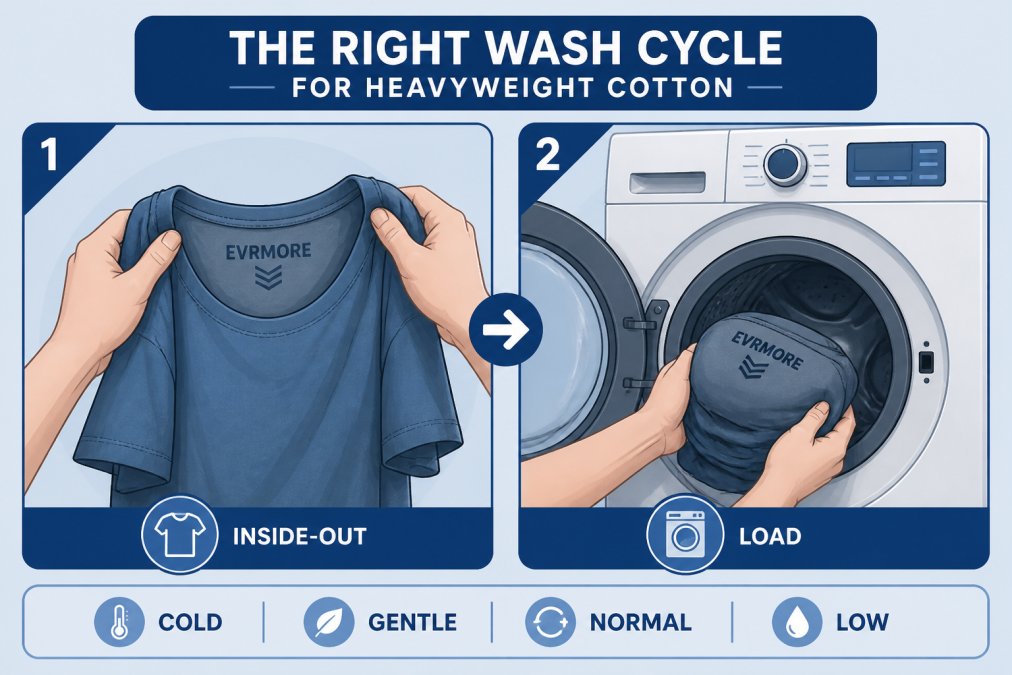
The cycle determines water temperature, agitation level, and spin speed, all of which affect how your garment survives the wash.
Gentle Cycle vs. Regular Wash: What the Difference Means
The gentle cycle uses lower agitation, slower spin speeds, and longer soak times. For heavyweight cotton, the gentle cycle is almost always the better choice.
Heavyweight cotton doesn't need aggressive agitation; the weight of the fabric itself helps water circulate through the weave. A gentle cycle removes dirt effectively while minimizing fiber damage. A slower spin speed removes enough water to prevent excessive drying time while protecting fabric integrity.
Most modern washing machines have a "delicates" or "gentle" setting. Use it.
Turning Garments Inside Out to Preserve Color
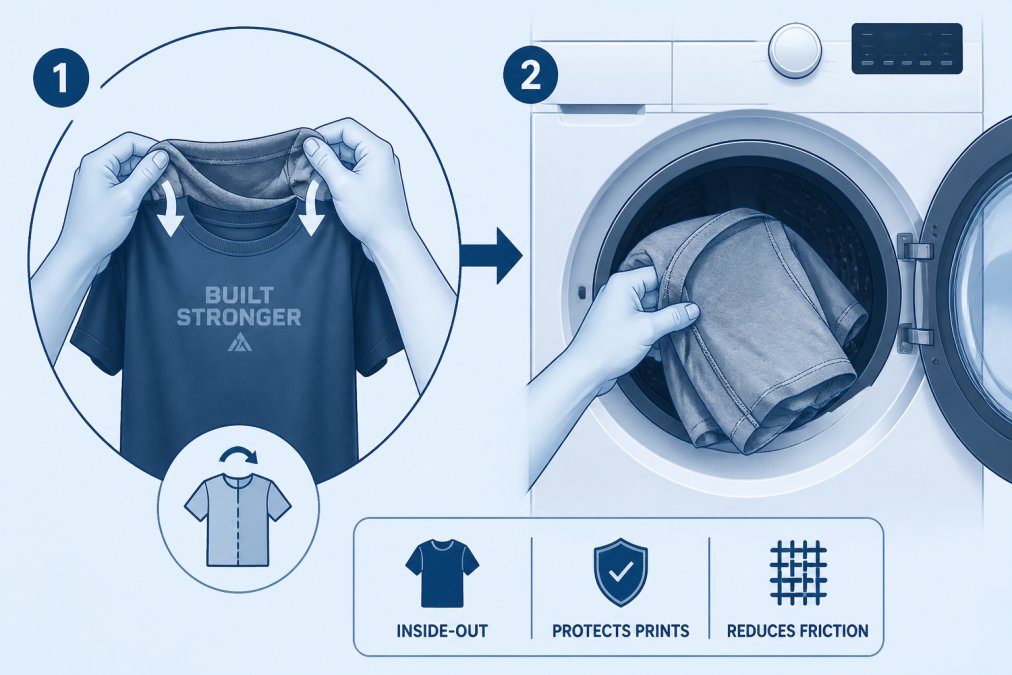
Wash heavyweight cotton inside out. The outside surface experiences the most agitation and friction during the wash cycle. Turning it inside out protects the visible surface, where graphics, color, and detail live. This is especially important for pieces like EVRMORE's Built Stronger tees.

Over two years of weekly wear, the difference between washing inside-out and outside-out is visible.
Air Drying vs. Machine Drying Cotton: Which Method Lasts Longer
Machine drying uses heat and tumbling action to remove moisture. Both damage cotton fibers. Heat causes contraction and can set wrinkles permanently. Tumbling creates friction that weakens fibers and causes pilling.
Air drying removes moisture without heat or mechanical stress. The tradeoff is time: air drying takes 24-48 hours depending on humidity and air circulation. But there's no damage to the garment during this process.
For heavyweight cotton that you want to preserve, air drying is the gold standard. If you must use a machine dryer, use the lowest heat setting and remove the garment while still slightly damp.
The best practice: air dry whenever possible. You can air dry while wearing other pieces. Rotate through your collection and nothing sits unworn for long.
How to Remove Stains from Heavy Cotton Without Damage
Treating Fresh Stains Immediately
Fresh stains, treated within hours, respond to gentle methods. Start with cold water and blot (don't rub). Rubbing pushes the stain deeper into the fiber. Blotting lifts it away.
After blotting, apply a stain treatment. A mild liquid detergent mixed with cold water works for many stains. Apply directly to the stain, let it sit for 10-15 minutes, then rinse with cold water. For protein-based stains (blood, sweat, food), enzyme-based treatments work well.
Once you've treated the stain, wash the garment normally using the gentle cycle in cold water. Don't put it in the dryer until you're sure the stain is gone. Heat will set any remaining stain permanently.
Tackling Set-In Stains on Heavyweight Fabric
Set-in stains require a different approach. Soak the garment in cold water with a stain treatment for several hours or overnight. After soaking, rinse thoroughly and treat again with a stain removal product. Enzyme-based treatments are most effective because they break down the stain molecules.
If the stain persists, consider a second soak or a different treatment product. Patience works better than aggression. For stubborn stains on visible areas, professional dry cleaning may be worth the cost.
Storage and Long-Term Maintenance for Heavyweight Pieces
Fold rather than hang. Heavyweight cotton is heavy, and hanging it for months can stretch the shoulders and neckline. Folding distributes the weight evenly and prevents permanent deformation.
Keep storage areas cool and dry. Moisture encourages mold and mildew. If you live in a humid climate, consider moisture-absorbing products like cedar blocks or silica packets. Avoid plastic storage containers for long-term storage; use breathable fabric storage bags or cardboard boxes instead.
Inspect stored pieces periodically for signs of pilling, loose seams, or odors. Wear your pieces regularly. Heavyweight cotton benefits from regular wear; the fabric softens, colors deepen, and the garment molds to your body.
Repair and Restoration to Keep Your Heavyweight Cotton Strong
Loose seams are the most common repair needed. If you notice a seam starting to separate, address it immediately. A simple hand-stitch repair takes 10 minutes and prevents the tear from spreading. A tailor can repair it for $10-20.
Small holes can be patched with iron-on patches applied to the inside or simple patches sewn on. Fading is not damage; it's character. Pilling can be addressed with a fabric comb or pill remover. Stretched necklines or cuffs can be tightened by a tailor taking in seams.
Don't discard heavyweight cotton just because it needs minor repair. These pieces are designed to last years. Investing in occasional repairs keeps them in your rotation.
Caring for heavyweight cotton properly transforms these garments into long-term wardrobe staples. Cold water washing, gentle cycles, inside-out washing, air drying, and prompt stain treatment aren't complicated, they're habits that compound into visible results over months and years. EVRMORE's heavyweight pieces are constructed to withstand this care and reward it with improved softness, deepened color, and a fit that molds to your body. Start with cold water and inside-out washing. Add air drying to your routine. These two changes alone will extend the life of your heavyweight cotton significantly.
Frequently Asked Questions
How do you wash 100% heavyweight cotton without causing shrinkage?
Wash heavyweight cotton in cold water on a gentle cycle using mild liquid detergent. Turn garments inside out before washing to protect color and graphics. Avoid hot water and bleach, which cause fiber stress and shrinkage. Air dry flat or on a rack instead of using a machine dryer. This combination of cold water, gentle agitation, and air drying preserves the fabric's integrity and prevents the 3-5% shrinkage that can occur with heat exposure.
Does heavyweight cotton shrink in the dryer?
Yes. Machine drying with heat is the primary cause of shrinkage in heavyweight cotton. Even on low heat settings, the combination of tumble dry action and high temperatures can cause significant shrinkage. Cold water washing followed by air drying is the most effective way to prevent shrinkage. If you must use a dryer, remove the garment while still damp and finish drying on a flat surface.
What's the best way to remove stains from heavy cotton garments?
Treat stains immediately by blotting (not rubbing) with cold water and mild liquid detergent. For protein stains like blood or sweat, use cold water; for oil-based stains, pre-treat with a small amount of detergent before washing. For set-in stains on heavyweight fabric, soak in cold water with detergent for 1-2 hours, then wash on a gentle cycle. Avoid bleach and hot water, which can set stains permanently and damage the cotton fibers. Always air dry after treatment to prevent heat from fixing any remaining discoloration.
How often should I wash heavyweight cotton to maintain durability?
Wash heavyweight cotton only when necessary, typically after 2-3 wears for graphic tees or hoodies. Frequent washing accelerates fabric stress and color fading. Spot-clean minor marks between washes, and allow the garment to air out overnight. Reducing wash frequency extends the garment's lifespan significantly while maintaining the bold graphics and structural integrity of the textile weave.
This article was written using GrandRanker

Leave a comment
This site is protected by hCaptcha and the hCaptcha Privacy Policy and Terms of Service apply.