


Using Streetwear to Express Personal Values in 2026
Table of Contents
- Why Streetwear Works for Expressing Personal Values
- Streetwear and Self-Expression: From Subculture to Everyday Wear
- Clothing as a Form of Self-Expression: What Your Outfit Actually Says
- A Values-to-Outfit Framework: How to Build a Streetwear Wardrobe
- Choosing Streetwear That Reflects Your Beliefs: What to Look For
- Ethical, Sustainable, and Inclusive Streetwear Decisions
- Conclusion: Wear What You've Become
- Frequently Asked Questions
Last Updated: October 14, 2026
Why Streetwear Works for Expressing Personal Values
Streetwear has become one of the most direct ways to show the world what you stand for. According to Pew Research Center's report on personal expression, people increasingly treat everyday purchases, including clothing, as statements about who they are and what they believe. That shift matters for anyone rebuilding after hard times.
Clothing as Nonverbal Communication
Nonverbal communication is sending a message without speaking, and clothing is one of its most visible forms. A graphic tee, a color choice, or a silhouette all carry meaning. That is why using streetwear to express personal values works so well: the message travels with you all day, no explanation required.

The Link Between Self-Image and Mental Well-Being
What you wear shapes how you see yourself. Many people in recovery or life transitions find that a deliberate wardrobe helps them hold onto a new identity. A wearable reminder of progress can steady you on a hard morning. The American Psychological Association notes that self-perception and behavior reinforce each other, which is exactly why intentional clothing choices can support real change.
Streetwear and Self-Expression: From Subculture to Everyday Wear
Streetwear started in youth culture and subcultures, where style signaled belonging and rebellion. Skaters, graffiti artists, and hip-hop fans built a shared visual language through their clothing.
That history is useful: streetwear was never just about looking good. It was always about identity, community, and values. When you wear a piece with a message, you join a long tradition of using clothing to declare who you are.
Clothing as a Form of Self-Expression: What Your Outfit Actually Says
Clothing as a form of self-expression turns fabric into a statement. Your outfit communicates mood, values, and self-image at a glance, the trick is making sure the message matches who you have become.
Visual Statements and the Messages They Carry
Every piece carries a message, whether you plan it or not. A bold slogan, a broken-chain graphic, or a muted colorway all say something. The question is whether it is intentional.
Avoiding Contradictory or Performative Messaging
The biggest mistake is wearing a message you do not actually live. A shirt that shouts resilience while your habits stay stuck reads as performative. Pick words and symbols you are actively working toward, not just ones that sound good.
A Values-to-Outfit Framework: How to Build a Streetwear Wardrobe
A values-to-outfit framework turns what you believe into what you wear, keeping your wardrobe honest, cohesive, and easy to build over time.
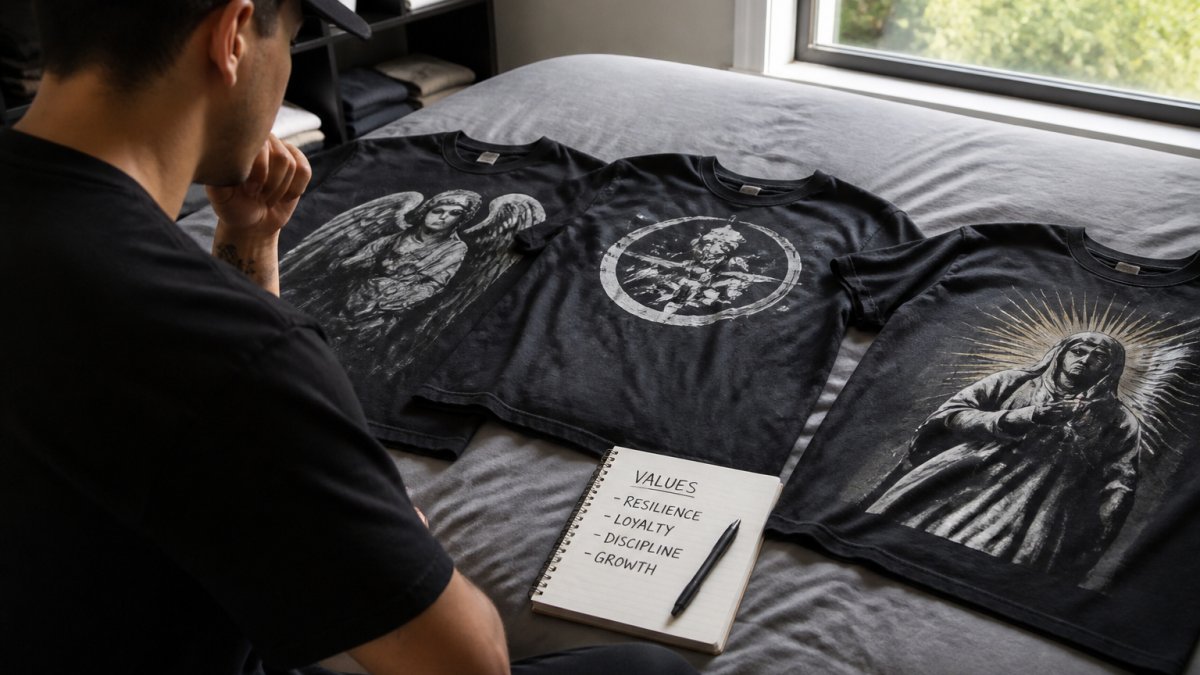
Step 1: Name the Values You Want to Wear
Write down three to five values that define this season of your life. Resilience. Faith. Sobriety. New beginnings. A tight list makes every later decision easier, because you can check each piece against it.
Then rank them by how public you want each one to be, on a 1-5 scale:
- 1 = private. You wear it for yourself. A small interior tag, a tonal print, a color you associate with the value.
- 3 = situational. You wear it in safe rooms, meetings, support groups, close friends.
- 5 = public. You wear it anywhere, including to work or a family dinner.
Ranking prevents the most common mistake: buying a 5-level statement when you wanted a 2, so the shirt sits in a drawer and feels like wasted money.
Step 2: Match Messages to Garments and Colorways
Now connect each value to a garment and a color. Match the intensity of the message to how public you want it to be.
| Public level | Best garment | Best placement | Colorway |
|---|---|---|---|
| 1 (private) | Tee, hoodie, or cap | Small chest hit, sleeve, or interior | Tonal, black-on-black, or a single personal color |
| 3 (situational) | Tee or overshirt | Full front graphic, moderate size | Neutral base with one accent |
| 5 (public) | Heavyweight tee or hoodie | Large front or back print | High-contrast, legible from across a room |
A value like "refusal to look back" fits a tee with a forward-facing message; quiet faith might fit a neutral colorway with a smaller graphic. Garment and colorway should carry as much of the message as the words do.
Step 3: Build Outfits Around One Clear Statement
Let one piece lead and keep the rest simple. One statement tee plus neutral bottoms beats three competing graphics, the difference between intentional and random.
A simple formula you can reuse:
One statement piece + two supporting pieces + one grounding piece.
- Statement piece: the graphic tee, hoodie, or cap that carries your value.
- Supporting pieces: plain bottoms and a plain layer (jacket, overshirt) that do not compete.
- Grounding piece: footwear and a bag or cap in a neutral tone that ties the look together.
Three Worked Outfit Examples
Here is the formula in practice, using the same three-value list: resilience, faith, and new beginnings.
Outfit 1, Public resilience. A heavyweight graphic tee with a bold front print, plain black denim, an open overshirt, and clean low-top sneakers.
Outfit 2, Situational faith. A neutral heavyweight tee with a smaller chest graphic, straight-leg chinos, a zip hoodie worn open, and a matching cap.
Rescued Redeemed Restored Christian Heavyweight Shirt →
A 30-Minute Wardrobe Exercise
Set a timer and do this once to see whether your closet matches your values.
- Write your three to five values on a sheet of paper.
- Pull every piece you wear at least twice a month and lay it out.
- Sort each piece into one of three piles: on-message (it expresses a value), neutral (it supports an outfit without saying anything), and off-message (it contradicts a value or you never wear it).
- Count the piles. A healthy wardrobe is roughly 20-30% on-message, 60-70% neutral, and 10% or less off-message. If your off-message pile is bigger than your on-message pile, you have a clarity problem, not a shopping problem.
- Write down the gaps. If you have no piece that expresses your top value, that is your next purchase. If you have five, you do not need a sixth.
| Step | What You Do | Quick Example |
|---|---|---|
| 1. Name values | List 3-5 core values and rank each 1-5 on how public you want it | Resilience (5), faith (3), new beginnings (1) |
| 2. Match messages | Pair values with garments, placement, and colorways | "Never Looking Back" on a black tee, full front |
| 3. Build outfits | Anchor each look on one statement piece | Statement tee + plain denim + open overshirt |
| 4. Audit | Sort your closet into on-message, neutral, and off-message | 20-30% on-message is a healthy target |
Choosing Streetwear That Reflects Your Beliefs: What to Look For
Choosing streetwear that reflects your beliefs comes down to three things: the message, the construction, and the fit. Get all three right and the piece earns a permanent spot in your rotation.
Check these before you buy:
- Message: Does it match a value on your list?
- Fabric weight: Heavier fabric holds its shape and lasts.
- Construction: Look for a ribbed neckline that will not stretch out.
This is where EVRMORE fits. The Never Looking Back Unisex Graphic Tee ($45.00) carries a broken-chain design and the line "Forward Is The Only Direction." For a faith-forward statement, the Rescued Redeemed Restored Christian Heavyweight Shirt ($45.00) declares "I was lost, now I'm found."

Ethical, Sustainable, and Inclusive Streetwear Decisions
Ethical and sustainable streetwear decisions start with buying less and choosing better. A durable piece you wear for years beats five cheap ones that fall apart, better for your wallet and lighter on the planet. Here is what "buy better" means at the point of purchase.
Read the Material, Not the Marketing
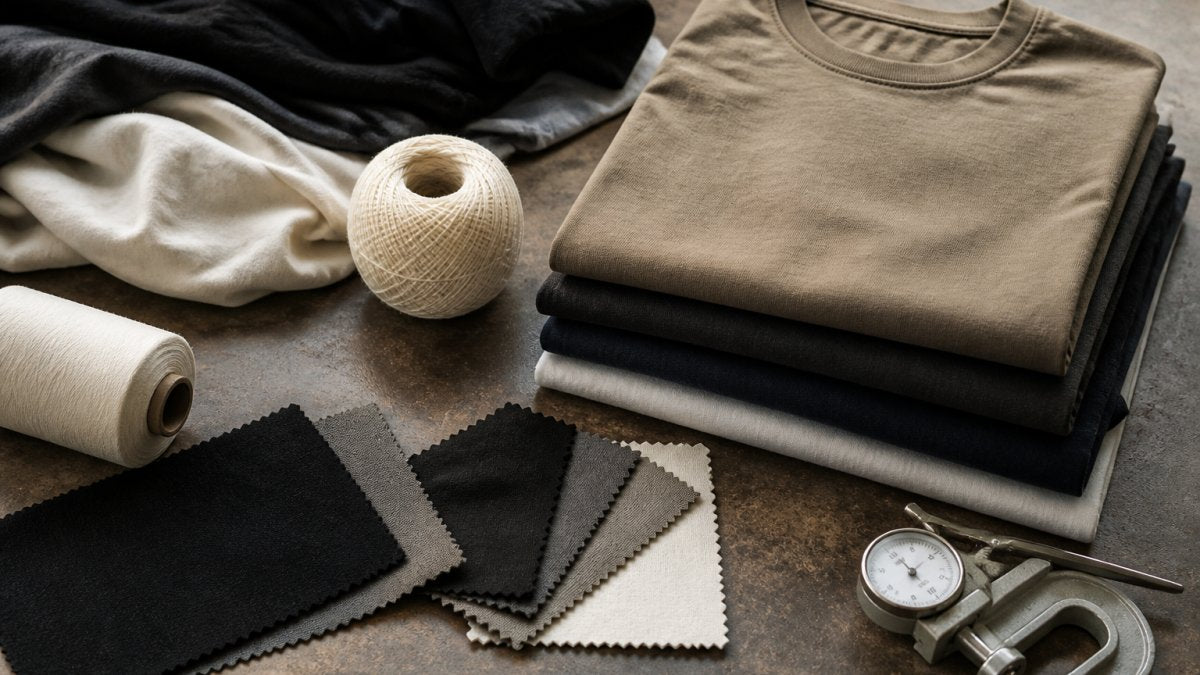
Fiber content tells you more about a garment's real-world life than any hangtag slogan. Practical rules:
- Cotton: Look for a stated weight. A heavyweight cotton tee (roughly 6 oz and up) holds its shape and survives more washes than a thin one. Thin cotton is where most fast-fashion tees fail first, usually at the neckline.
- Cotton blends: A small percentage of polyester or elastane can improve durability and recovery, but a high synthetic share on a "premium" tee is usually a cost shortcut, not a feature.
- Recycled fibers: Recycled cotton and recycled polyester reduce demand for virgin material, but they are not automatically more durable. Treat them as one factor, not the whole decision.
Secondhand and Resale: The Highest-Impact Move
The single biggest sustainability lever is not which new brand you buy, it is how much new product you buy at all. Secondhand and resale channels for streetwear are deep and well organized:
- Local thrift and consignment for basics, denim, and outerwear.
- Online resale marketplaces for specific graphics, vintage pieces, and discontinued colorways.
- Peer-to-peer swaps with friends, which cost nothing and keep garments in circulation.
A common pattern: source neutral, high-wear pieces (plain tees, denim, jackets) secondhand and reserve new purchases for the one or two statement pieces that carry your values, concentrating spend on pieces you will wear weekly.
Labor and Transparency: What to Look For
You will rarely get a full supply-chain disclosure from any brand. What you can look for is whether a brand says anything specific at all:
- Does it name its materials and construction methods, or only its aesthetic?
- Does it describe where and how garments are made, even at a high level?
- Does it publish care and repair guidance, which signals it expects the piece to last?
Vague "ethically made" language is a weak signal; specific, checkable claims are stronger. If a brand cannot tell you anything about how a garment is made, assume the least favorable case.
Inclusivity Across Bodies, Budgets, and Abilities
A wardrobe that expresses your values should work across body types, budgets, and abilities. Concrete checks:
- Sizing range: Look for brands that publish real garment measurements (chest, length, sleeve) rather than only S/M/L labels. Measurements let you buy the fit you want regardless of the size tag.
- Unisex and relaxed cuts: Boxy, dropped-shoulder cuts tend to fit a wider range of bodies than slim, tapered cuts. They also layer better, which extends how many seasons you can wear a piece.
- Budget: You do not need a full wardrobe of statement pieces. One well-made message tee plus neutral basics you already own can carry your values for years. Cost per wear is the number that matters, not sticker price.
Cultural Context and Respectful Use of Symbols
Respectful use of symbols means knowing what a design references before you wear it, easy to overlook, easy to get wrong.
- Research the reference. If a graphic borrows from a specific culture, religion, or subculture, find out what it means to the people it comes from before you wear it.
- Check the source. Was the design made with or by members of that culture, or borrowed without credit?
- Ask the test question. If you cannot explain the meaning of a symbol to someone who asks, leave it on the rack.
A few practical rules we follow:
- Buy pieces you can wear at least once a week.
- Check the care instructions and follow them to extend the life of the garment.
- Choose brands that explain their materials and construction.
Conclusion: Wear What You've Become
Using streetwear to express personal values only works when the message is true. Name your values, match them to garments, and build each outfit around one clear statement.
EVRMORE builds premium streetwear for people who have come through hard things and refuse to look back. Our heavyweight construction is made for everyday wear, our boxy dropped-shoulder cut keeps you comfortable, and our message-driven designs let your values do the talking.
Frequently Asked Questions
How can I use clothing to express my personal values?
Start by writing down two or three values you want visible, then match each one to a garment. A heavyweight graphic tee with a clear message does the work in one piece. Keep the rest of the outfit neutral so the statement reads clean. EVRMORE's Built Stronger Tee in Black ($45.00) pairs a white chest graphic with a boxy cut, so the message carries without competing with your other layers.
How can I make a streetwear outfit feel authentic to me?
Wear pieces tied to something you actually lived through, not just what looks good online. If a message references a chapter you haven't experienced, it reads as costume. Pick one statement garment, like the Never Looking Back Unisex Graphic Tee ($45.00), and build around it with basics you already own. Fit matters too: order your usual size in a boxy cut for the relaxed look, or size up for more room.
Do I have to wear a bold message to express my values?
No. Subtle expression works just as well, especially early in a transition. A neutral colorway with a smaller front hit lets you carry meaning without announcing it. The Built Stronger Tee in Vintage Pearl ($45.00) uses a light base with a bold front hit and a full back statement graphic, so the message is there when you want it and quieter from the front.
How do I keep a streetwear wardrobe from turning into impulse buys?
Set a rule before you shop: every new piece has to name a value you already listed. That filter kills most impulse purchases. Buy fewer, heavier garments. A super-heavyweight tee with a structured drape, like the Rescued Redeemed Restored Christian Heavyweight Shirt ($45.00), holds its shape through repeated washes, so you replace it less often than a thin blank.


Leave a comment
This site is protected by hCaptcha and the hCaptcha Privacy Policy and Terms of Service apply.