

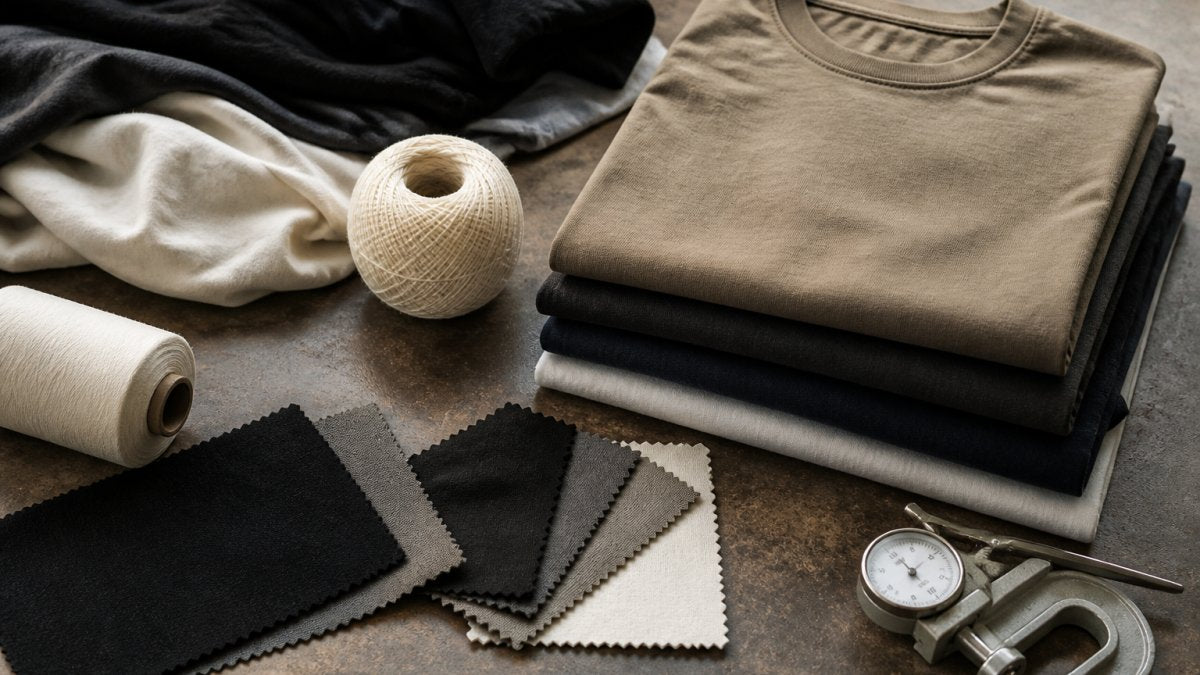
Best Fabrics for Durable Streetwear Tees
Table of Contents
- What Makes a Fabric Durable Enough for Streetwear Tees
- T-Shirt Fabric Weight and GSM: What the Numbers Actually Mean
- The Most Durable Fabric for T-Shirts: Cotton, Blends, and Trade-Offs
- Ring-Spun Cotton vs. Regular Cotton: Why the Spin Matters
- The Best T-Shirt Fabric for Screen Printing and Embroidery
- How to Care for Heavyweight Tees So They Outlast Fast Fashion
- Matching Fabric to Use Case: A Decision Framework
- Conclusion: Choose Fabric Like You Choose What You Wear It For
- Frequently Asked Questions
Last Updated: October 15, 2026
What Makes a Fabric Durable Enough for Streetwear Tees
The best fabrics for durable streetwear tees are heavyweight ring-spun cotton and cotton-polyester blends: fabric weight, fiber length, knit structure, and finishing decide how long a durable streetwear tees pick survives real wear.
At EVRMORE, we build every tee on that principle: a heavy blank first, the message second. This guide covers what makes a fabric last, from GSM to spin type to print compatibility.
The Four Factors That Decide How Long a Tee Lasts
Four variables determine whether a tee lasts two years or two months:
- Fabric weight (GSM or oz): heavier knit means more yarn per square inch and slower wear-through.
- Fiber length: long-staple cotton resists pilling and surface abrasion far better than short-staple.
- Knit structure: tighter, denser jersey holds shape; loose knits stretch at the neck and hem.
Change any one and the garment's lifespan shifts, which is why two tees at the same price can perform completely differently.
T-Shirt Fabric Weight and GSM: What the Numbers Actually Mean
Fabric weight is measured in GSM (grams per square meter) or ounces per square yard, and tells you how much yarn is packed into the cloth. More yarn means more material to wear through.
| Weight Class | Typical GSM | Typical Oz | Feel | Best For |
|---|---|---|---|---|
| Lightweight | 120-150 GSM | 3.5-4.5 oz | Thin, clingy | Layering, warm climates |
| Midweight | 150-190 GSM | 4.5-5.6 oz | Standard tee feel | Everyday basics |
| Heavyweight | 190-240 GSM | 5.6-7 oz | Substantial, structured | Streetwear, durability |
| Super-heavyweight | 240+ GSM | 7-9+ oz | Thick, firm drape | Statement tees, long wear |
Most fast-fashion tees sit in the lightweight range, the single biggest reason they wear out fast.
A 9 oz ring-spun cotton/poly tee, like the one we use for our Oversized Heavyweight Streetwear Tee - Built Stronger, sits at the top of that scale, the difference between a tee that survives a hundred washes and one that goes thin by twenty.

The Most Durable Fabric for T-Shirts: Cotton, Blends, and Trade-Offs
The most durable fabric for t-shirts is a heavyweight cotton-polyester blend, because polyester adds abrasion resistance and shape retention pure cotton can't match.
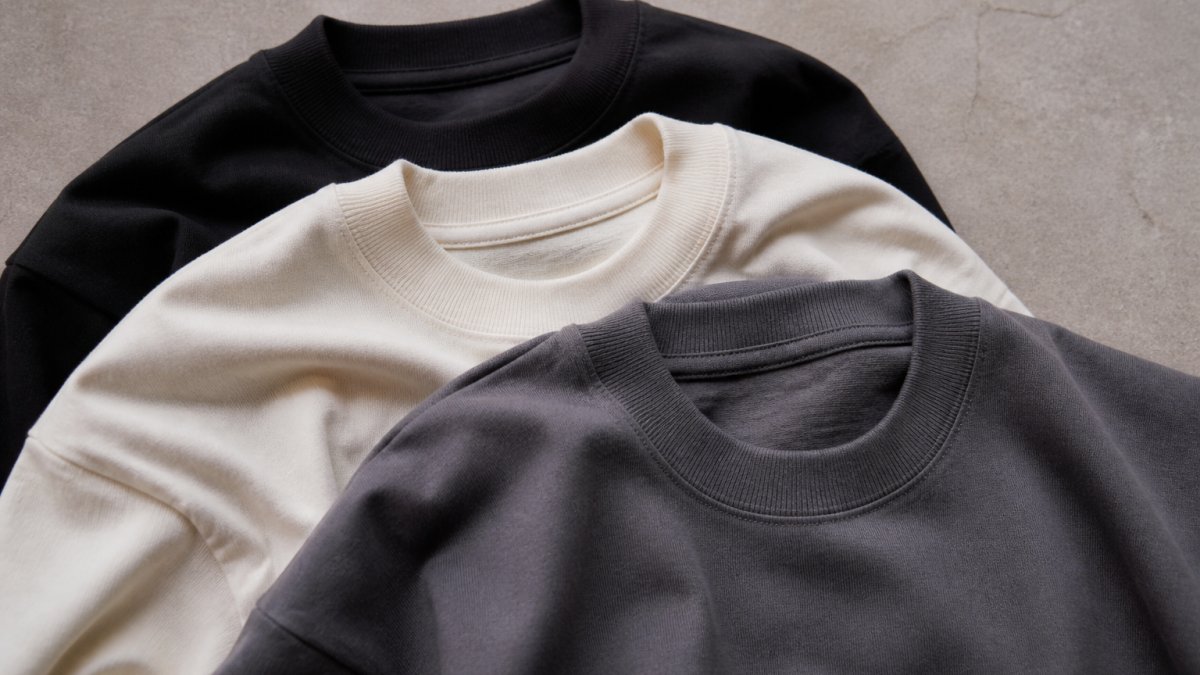
100% Cotton: Combed, Ring-Spun, and Long-Staple
Not all cotton is equal. The processing and fiber length change everything:
- Open-end cotton: short fibers, rougher surface, prone to pilling. Cheap and common in budget tees.
- Combed cotton: short fibers combed out before spinning, leaving smoother, stronger yarn.
- Ring-spun cotton: spun to align fibers tightly, producing a softer, denser, more durable yarn.
Long-staple ring-spun cotton is the gold standard for a cotton-only tee, and costs more because the raw fiber does.
Cotton-Polyester Blends and Other Fibers
Blending cotton with polyester is the practical durability play. Polyester fibers are strong, resist stretching, and hold dye well. A 50/50 or 60/40 cotton-poly blend resists shrinkage, wrinkling, and abrasion better than pure cotton.
Other fibers show up in streetwear too, each with a trade-off:
- Hemp: very strong and abrasion-resistant, but coarser and pricier.
- Nylon: adds stretch and toughness, often in small percentages.
- Tri-blends (cotton/poly/rayon): extremely soft, but rayon weakens the fabric over time.
For hard wear over years, a heavyweight cotton-poly blend is the safest bet; for a tee you want to print on and keep crisp, long-staple cotton is the better canvas.
Ring-Spun Cotton vs. Regular Cotton: Why the Spin Matters
Ring-spun cotton is made by twisting and thinning fibers continuously as they spin, aligning them into a tight, strong, smooth yarn. Regular cotton, usually open-end spun, is made faster and cheaper, leaving a rougher yarn with more exposed fiber ends.
That difference shows up in three ways:
- Softness: ring-spun feels smoother against skin from day one.
- Strength: tighter yarn resists tearing and thinning at stress points.
- Pilling: fewer loose fiber ends mean fewer pills after repeated washing.
The trade-off is cost: ring-spinning takes more time and yields less yarn per hour, so ring-spun tees cost more to make. You feel that difference most at the collar and hem, where cheap tees fail first.
The Best T-Shirt Fabric for Screen Printing and Embroidery
Decoration method and fabric choice are not independent. The same heavyweight tee that screen prints beautifully can pucker under dense embroidery, and a soft tri-blend can reject a heat transfer within a dozen washes. Match the method to the fabric before committing to a production run.
Here is how the major decoration methods behave across the fabrics most common in streetwear tees:
Oversized Heavyweight Streetwear Tee – Built Stronger →
| Decoration Method | Best Fabric Match | Works Acceptably | Avoid | Primary Failure Mode |
|---|---|---|---|---|
| Screen printing (plastisol) | Heavyweight ring-spun cotton, high-cotton blends | Midweight ring-spun, combed cotton | Open-end cotton, loose knits | Ink cracking at stretch points; uneven coverage on rough surfaces |
| Screen printing (water-based) | Combed or ring-spun cotton | High-cotton blends | High-polyester blends | Dye migration and muted color on synthetics |
| Direct-to-garment (DTG) | 100% ring-spun cotton, tight knit | High-cotton blends with pretreatment | Open-end cotton, tri-blends | Fading and wash-out on loose or high-poly surfaces |
| Direct-to-film (DTF) | Heavyweight cotton and cotton-poly blends | Midweight ring-spun | Very loose knits | Edge lifting when the fabric stretches under the film |
| Heat transfer / vinyl | Cotton-poly blends, tight jersey | Heavyweight cotton | Tri-blends, loose knits | Peeling at edges; scorching on heat-sensitive fibers |
| Embroidery | Heavyweight cotton, cotton-poly blends, French terry | Midweight ring-spun | Tri-blends, lightweight jersey | Puckering, needle holes, and sagging under stitch weight |
A few mechanisms explain most outcomes:
- Surface smoothness. Screen printing and DTG rely on ink sitting evenly across the fabric face. Ring-spun and combed cotton present a flatter surface than open-end cotton, whose protruding fiber ends create uneven ink deposit and a mottled look.
- Fabric stability under heat. Screen printing and heat transfers cure at high temperatures. Cotton-poly blends hold their dimensions; pure cotton can shrink slightly, and high-poly blends can scorch or develop dye migration.
- Stretch and recovery. Dense embroidery needs a fabric that won't move under the needle. Tri-blends and lightweight jerseys stretch, so stitches pull the fabric into puckers and leave visible needle holes.
Practical guidance by method:
- Screen printing large runs. Choose heavyweight ring-spun cotton or a high-cotton blend. Water-based inks look best on 100% cotton; plastisol is more forgiving across blends.
- DTG for small runs and photo-realistic art. Stick with 100% ring-spun cotton and a tight knit. Pretreatment matters as much as the fabric, a poorly pretreated heavyweight tee can still produce a dull, short-lived print.
- DTF for detailed, multi-color art without minimums. Heavyweight cotton and cotton-poly blends both work; avoid loose knits where the film lifts at the edges.
The throughline: the heavier and smoother the fabric, the more decoration methods it accepts and the longer the decoration survives. Match the method to the fabric, then test before you scale.
How to Care for Heavyweight Tees So They Outlast Fast Fashion
Care practices decide whether a good tee lasts two years or ten, the fabric only gets you halfway. What most care guides skip is the mechanism: why each habit matters and what it costs when you ignore it.
What Actually Happens in the Wash
- Heat breaks down cotton fibers. Hot water and high dryer temperatures accelerate hydrolysis of cellulose, the polymer that gives cotton its strength. Over repeated cycles, fibers thin and the fabric loses body.
- Mechanical agitation causes abrasion. Dryer tumbling plus friction from other garments wears down the knit surface, causing pilling and surface fuzz.
- Detergents and additives leave residue. Fabric softener coats fibers in a waxy film that reduces breathability and can interfere with print adhesion. Bleach oxidizes dyes and weakens fibers.
A Care Routine Built Around Those Mechanisms
- Wash cold, inside out. Cold water slows fiber degradation and dye loss; turning the tee inside out protects the print from abrasion.
- Use a gentle cycle with like colors. Less agitation means less surface wear, and washing darks together reduces dye transfer.
- Skip the dryer, or use low heat. Tumble drying is the leading cause of shrinkage and collar deformation; air drying preserves shape and print integrity.
What to Expect Over Time
A heavyweight ring-spun cotton tee cared for with cold washes and air drying holds its shape, color, and print far longer than a lightweight tee given the same treatment. The difference compounds: a heavier knit has more material to lose before it looks worn, and a gentler routine slows that loss.
A few realistic expectations, based on common industry experience:
- Shrinkage. Most cotton tees shrink a small amount on the first wash, typically in the low single digits as a percentage of length. Pre-shrunk and garment-dyed blanks shrink less. Cotton-poly blends shrink less than pure cotton.
- Color. Dark dyes fade gradually with repeated washing. Cold water and inside-out washing slow this noticeably.
- Prints. Screen prints and DTF prints that are washed cold and air dried commonly outlast the same prints washed hot and tumble dried.
The care routine compounds the durability built into the fabric. A well-made heavyweight tee treated well can stay in rotation for years; the same tee treated carelessly can look tired within a season.
Matching Fabric to Use Case: A Decision Framework
Different wearers need different fabrics. Use this framework to pick:
| If You... | Choose | Why |
|---|---|---|
| Wear the same tee daily | Heavyweight cotton-poly blend | Abrasion resistance and shape retention |
| Want the best print surface | Heavyweight ring-spun cotton | Smooth, even ink adhesion |
| Need breathability in heat | Midweight long-staple cotton | Lighter, more air movement |
| Want subtle, understated style | Muted heavyweight tee (Slate, Bone) | Quiet message, strong construction |
| Want a bold statement piece | Heavyweight tee with full front/back print | Structured canvas holds bold graphics |
| Are building a small brand | Heavyweight blanks, tested decoration | Lower return rates, better reviews |
The pattern is simple: match weight and fiber to how hard you'll wear the tee, and construction to how you'll decorate it.
Our Never Looking Back Unisex Graphic Tee in Black or Bone and our Rescued Redeemed Restored Christian Heavyweight Shirt both sit in the heavyweight tier for exactly this reason: built to be worn, washed, and worn again without losing their shape or their message.

Conclusion: Choose Fabric Like You Choose What You Wear It For
Picking a durable tee isn't about chasing the single heaviest number. It's about matching weight, fiber, spin, and construction to how you actually live in the garment.
That's the standard we hold at EVRMORE.
If you're rebuilding and want apparel that lasts as long as the mindset behind it, start with a tee that was made to be worn hard. Add to cart and wear something built to stay.

Frequently Asked Questions
What is the most durable fabric for t-shirts?
A heavyweight ring-spun cotton or a cotton-polyester blend in the 6 to 9 oz range holds up best. The tighter knit structure and longer fibers resist abrasion and pilling better than open-end cotton or thin jersey. Blends add shape retention, which keeps the neckline and shoulders from stretching. For durable streetwear tees, look for fabric weight above 6 oz and a ribbed collar that holds its form after repeated washing.
What fabric weight is best for a durable t-shirt?
For everyday durability, 6 to 7 oz (roughly 200 to 240 GSM) is a solid baseline. Heavyweight streetwear tees often land at 8 to 9 oz (270 to 300 GSM), which gives a thicker hand feel and better resistance to wear. Anything under 5 oz tends to be too thin for daily rotation and shows pilling faster. Check the GSM or oz spec before buying if longevity matters to you.
Does 100% cotton last longer than polyester?
Not necessarily. Polyester fibers are strong and resist abrasion, but they hold odor and can pill. Cotton feels better against skin and breathes well, but it shrinks and can lose shape without a blend. A cotton-polyester blend often outperforms both for durability because it combines cotton's comfort with polyester's shape retention. For durable streetwear tees, a blend in the 50-50 to 60-40 range is a practical middle ground.
Is heavyweight cotton better for streetwear tees?
Yes, for most streetwear use cases. Heavyweight cotton (8 oz and up) holds a boxy silhouette, drapes with structure, and resists the sagging that plagues lighter fabrics. It also prints better because the thicker surface absorbs ink without bleeding. The trade-off is warmth and slower drying, so if you run hot or live in a humid climate, a 6 to 7 oz ring-spun cotton or a cotton-poly blend may serve you better.
Are cotton-polyester blends more durable than 100% cotton?
In most wear tests, yes. Blends resist shrinkage, hold color longer, and keep their shape through repeated washing better than 100% cotton. The polyester content adds tensile strength and reduces pilling. The downside is breathability and a slightly less natural hand feel. If you want a tee that looks the same after 50 washes as it did on day one, a cotton-poly blend is the safer bet for durable streetwear tees.


Leave a comment
This site is protected by hCaptcha and the hCaptcha Privacy Policy and Terms of Service apply.