

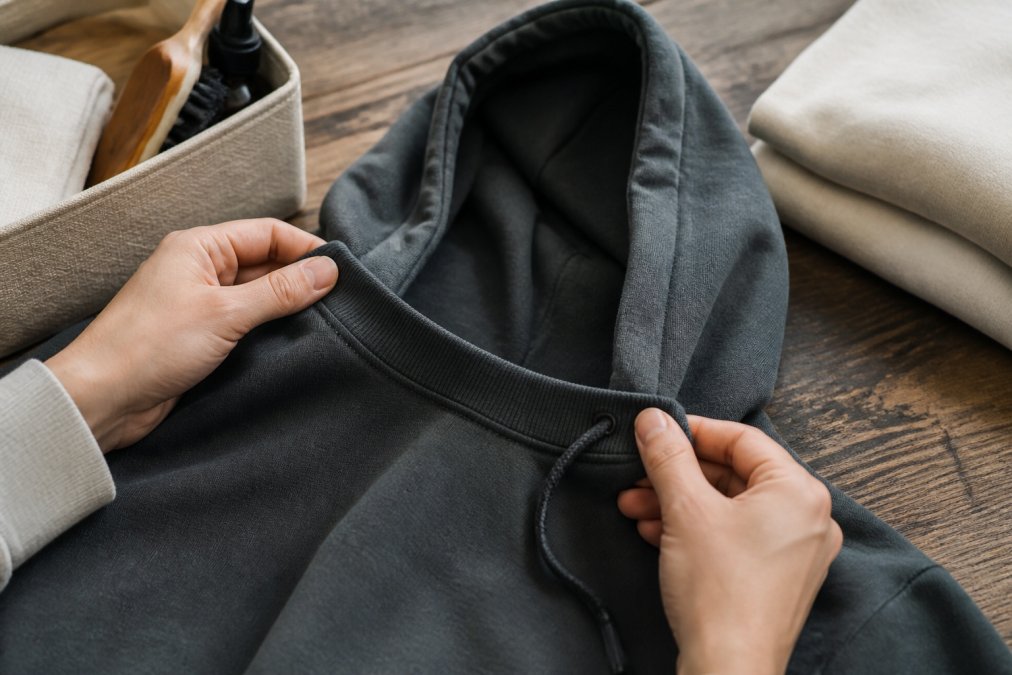
How to Prevent Hoodie Neckline Sagging: 7 Proven Methods
Table of Contents
- Why Hoodie Necklines Sag: Understanding the Problem
- How to Wash Hoodies Without Stretching the Neckline
- How to Hang Hoodies Properly to Maintain Neckline Shape
- Pre-Washing Techniques to Protect Your Hoodie Neckline
- How to Shrink Hoodie Collar and Restore Original Fit
- Reinforcement Methods for Long-Lasting Neckline Integrity
- Common Mistakes That Cause Neckline Sagging
- Conclusion
Last Updated: August 12, 2026
Why Hoodie Necklines Sag: Understanding the Problem
Hoodie necklines sag because the fabric loses its elasticity over time. The ribbed knit that forms the neckline is engineered to stretch and recover, but repeated washing, heat exposure, and the weight of the fabric itself gradually wear down those fibers. Understanding why this happens is the first step to preventing it.
The neckline of a hoodie bears constant stress. Every time you pull the hoodie over your head, you're stretching the fabric. When you wash it in hot water or toss it in the dryer, the fibers relax and don't always bounce back to their original shape. If the hoodie sits on a hanger for weeks, gravity pulls at the neckline continuously.
Most people don't realize that the way they care for a hoodie after purchase determines whether the neckline stays fitted or becomes a drooping collar. This isn't a manufacturing flaw, it's a care problem. The good news is that several proven methods can prevent hoodie neckline sagging entirely, and even reverse some damage if it's already started.
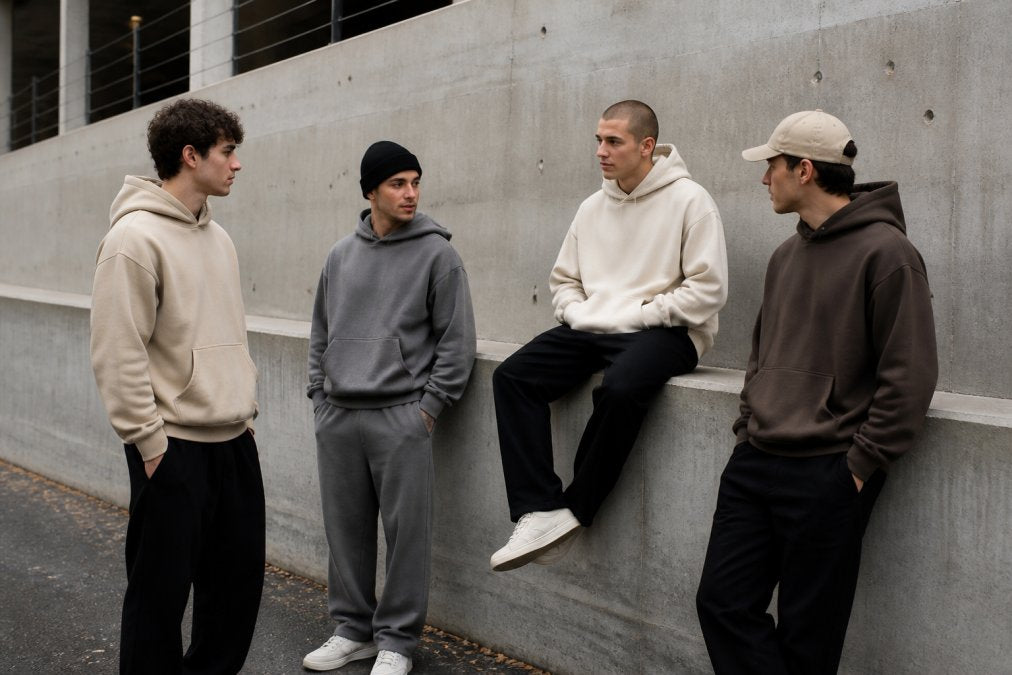
At EVRMORE, we design hoodies with heavyweight fabric and reinforced construction specifically to resist this kind of wear. But even premium hoodies need proper care to maintain their shape. The techniques below work for any quality hoodie, including our Built Stronger Hoodie in original French Terry.

How to Wash Hoodies Without Stretching the Neckline
The washing process is where most neckline damage happens. Hot water relaxes fibers, agitation stretches them, and improper drying allows them to set in a stretched position.
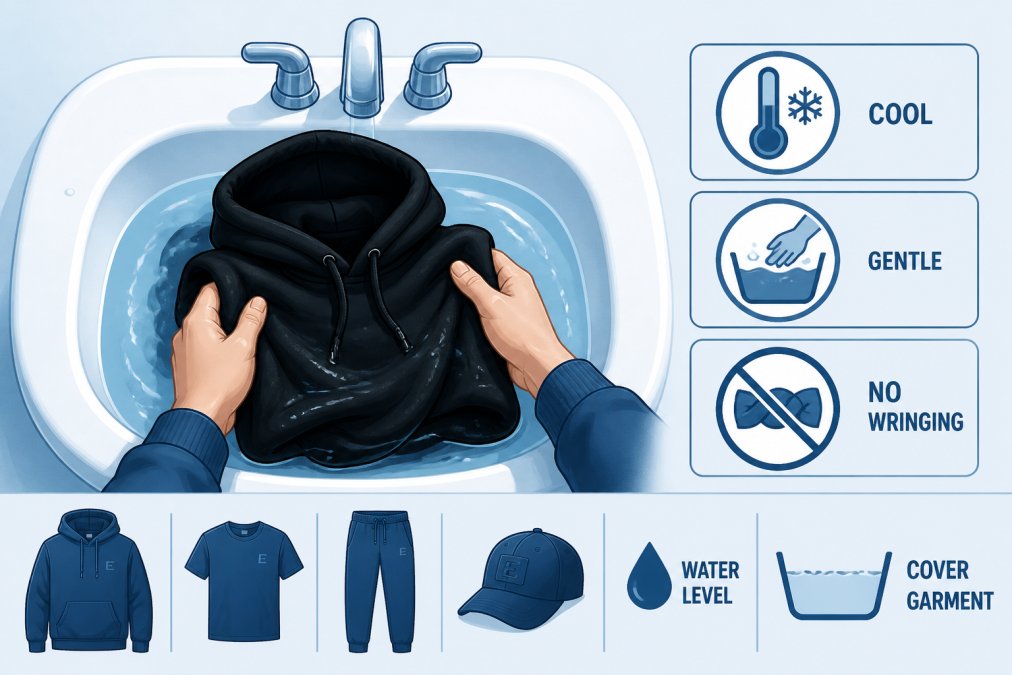
Wash your hoodies in cold water on a gentle or delicate cycle. Cold water preserves elasticity in the ribbed knit, while gentle cycles minimize agitation that pulls at the neckline fibers. This single step prevents more neckline sagging than any other washing habit.
Turn the hoodie inside out before washing. This protects the outer fabric and neckline from direct friction against the washing machine drum. The inside-out position also reduces the force applied to the neckline's facing and seams.
Use a mesh laundry bag if you're machine washing. Place the hoodie inside the bag to create a barrier between the garment and the agitation. This is especially important for hoodies with delicate graphics or messaging, like those from EVRMORE's collection.

Avoid fabric softeners and bleach. Softeners break down the elastic fibers in the ribbed knit, making the neckline more prone to sagging. Bleach degrades synthetic and natural fibers alike. Use a mild detergent designed for delicate fabrics instead.
Never wring the hoodie to remove water. Wringing twists the neckline and stretches it beyond its normal shape. Instead, gently squeeze water out by hand, or roll the hoodie in a clean towel to absorb moisture.
How to Hang Hoodies Properly to Maintain Neckline Shape
How you store a hoodie between wears matters as much as how you wash it. Improper hanging stretches the neckline through constant gravitational stress.
Use a padded or wooden hanger, never a thin wire hanger. Thin hangers concentrate pressure on a small area of the shoulder seam, which pulls the neckline downward over time. A padded hanger distributes weight evenly across the shoulder, reducing stress on the neckline.
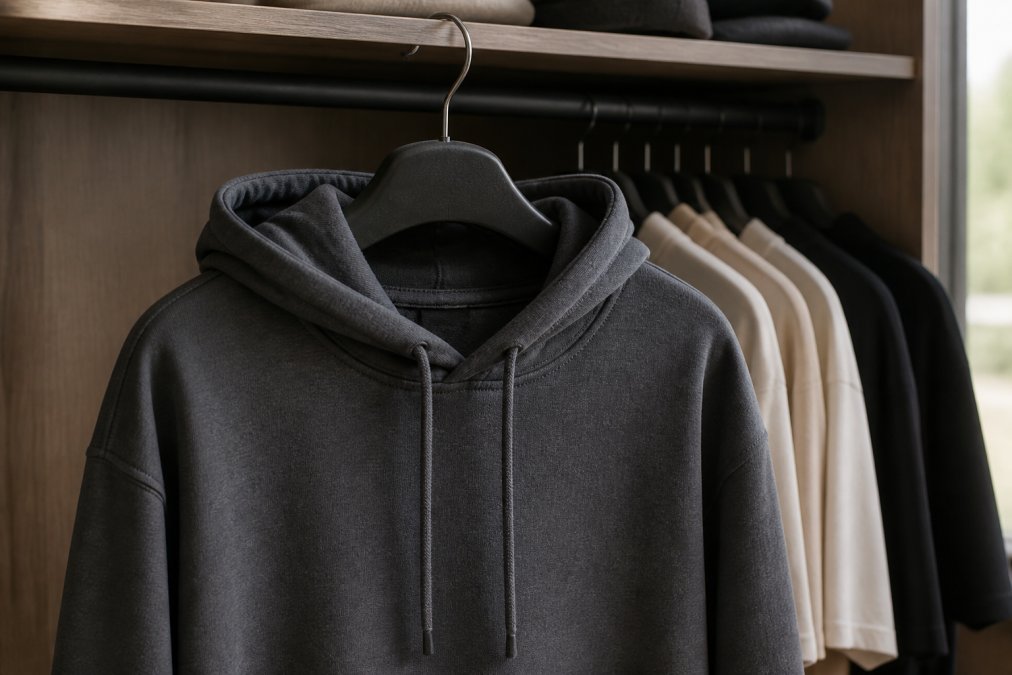
Hang the hoodie horizontally across the hanger rather than vertically. Vertical hanging creates a constant downward pull on the neckline. Horizontal hanging, where the body of the hoodie rests across the hanger bar, distributes the weight across the entire shoulder seam instead of concentrating it at the neckline.
Some people fold hoodies instead of hanging them. Folding is actually a better option if you have shelf space, because it eliminates gravitational stress entirely. If you do fold, fold along the seams to avoid creasing the graphic or messaging on the front.
Store hoodies in a cool, dry place away from direct sunlight. Heat and UV exposure can degrade elastic fibers in the ribbed knit, making the neckline more prone to stretching. A closet shelf or drawer is ideal.
Pre-Washing Techniques to Protect Your Hoodie Neckline
Before you wash a new hoodie, prepare the neckline to resist future stretching. These preventative steps are quick but highly effective.
Stay-stitch the neckline seam before the first wash. Stay-stitching is a reinforcement technique where you sew a line of stitches just inside the original seam, parallel to it. This stabilizes the neckline and prevents it from stretching during washing and wear. Use a needle and thread that matches the hoodie color, and sew about 1/8 inch inside the original seam line. You don't need to be precise, the goal is reinforcement, not perfection.
Use cotton twill tape as a facing reinforcement. Cut a strip of cotton twill tape to match the length of the neckline seam. Hand-stitch or machine-stitch the tape to the inside of the neckline, covering the seam allowance. The tape adds structural integrity and prevents the ribbed knit from stretching out of shape.
Wash the hoodie in cold water before wearing it. This pre-wash allows the fabric to relax slightly and set its shape before you start wearing it regularly. A single cold-water wash removes any excess dye and prepares the fibers for repeated wear.
If your hoodie has a drawstring, tie it loosely during the first few washes. A loose drawstring prevents the neckline from being pulled too tightly, which can distort the ribbed knit. After a few washes, you can adjust the drawstring to your preferred fit.
How to Shrink Hoodie Collar and Restore Original Fit
If your hoodie neckline has already started to sag, you can shrink it back to its original fit. This works best if the sagging is mild to moderate.
Use hot water and a dryer on high heat to shrink the neckline. Heat causes synthetic and natural fibers to contract. Wash the hoodie in hot water on a normal cycle, then dry it on high heat. The combination of heat and agitation will shrink the ribbed knit slightly. This technique works best for hoodies made from cotton blends or polyester.
Be cautious with this method. Too much heat can damage the hoodie's overall fit and may cause uneven shrinking. Test this on a hoodie you're less attached to first, or try it on just the neckline by soaking the collar area in hot water and air-drying it in the sun.
For a more controlled approach, soak only the neckline in hot water for 10-15 minutes. Use a small basin or sink filled with water heated to about 140 degrees Fahrenheit. Submerge just the neckline area, not the entire hoodie. After soaking, gently squeeze out the water and lay the hoodie flat to dry. The heat will shrink the ribbed knit without affecting the rest of the garment.
Air-dry the hoodie in the sun after heat treatment. Sunlight provides additional heat and UV exposure that can help set the shrinkage. Lay the hoodie flat on a clean surface or hang it loosely on a hanger. Check it every 30 minutes to ensure even drying.
Allow the hoodie to cool completely before wearing or storing it. Putting on a warm hoodie immediately after heat treatment can re-stretch the neckline before the fibers have fully set.
Reinforcement Methods for Long-Lasting Neckline Integrity
Beyond washing and storage, several reinforcement techniques can extend the life of your hoodie neckline and prevent sagging altogether.
Reinforce the neckline seam with a second row of stitching. Use a sewing machine or needle and thread to sew a parallel line of stitches 1/4 inch away from the original seam, on the inside of the hoodie. This distributes stress across two seams instead of one, significantly reducing the risk of stretching.
Add elastic thread to the neckline seam. Elastic thread is thinner than regular thread and provides extra recovery power. Wind elastic thread onto the bobbin of your sewing machine and sew a line of stitches along the inside of the neckline seam. The elastic thread will help the neckline snap back to its original shape after stretching.
Use a narrow strip of elastic fabric as a reinforcement band. Cut a piece of elastic fabric (like elastic from old swimwear or athletic wear) to match the neckline length. Sew it to the inside of the neckline seam, stretching it slightly as you sew. This adds structural support and recovery power to the neckline.
Consider a neckline binding if the hoodie is showing signs of wear. Binding is a fabric strip that wraps around the neckline, covering and reinforcing the original seam. You can purchase pre-made binding or cut your own from stretchy fabric. Sew the binding around the neckline on the inside, then fold it to the outside and stitch it down again. This creates a durable, professional-looking finish that resists stretching.
These reinforcement methods work best when applied to a new hoodie, before any sagging has occurred. However, they can also help stabilize a hoodie that's already showing minor neckline issues.
Common Mistakes That Cause Neckline Sagging
Most people don't realize they're damaging their hoodie necklines through everyday habits. Recognizing these mistakes is the fastest way to prevent sagging.
Using the dryer on high heat is the most common mistake. High heat relaxes elastic fibers and sets them in a stretched position. If you use a dryer at all, use low heat or air-dry instead. Many people assume that a dryer won't damage a hoodie, but repeated high-heat drying is one of the leading causes of neckline sagging.
Hanging hoodies on thin hangers for months at a time creates constant downward stress. The thin wire concentrates all the hoodie's weight on a tiny point, pulling the neckline down. Padded hangers or folding is far better.
Pulling the hoodie over your head roughly stretches the neckline. Every time you yank a hoodie over your head quickly, you're stretching the ribbed knit. Pull more gently, or consider unzipping the hoodie before pulling it on if it's a pullover style.
Washing in hot water with regular detergent breaks down elastic fibers. Hot water opens up the fiber structure, and regular detergents can leave residue that prevents proper recovery. Cold water and delicate detergent are essential.
Storing hoodies in a damp environment allows mold and mildew to grow, which degrades fibers. Store in a cool, dry place only.
Ignoring small signs of sagging until it's severe. Once a neckline has stretched significantly, it's much harder to restore. Address minor sagging immediately using the shrinking techniques described above.
Washing hoodies with heavy items like jeans or towels causes excessive agitation. The friction from heavier fabrics pulls at the delicate neckline. Wash hoodies separately or with other lightweight garments.
Not turning the hoodie inside out before washing exposes the neckline to direct friction. This single habit causes more damage than most people realize.
Preventing hoodie neckline sagging comes down to understanding the stress points and protecting them consistently. Cold water washing, gentle handling, proper hanging, and strategic reinforcement are the foundation of long-lasting neckline integrity. EVRMORE hoodies are built with heavyweight construction and durable ribbed knits specifically designed to withstand these stresses, but every hoodie, regardless of brand, benefits from the care methods outlined here. Start with the washing and storage techniques, and your hoodie will maintain its fit for years. If sagging has already started, the shrinking and reinforcement methods can restore the neckline to its original shape. The key is consistency: treat your hoodie as an investment, not a disposable garment, and it will serve you well.
| Prevention Method | Best For | Effort Level | Results Timeline |
|---|---|---|---|
| Cold water washing | All hoodies | Minimal | Immediate (prevents future sagging) |
| Padded hangers | All hoodies | Minimal | Immediate (prevents future sagging) |
| Stay-stitching neckline | New hoodies | Moderate | Prevents sagging indefinitely |
| Hot water shrinking | Mild sagging | Low | 1-2 washes |
| Cotton twill tape reinforcement | New hoodies | Moderate | Prevents sagging indefinitely |
| Elastic thread reinforcement | New hoodies | Moderate | Prevents sagging indefinitely |
Frequently Asked Questions
Why does my hoodie neckline get stretched out after a few washes?
Hoodie necklines stretch due to friction during washing, improper drying methods, and the natural weight of wet fabric pulling downward. Stretch fabrics like cotton-blend and French terry are especially prone to this. The neckline facing, the reinforced edge, weakens over time if not cared for properly. Using hot water, aggressive washing cycles, and hanging wet hoodies all accelerate stretching. Heavy-duty fabrics like those used in EVRMORE's Built Stronger Hoodie resist this better, but proper care extends the life of any neckline.
Can you shrink a stretched-out hoodie neckline back to its original size?
Yes, you can partially restore a stretched neckline through controlled shrinking. Wash the hoodie in hot water on a gentle cycle, then dry on medium heat for 10-15 minutes to trigger shrinkage in the fabric. For stubborn sagging, try steam pressing the neckline facing from the inside out. However, prevention is far more effective than restoration, once the facing is distorted, complete recovery is difficult. Start with proper care techniques to avoid reaching this point.
Does hanging hoodies cause neckline sagging?
Hanging can cause sagging if done incorrectly. Hanging by the neckline or using thin wire hangers concentrates the garment's weight on that small area, stretching it permanently. Instead, use padded or wooden hangers and hang hoodies by the shoulders, supporting the garment horizontally. Alternatively, fold hoodies flat in drawers to eliminate hanging tension entirely. This is especially important for heavyweight hoodies, which exert more downward force on the neckline.
What's the difference between EVRMORE hoodies and cheaper alternatives when it comes to neckline durability?
EVRMORE's Built Stronger Hoodie uses heavyweight French terry and fleece construction with reinforced seam allowances and proper facing techniques that resist stretching longer than standard hoodies. The premium fabric weight distributes stress more evenly across the neckline, and the boxy cut reduces excess tension. Cheaper hoodies often use thinner, lower-quality facing and weaker seam construction, causing necklines to sag within weeks. Investing in quality construction, like EVRMORE's $85-$90 hoodies, means your neckline stays intact for years, not months.
This article was written using GrandRanker

Leave a comment
This site is protected by hCaptcha and the hCaptcha Privacy Policy and Terms of Service apply.