

How to Layer Heavyweight Hoodies: A Fit Guide
Table of Contents
- Understanding Heavyweight Hoodie Fabric Weight and GSM
- How to Layer Heavyweight Hoodies Without Looking Bulky
- Best Jackets to Wear Over Hoodies for a Clean Aesthetic
- How to Style Oversized Hoodies for Different Occasions
- Outerwear Pairings and Color Coordination
- Footwear and Silhouette Balance
- Fabric Care to Maintain Your Layered Wardrobe
- Temperature-Specific Layering Strategies
Last Updated: August 24, 2026
Understanding Heavyweight Hoodie Fabric Weight and GSM
GSM (grams per square meter) measures fabric density and durability. Lightweight hoodies run 200-300 GSM, while true heavyweight hoodies sit between 400-600 GSM. This difference directly impacts longevity, thermal regulation, and how the fabric layers.
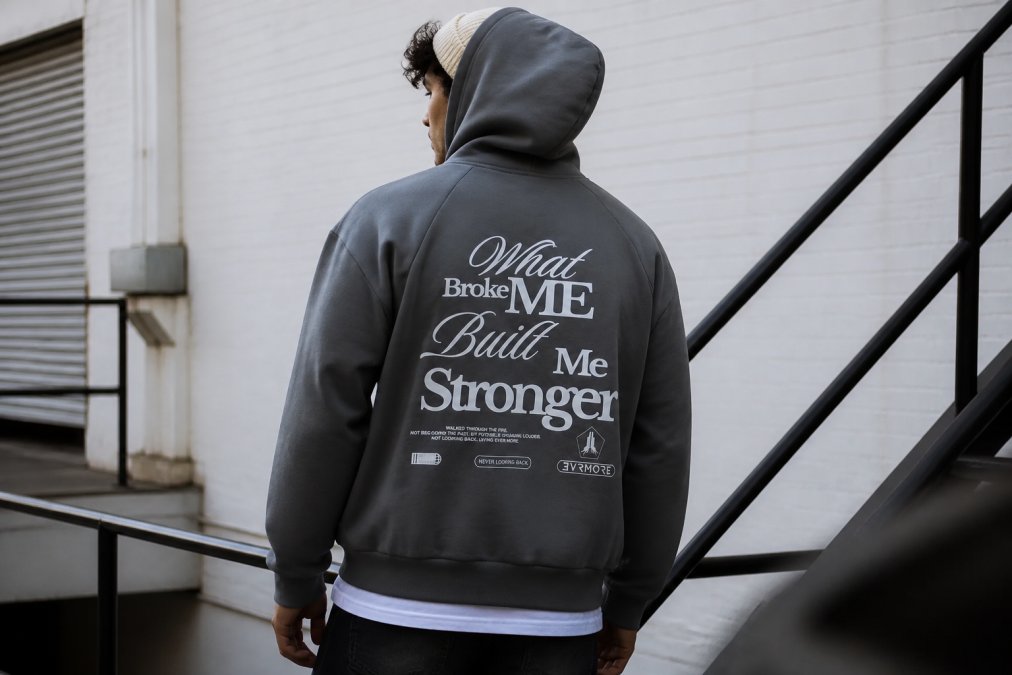
EVRMORE's 16.5 oz French terry sits in the premium range. Higher GSM alone doesn't guarantee quality, construction matters equally. Combed ring-spun cotton resists degradation while maintaining softness. The real advantage is knowing whether a hoodie supports layering: pieces under 350 GSM bunch awkwardly under jackets, while heavyweight options maintain clean lines.

How to Layer Heavyweight Hoodies Without Looking Bulky
The biggest mistake is choosing pieces that fight each other instead of complement. The solution is understanding fit profiles and how silhouettes interact.
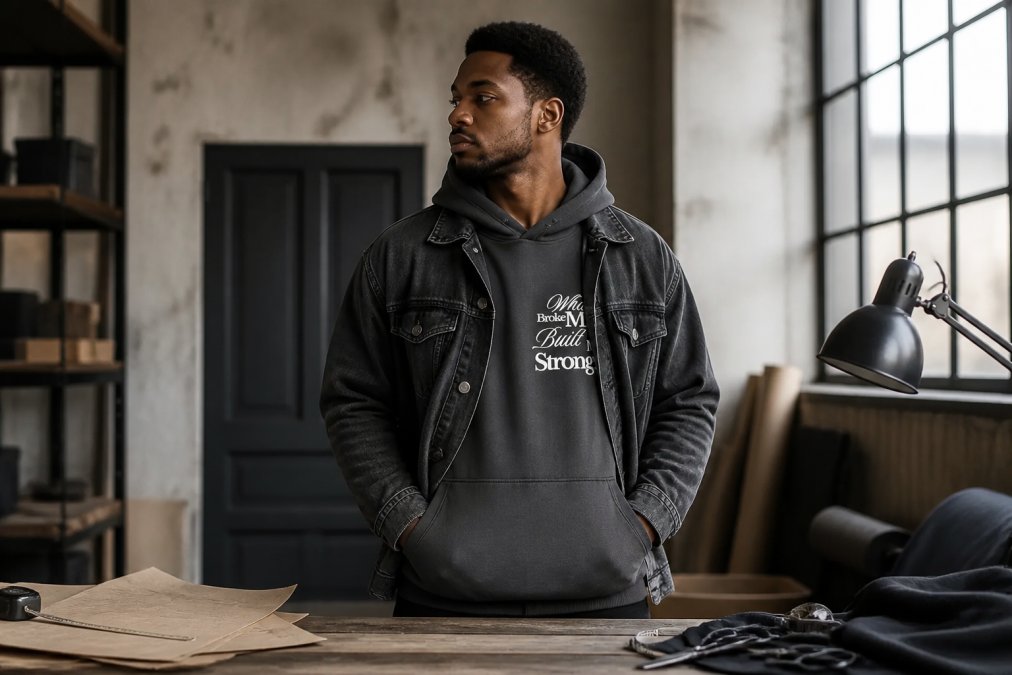
Start with one fitted piece and one with volume. If your hoodie is boxy and oversized, your outer layer needs structure and a tailored cut, a slim-fit denim jacket or structured bomber works. Going oversized on both collapses the silhouette into formlessness.
Your outer layer's fabric weight matters too. A thin windbreaker over a heavyweight hoodie creates awkward proportion; you need outerwear with presence (peer-reviewed research). A 12-14 oz denim jacket, structured wool blend, or trench coat all work because they hold their own without excessive bulk.
EVRMORE's dropped-shoulder design makes layering easier. Dropped shoulders sit lower on the arm, keeping the overall shoulder line clean when you add a jacket on top.
Choosing the Right Base Layer
Your base layer goes under the heavyweight hoodie. A thin, fitted long-sleeve shirt works best, cotton-poly blends dry faster than pure cotton and won't add visible bulk. The fit should be close to your body, not tight or loose.
Color coordination starts here. If your hoodie is black, a gray or white base layer works. If it's a lighter neutral like vintage pearl or slate, you can go darker underneath. The base layer shouldn't be visible, but if it peeks at the wrists or neck, it should feel intentional.
A proper base layer enables temperature regulation. Heavyweight hoodies are warm, sometimes too warm indoors. A thin base layer lets you shed the hoodie without looking underdressed.
Fit Profile Matters More Than Fabric Count
Fit profile, shoulder width, sleeve length, torso length, and chest/waist room, determines whether layering reads as intentional or sloppy. An oversized fit with generous room everywhere works differently than a tailored or boxy cut.
EVRMORE's boxy cut with dropped shoulders works because it's deliberate, making a statement about proportion and presence. Your body type influences which fit profile actually works: broader shoulders need more chest room, while narrower frames can pull off boxy cuts more easily with intentional negative space.
Best Jackets to Wear Over Hoodies for a Clean Aesthetic
Not every jacket works over a heavyweight hoodie. The wrong choice creates visual chaos; the right choice makes the hoodie look intentional.
Denim and Bomber Jackets
Denim is the safest choice because its weight and structure naturally complement heavyweight hoodies. A 12-14 oz denim jacket has enough body to hold its shape over an oversized hoodie's volume.
A tailored, fitted denim jacket creates contrast with an oversized hoodie, emphasizing its volume intentionally. A loose denim jacket over a loose hoodie just looks thrown together.
Bomber jackets work similarly, they're structured enough to maintain their silhouette over a heavyweight piece, but their cropped length prevents the layered look from feeling overwhelming. Black or dark indigo denim works with almost any hoodie color. Light wash denim requires more thought and works best with darker hoodies for clear contrast.
Structured Outerwear Options
Trench coats and structured blazers work surprisingly well over heavyweight hoodies when done intentionally. A trench coat's length, drape, and structure give it enough presence to balance an oversized hoodie. This works best when the hoodie is minimal in design, a solid color rather than a bold graphic.
Structured wool blazers follow the same principle, adding formality and definition that prevents the hoodie from dominating the silhouette. The contrast between the blazer's tailored construction and the hoodie's relaxed fit creates visual tension that works.
The mistake most people make is choosing outerwear that's too thin or unstructured. A lightweight windbreaker over a heavyweight hoodie creates imbalanced proportion where the inner layer overwhelms the outer layer.
How to Style Oversized Hoodies for Different Occasions
Oversized hoodies are versatile, but styling depends on context.
Smart Casual and Streetwear Looks
Smart casual means elevated casual, more intentional than comfortable, but not formal. An oversized hoodie works when paired with fitted or tapered bottoms and intentional footwear.
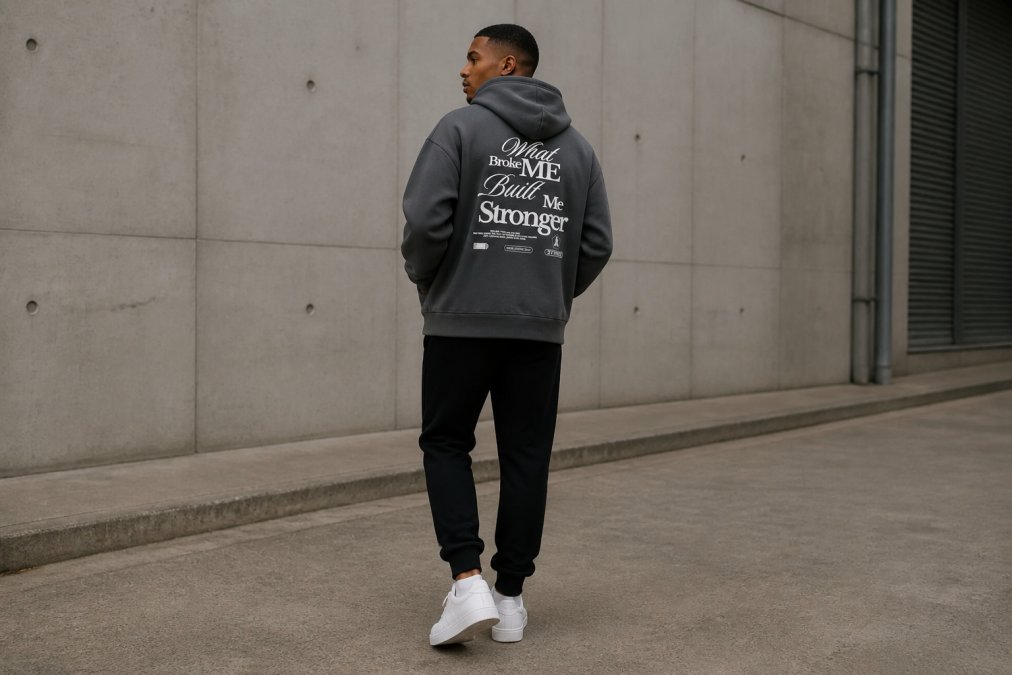
Fitted chinos or tailored trousers create proportion contrast with an oversized hoodie. The narrower silhouette through the legs balances the volume through the torso. Pair with clean white sneakers or minimalist leather shoes for a put-together look.
Streetwear styling leans into the oversized aesthetic deliberately. Oversized hoodies pair with relaxed-fit or straight-leg jeans, not skinny jeans. The key to making this work is proportion through footwear and accessories. Clean, minimal sneakers keep the look grounded.
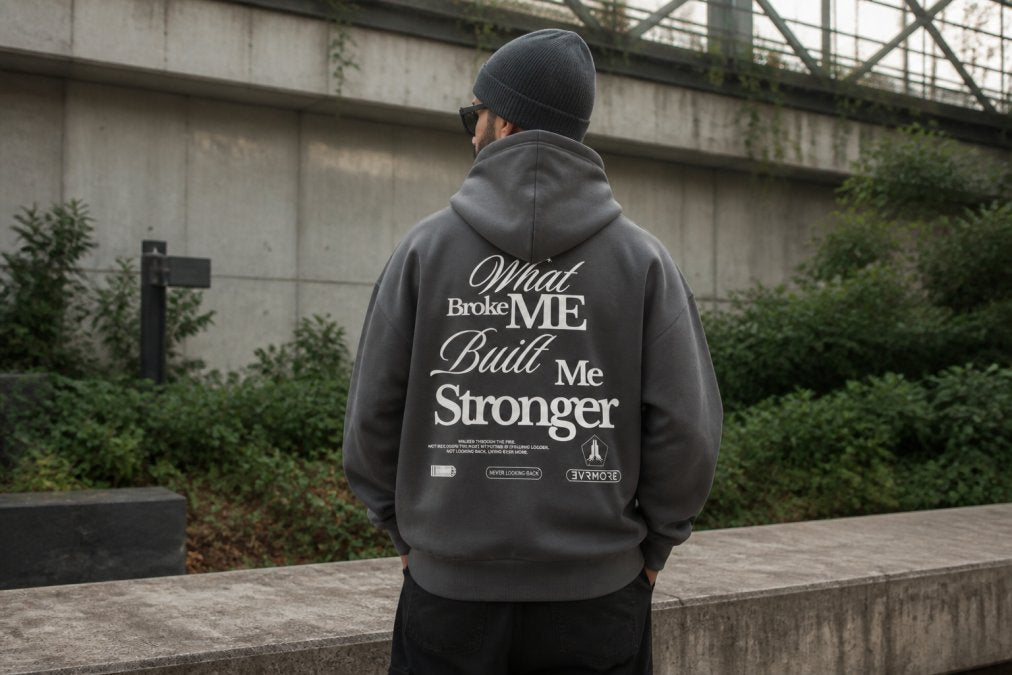
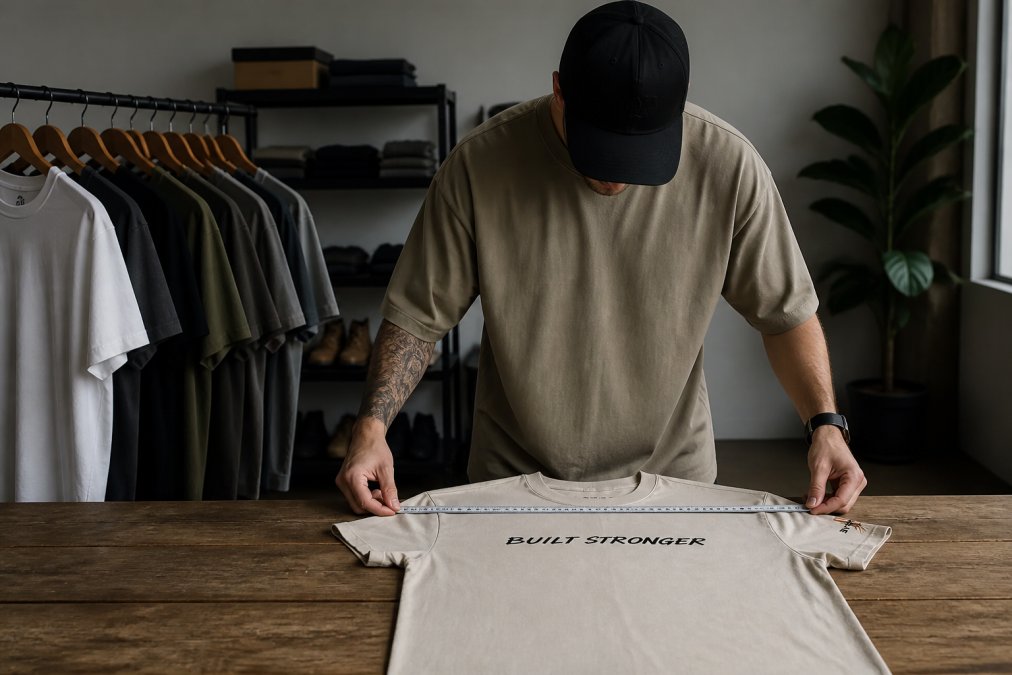
Color coordination in streetwear uses neutrals as the foundation. Black, gray, slate, vintage pearl, these neutral tones work together without competing. If your hoodie has bold messaging like EVRMORE's "Built Stronger" design, keep the rest minimal so the graphic breathes.
Cold Weather and Seasonal Combinations
In cold weather, layering heavyweight hoodies becomes essential. The challenge is adding warmth without looking like you're wearing multiple sleeping bags.
Winter styling means adding a heavier outerwear piece over the hoodie. A wool coat, puffer jacket, or structured parka all work, but they need to be fitted through the shoulders and chest. Oversized outerwear over an oversized hoodie creates an uncontrolled silhouette.
A heavyweight hoodie provides significant warmth, so your outer layer doesn't need to be as heavy as it would over a t-shirt. This means you can use more tailored, less bulky outerwear and still stay warm.
Seasonal transitions are where most people struggle. An oversized heavyweight hoodie with a light denim or bomber jacket handles early fall and late spring temperature swings better than heavier outerwear.
Outerwear Pairings and Color Coordination
Color coordination determines whether a layered look feels intentional or accidental. Neutral tones are your foundation: black, gray, charcoal, white, cream, and beige all work together without visual conflict. EVRMORE's vintage pearl and slate are inherently neutral, sitting between warm and cool tones.
When pairing a neutral hoodie with outerwear, use two strategies: monochromatic (staying within the same color family) or contrast (choosing a deliberately different neutral). Monochromatic looks more refined; a charcoal hoodie under a black denim jacket creates cohesion. Contrast looks more intentional; a slate hoodie under a tan trench coat creates visual interest.
Stick to three colors maximum and make them intentional. If using EVRMORE's bold graphic designs, keep the rest monochromatic so the messaging has space to land.
Texture also matters when color options are limited. A heavyweight hoodie's structured fabric has different visual weight than smooth denim. Pairing these creates interest through texture rather than color.
Footwear and Silhouette Balance
Your shoes determine whether the overall silhouette reads as balanced or awkward, especially with oversized hoodies.
Clean, minimal sneakers are the safe choice. White leather, minimal design, no chunky soles ground the silhouette without adding visual weight. They work with almost any outfit.
Fitted or tapered bottoms require different footwear than relaxed-fit jeans. With fitted pants, you can wear structured shoes, leather dress shoes, minimal sneakers, or boots. The narrower pant leg creates enough visual definition that shoes don't need to be minimal.
With relaxed or oversized jeans, keep shoes minimal and clean. Chunky sneakers or boots add visual weight that compounds the already-loose silhouette.
The silhouette principle is simple: if the upper half is loose, taper the lower half. If the upper half is fitted, you have more flexibility with the lower half.
Fabric Care to Maintain Your Layered Wardrobe
A heavyweight hoodie is an investment. Proper care extends its life and maintains quality.
Wash in cold water to preserve fabric integrity and color. Turn the hoodie inside out before washing to protect graphic designs. Use gentle, pH-neutral detergent.
Air dry whenever possible. Machine drying creates heat that degrades fabric and causes shrinkage. Lay flat or hang to dry. If you must use a machine dryer, use the lowest heat setting.
Pilling is common with French terry but preventable. Wash with similar fabrics to reduce friction. A fabric shaver removes pills without damaging underlying fabric if they appear.
Hang hoodies on padded hangers or fold them in a drawer. Thin wire hangers stretch shoulders, especially with heavier fabrics. Keep away from direct sunlight to prevent color fading.
Temperature-Specific Layering Strategies
Different temperatures require different layering approaches.
In mild cold (45-55 degrees), a heavyweight hoodie often provides enough warmth alone (weather.gov). Add a lightweight denim or bomber jacket for wind protection and style. You're layering for aesthetics and minor temperature regulation.
In moderate cold (30-45 degrees), add a structured mid-weight jacket over the hoodie. A wool blend, structured puffer, or quilted jacket provides meaningful warmth without excessive bulk.
In severe cold (below 30 degrees), you need a heavy outerwear piece. A parka or insulated coat becomes your primary heat source. The heavyweight hoodie becomes a mid-layer. Pair with thermal base layers underneath for maximum warmth.
According to the National Weather Service guidance on cold weather safety, layering with moisture-wicking base layers, insulating mid-layers, and wind-resistant outer layers is most effective. A heavyweight hoodie functions as the insulating mid-layer.
Humidity affects how warm clothing feels. A heavyweight hoodie feels warmer in dry cold than damp cold because moisture conducts heat away from your body.
Building a wardrobe around heavyweight hoodies means investing in pieces that last and look intentional when layered. The difference between a hoodie that falls apart after a season and one that remains a staple comes down to fabric weight, construction quality, and understanding how fit profiles interact.
EVRMORE's heavyweight hoodies start at $85-90 and use 16.5 oz French terry construction with dropped shoulders and a boxy cut designed for layering. The "Built Stronger" messaging is bold enough to make a statement but works within a minimalist aesthetic when styled correctly. Get started with EVRMORE and build a layered wardrobe that reflects both your style and your substance.
Frequently Asked Questions
Q: What is considered heavyweight for a hoodie in terms of GSM?
A: Heavyweight hoodies typically range from 14 to 16.5 ounces per square yard (GSM). The What Broke Me Heavyweight Hoodie by EVRMORE weighs 16.5 oz, placing it in the premium heavyweight category. This density provides durability and structure. Higher GSM means better shape retention and longevity, making it a worthwhile investment for everyday wear and layering.
Q: How do you layer a hoodie without looking bulky?
A: The key is balancing oversized proportions with fitted or tapered pieces below. Pair your heavyweight hoodie with slim-fit jeans or tapered pants to create visual contrast. Choose outerwear that fits close to your shoulders rather than adding volume. Neutral tones like black, slate, and vintage pearl create a clean aesthetic without competing patterns that add visual weight.
Q: What jackets pair best with heavyweight hoodies?
A: Denim jackets, bomber jackets, and structured trench coats work well over heavyweight hoodies. Denim adds texture and a tailored feel, while bombers provide a relaxed streetwear vibe. Choose jackets with a tailored or boxy cut that complements the dropped shoulders of your hoodie rather than adding bulk. A jacket in a contrasting neutral tone (like pairing a slate hoodie with a black denim jacket) creates visual separation and a refined silhouette.
Q: Should I wear a t-shirt under a heavyweight hoodie?
A: For most situations, wearing a t-shirt under a heavyweight hoodie is optional. Heavyweight hoodies like EVRMORE's 16.5 oz construction are designed to be comfortable on their own due to their premium fabric and structure. Skip the base layer if you want a cleaner silhouette and less bulk. Wear a thin t-shirt only if you're layering the hoodie under a jacket for added warmth in cold weather, or if you prefer extra comfort during extended wear.
This article was written using GrandRanker

Leave a comment
This site is protected by hCaptcha and the hCaptcha Privacy Policy and Terms of Service apply.