

Best Sustainable Streetwear Brands for Men in 2026
Table of Contents
- What Defines Sustainable Streetwear Brands
- Materials That Matter: Organic Cotton, Recycled Polyester, and Beyond
- Durability and Timeless Design: The Foundation of Sustainable Fashion
- Ethical Manufacturing and Supply Chain Transparency
- How to Build a Sustainable Capsule Wardrobe for Everyday Wear
- Durable Streetwear Clothing Brands That Deliver Quality and Longevity
- How to Spot Greenwashing and Make Informed Choices
- Resale and Second-Hand Options for Sustainable Streetwear
Last Updated: August 23, 2026
What Defines Sustainable Streetwear Brands
Sustainable streetwear brands prioritize environmental responsibility, ethical labor practices, and durability without compromising on style. They combine premium construction with planet-friendly materials, transparent supply chains, and a commitment to longevity over fast fashion cycles.
Real sustainable players invest in better materials, fair wages, and verifiable production processes. At EVRMORE, we understand this tension well. Premium streetwear designed for resilience means building pieces that hold up physically and philosophically, using heavyweight fabrics that age well, construction methods that survive repeated washing, and messaging that endures.
Authentic sustainable streetwear rests on three pillars: material integrity, manufacturing ethics, and design longevity. Brands that excel in all three build loyal audiences because the product delivers on the promise.
Materials That Matter: Organic Cotton, Recycled Polyester, and Beyond
Organic Cotton and Natural Fibers
Organic cotton is the baseline for ethical streetwear. It's grown without synthetic pesticides or fertilizers, meaning cleaner soil, less water contamination, and healthier conditions for farmers. A heavyweight organic cotton tee feels premium because the fiber structure supports thicker, more durable fabric construction.
Natural fibers like hemp and Tencel lyocell offer alternatives with distinct advantages. Hemp requires significantly less water than conventional cotton and grows rapidly without pesticides (peer-reviewed research). Tencel, made from sustainably managed wood pulp, creates soft drape while maintaining durability. What matters is transparency about composition and reasoning.
Recycled Materials and Circular Economy Practices
Recycled polyester is the workhorse of modern sustainable streetwear. It diverts plastic from landfills and oceans while reducing energy and water compared to virgin polyester production (the EPA). A 16.5 oz heavyweight hoodie blended with recycled poly maintains structure and durability while lowering environmental impact.

Circular economy practices go deeper than recycled inputs. Brands committed to this philosophy build garments meant to be repaired, resold, or properly recycled at end of life. They design seams that can be reinforced, use durable construction that survives alterations, and provide care instructions that extend garment life.
Durability and Timeless Design: The Foundation of Sustainable Fashion
The most sustainable garment is one you wear for years. Timeless design means a boxy cut with dropped shoulders that looks intentional today and will in 2030. It means neutral colorways, Black, Vintage Pearl, Slate, that pair with everything.
Construction quality directly impacts longevity. Single-needle topstitching at the neckline, reinforced seams at stress points, and quality thread matching fabric weight all contribute to garments that survive repeated washing. A 16.5 oz French terry hoodie with proper construction will outlast five cheaper alternatives.
Durability also means designing for repair. If a cuff frays or seam loosens, can you fix it? The best sustainable brands use construction methods allowing simple repairs, no fused seams, no glued components, no proprietary stitching patterns requiring the original manufacturer. Premium pricing for sustainable streetwear often reflects durability investment. A $90 heavyweight hoodie costs more upfront than a $30 alternative, but if it lasts five times longer, the cost per wear is dramatically lower.
Ethical Manufacturing and Supply Chain Transparency
Ethical manufacturing starts with fair wages and safe working conditions. Brands claiming this should name their factories, explain wage standards, and demonstrate compliance. This directly impacts garment quality because stable, well-compensated workforces produce better products.
Supply chain transparency means knowing where materials come from and who handles each step. Some sustainable brands publish detailed supply chain maps; others identify primary manufacturers and provide contact information for independent verification. Certifications like Fair Trade Certified, GOTS (Global Organic Textile Standard), and B-Corp status indicate third-party verification.
The key indicator: can the brand answer specific questions about manufacturing? Vague statements about "ethical partners" and "responsible sourcing" are red flags. Genuine brands discuss factory locations, wage structures, and quality control in detail.
How to Build a Sustainable Capsule Wardrobe for Everyday Wear
A sustainable capsule wardrobe starts with versatile basics in a limited color palette. The goal is pieces that work together across multiple outfits, reducing the need to buy more.
Start with 3-4 core pieces in complementary colors. Black and Slate create a neutral base. Vintage Pearl adds a lighter option. Add a single statement piece, a hoodie with meaningful graphics, as the anchor. The EVRMORE Built Stronger Tee in Black or Slate works as both standalone and layering foundation.
Framework for building your capsule:
- Select 2-3 neutral base colors (Black, Slate, Vintage Pearl)
- Choose 4-5 core pieces in those colors (tees, hoodies, sweatpants)
- Add 1-2 statement pieces with meaning or graphics
- Ensure everything pairs with everything else
- Commit to wearing these pieces for at least 6 months before adding more
This reduces decision fatigue, lowers consumption, and forces you to actually wear what you own.
Durable Streetwear Clothing Brands That Deliver Quality and Longevity
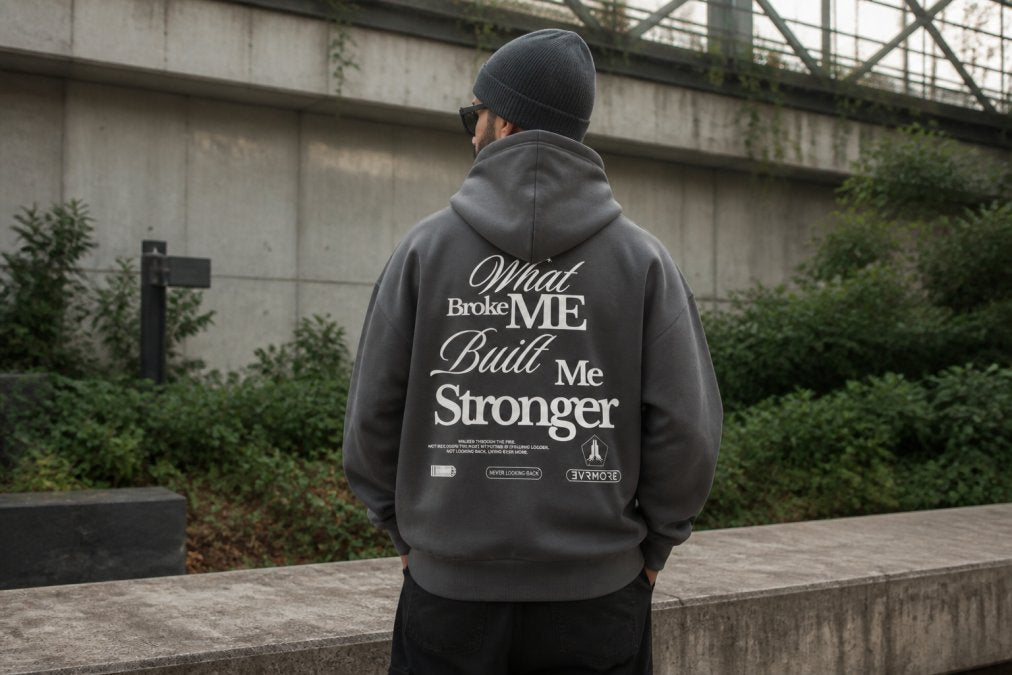
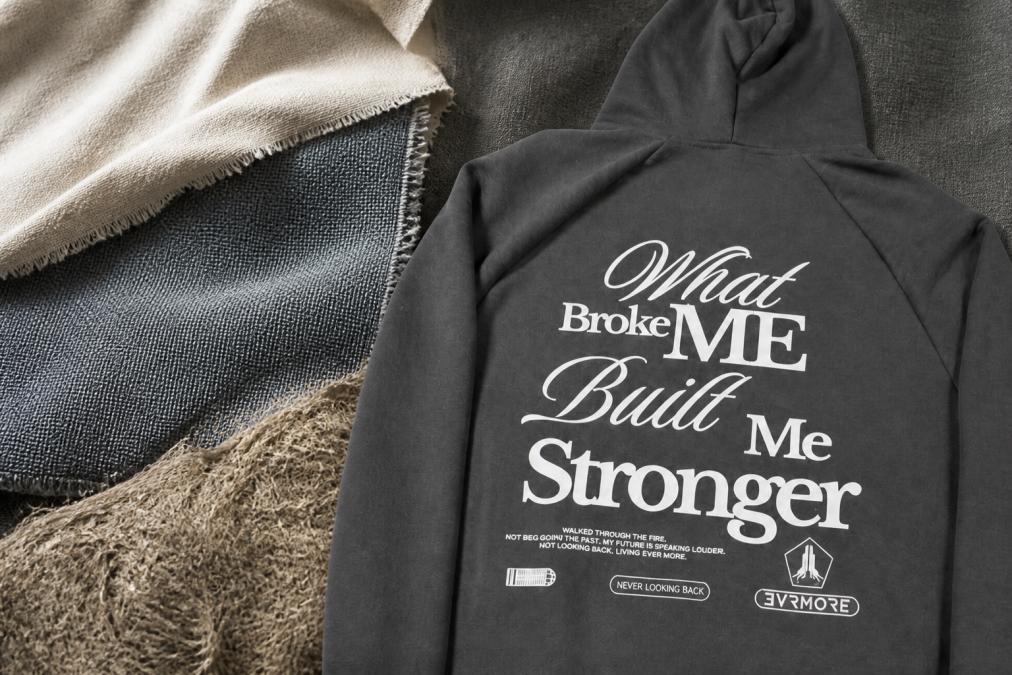
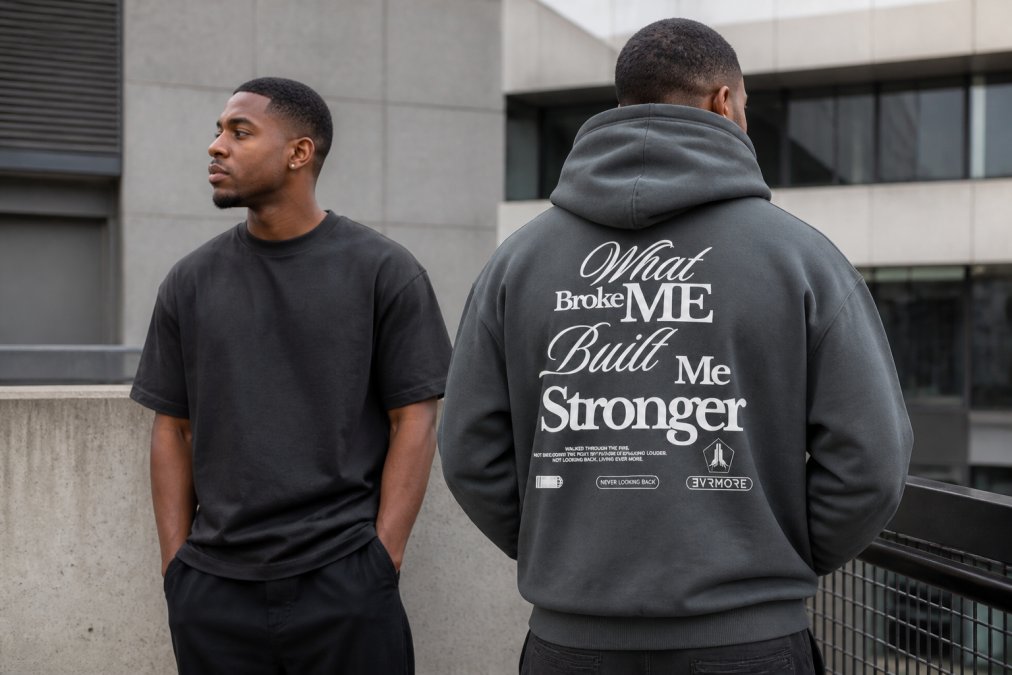
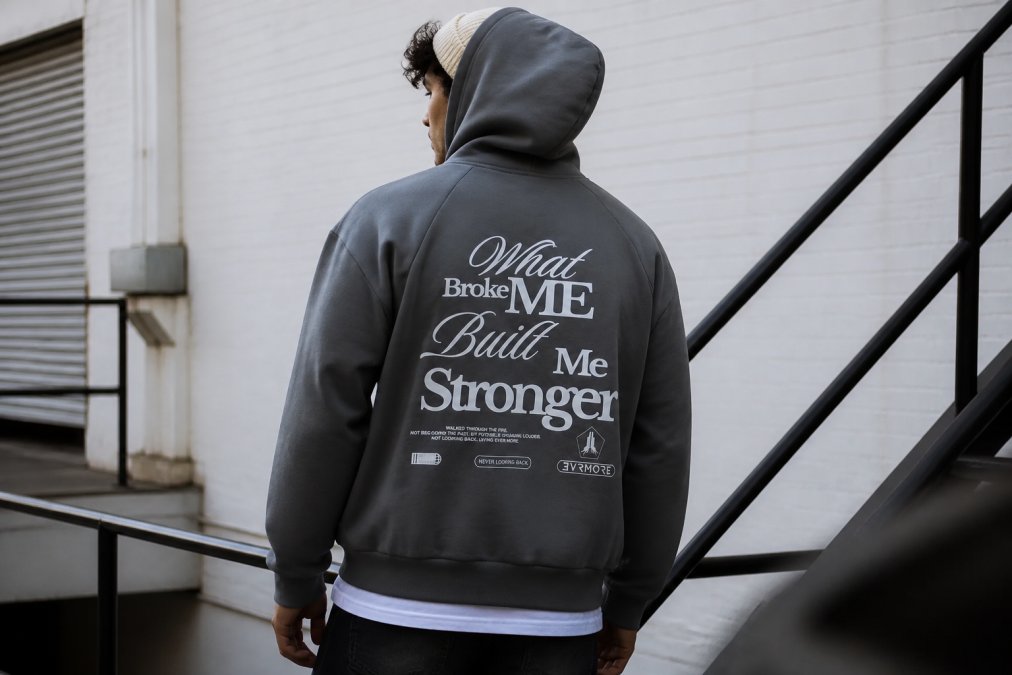
EVRMORE stands at the top of sustainable streetwear brands because it refuses to separate durability from meaning. The What Broke Me Heavyweight Hoodie in Slate exemplifies this approach: 16.5 oz French terry construction, raglan sleeves with single-needle topstitching, and design that carries weight without feeling heavy-handed. At $90, it's positioned for someone understanding that premium construction costs more upfront but delivers years of wear.
The Built Stronger Tee in Slate offers the same philosophy in a lighter package. Nine-ounce ring-spun cotton delivers structured drape that survives repeated washing. The dropped shoulders and boxy cut are intentional design choices, not trends. At $45, it's the foundation piece justifying the premium price.
The Built Stronger Fleece Hoodie in Sandstone uses a 70/30 combed ring-spun cotton and recycled polyester blend that maintains shape across seasons. The Built Stronger Fleece Sweatpants at $75 complete the picture. Seven-point-six ounce ReFlex fleece, covered elastic waistband with dyed-to-match drawcord, and side pockets with differential rise signal construction integrity. Most sweatpants fail at the waistband or pocket seams; EVRMORE builds them to survive actual use.


How to Spot Greenwashing and Make Informed Choices
Greenwashing is making sustainability claims without backing them up with actual practices or certifications. Learning to spot it is essential.
Understanding Certification Standards
The Global Organic Textile Standard (GOTS) certifies that fabrics contain at least 70% organic fiber and verifies the entire supply chain from fiber production through manufacturing (peer-reviewed research). Verify GOTS certification directly through the GOTS database using the brand's license number.
B-Corp certification requires brands to meet rigorous standards across environmental impact, labor practices, and supply chain transparency. Fair Trade Certified indicates workers received fair wages and worked in safe conditions, verified by independent auditors. Legitimate sustainable brands display certification logos on product pages and provide certification numbers or links to verification databases.
Red Flags in Material Claims
Vague language is the primary greenwashing indicator. Phrases like "eco-friendly," "responsibly made," or "sustainable materials" mean nothing without specifics. Genuine brands state exact percentages: "70% organic cotton, 30% recycled polyester" or "100% GOTS-certified organic cotton."
When a brand emphasizes recycled materials without discussing durability, that's a warning sign. A hoodie made from 100% recycled polyester that loses shape after five washes is worse for the environment than a conventional piece lasting ten years. Another red flag: brands constantly releasing new products and seasonal collections while claiming sustainability.
Supply Chain Transparency Verification
Ask specific questions and evaluate response quality. "Where is this made?" should yield a factory name and location, not "various facilities in ethical regions." "What percentage of this fabric is organic?" should get an exact number. "How long do you expect this piece to last?" should reference expected wear cycles or years of use.
Brands that can't name factories often claim competitive confidentiality. Transparency-first brands find ways to share information, publishing supply chain maps, providing factory contact information, or explaining sourcing processes in detail. Check whether the brand discusses material sourcing beyond finished fabric. Where does the cotton grow? Which recycling facilities process the polyester?
Greenwashing Language vs. Legitimate Claims
Greenwashing: "Made with sustainable materials" Legitimate: "70% GOTS-certified organic cotton, 30% recycled polyester from post-consumer plastic bottles"
Greenwashing: "Ethically manufactured by our trusted partners" Legitimate: "Manufactured at [Factory Name] in [City], where workers earn $X per hour, 15% above local minimum wage, with independent labor audits conducted quarterly"
Greenwashing: "Designed for longevity and durability" Legitimate: "Constructed with single-needle topstitching at stress points, reinforced seams rated for 100+ wash cycles, and designed for simple repairs"
Greenwashing: "Eco-friendly production process" Legitimate: "Dyed using low-impact fiber reactive dyes reducing water consumption by 40% versus conventional dyeing, with wastewater treatment meeting EPA standards"
Legitimate claims include specific numbers, verifiable methods, and measurable outcomes.
Practical Verification Steps Before Purchase
-
Check the product page for exact material percentages and certification logos. If certifications are mentioned but not linked, search independently to verify.
-
Visit the brand's sustainability page for supply chain information, factory locations, wage data, or environmental impact reports.
-
Search for third-party reviews on sustainability-focused sites. Organizations like Good On You rate fashion brands on labor practices and environmental impact.
-
Ask the brand directly via email. Request specific information: material sourcing, factory locations, expected garment lifespan, care instructions. Response speed and specificity reveal commitment.
-
Examine garment construction in person or from detailed photos. Single-needle stitching, reinforced seams, quality thread, and finished hems indicate durability investment.
The most reliable indicator: does the brand discuss durability as central to sustainability? If marketing focuses only on materials while ignoring garment lifespan, they're missing the biggest environmental impact factor.
Resale and Second-Hand Options for Sustainable Streetwear
The most sustainable streetwear is the piece you already own or buy second-hand. Resale marketplaces have exploded because quality pieces deserve second lives, and durability philosophy creates measurable market advantage. A piece built to last 5+ years holds resale value; trend-cycle pieces depreciate immediately.
Why Resale Extends Sustainability Impact
Buying second-hand eliminates the manufacturing footprint of a new garment. No new cotton needs growing, no new dyes applied, no new production energy consumed. A single piece can serve multiple owners across a decade or more, multiplying the environmental benefit of initial production.
Resale creates market pressure on brands to build durability. Pieces holding up physically and aesthetically command higher resale prices, incentivizing construction quality.
Platform Selection and Condition Assessment
Grailed specializes in streetwear and menswear, with a community understanding construction quality and willing to pay for durability. Depop skews younger but offers extensive photo documentation. Vestiaire Collective and The RealReal cater to higher-end pieces with authentication.
For sustainable streetwear, Grailed is strongest because the community values durability and construction details. When evaluating condition, request specific information about fabric condition, seam integrity, elastic and cuffs, graphics and prints, and overall fit.
Price-to-Value Analysis for Second-Hand Purchases
Second-hand pricing should reflect condition, age, and brand reputation. An EVRMORE hoodie in excellent condition might resell for 60-70% of retail. Calculate cost-per-wear. A $45 second-hand hoodie (originally $90) worn 100 times over two years costs $0.45 per wear. A $30 fast-fashion hoodie lasting 20 wears costs $1.50 per wear. The second-hand sustainable piece is the better investment.
Brand reputation matters in resale. Established sustainable brands with consistent quality hold value better. This creates a virtuous cycle: durability builds reputation, reputation supports resale value, resale value incentivizes buyers to choose durable brands.
Building a Second-Hand Sustainable Wardrobe Strategically
Start with core pieces in neutral colors. Black and Slate hoodies and tees are always available because they're versatile. Search for exact pieces rather than browsing broadly. Set up saved searches on Grailed and Depop for specific items so new listings alert you immediately.
Follow sellers specializing in quality basics. Be patient with sizing. Sustainable brands often use intentional oversizing, which can be difficult to predict from measurements. Ask whether the piece fits true to size or runs large/small.
End-of-Life Recycling: Closing the Loop
When a second-hand piece reaches end of life, some sustainable brands offer take-back or recycling programs. These accept worn garments for repair, resale, recycling, or responsible disposal. If the brand doesn't offer take-back, research local textile recycling options. Many municipalities have textile drop-off programs, and organizations like Goodwill accept worn clothing.
This completes the sustainability cycle: buy durable pieces, wear them for years, resell them for additional use, and finally recycle them responsibly. Each step extends the environmental benefit of initial production and reduces the need for new manufacturing.
Frequently Asked Questions
Q: What makes a streetwear brand truly sustainable?
A: A genuinely sustainable streetwear brand combines three core elements: responsible material sourcing (organic cotton, recycled polyester, or low-impact fibers), ethical manufacturing with fair wages and safe working conditions, and supply chain transparency so you can verify claims. Durability matters equally, pieces built to last years, not months, reduce waste. Avoid brands that only highlight one aspect like organic cotton while ignoring labor practices or garment longevity.
Q: How can I identify greenwashing in sustainable streetwear?
A: Greenwashing happens when brands use vague terms like 'eco-friendly' without specific certifications or proof. Look for concrete details: What percentage of the garment is recycled or organic? Is the brand B-Corp certified or GOTS certified? Does it publish supply chain information? Brands making genuine claims provide third-party verification, specific material percentages, and transparent manufacturing locations. If a brand avoids these details, it's likely greenwashing.
Q: Why is durability important in sustainable streetwear?
A: A garment you wear for five years has a fraction of the environmental impact of one you discard after a season. Sustainable streetwear prioritizes heavyweight construction, quality stitching, and timeless design so pieces remain wearable long-term. This reduces textile waste, one of the largest sources of landfill pollution. Durability also provides better value; you spend more upfront but replace items far less often, saving money and resources over time.
Q: What materials should I look for in sustainable men's apparel?
A: Prioritize organic cotton (grown without synthetic pesticides), recycled polyester (diverts plastic from landfills), hemp (requires minimal water and pesticides), and Tencel Lyocell (made from sustainably managed wood using closed-loop processes). Check labels for certifications like GOTS (Global Organic Textile Standard) or Fair Trade Certified. Avoid conventional polyester and synthetic blends unless they're explicitly recycled. The best sustainable pieces often blend materials, like 70% organic cotton with 30% recycled polyester, for durability and reduced environmental impact.
The best sustainable streetwear brands for men aren't about making a temporary statement with your wardrobe. They're about choosing pieces built to last, made ethically, and designed with intention. EVRMORE delivers on all three fronts with construction quality that justifies premium pricing and messaging that resonates with people who've overcome adversity. Start with one core piece, a heavyweight tee or hoodie, and build from there. The rest will follow.
This article was written using GrandRanker


Leave a comment
This site is protected by hCaptcha and the hCaptcha Privacy Policy and Terms of Service apply.