

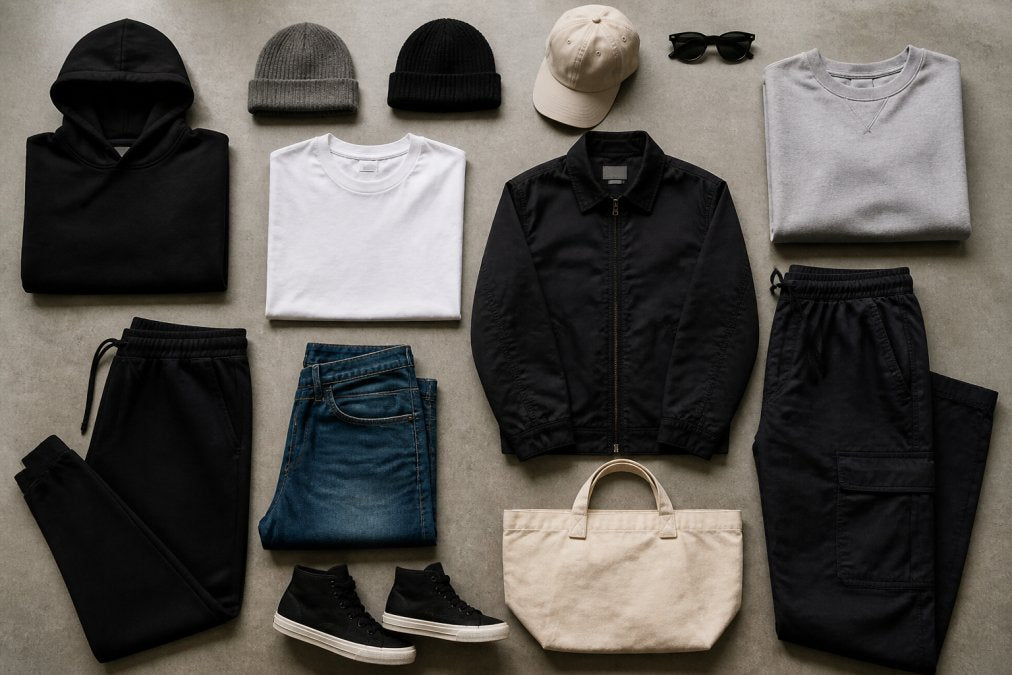
12 Essential Streetwear Pieces for Men: 2026 Wardrobe Guide
Table of Contents
- 1. Oversized Heavyweight Tees: The Foundation of Essential Streetwear
- 2. Hoodies and Sweatshirts: Your Daily Armor
- 3. Utility Cargo Pants and Baggy Denim: The New Silhouette
- 4. Timeless Sneakers and Footwear Rotation
- 5. Layering Essentials, Outerwear, and Headwear
- 6. How to Style Streetwear for Men: Building a Cohesive Look
- 7. Streetwear Sizing Guide for Men: Getting the Fit Right
- 8. Is Adversity Streetwear Worth the Investment?
- Frequently Asked Questions
Last Updated: September 13, 2026
1. Oversized Heavyweight Tees: The Foundation of Essential Streetwear
Essential streetwear starts with one piece: the heavyweight tee. According to Cotton Incorporated's textile research, fabric weight is the single biggest factor separating a tee that drapes well from one that goes limp after three washes. At EVRMORE, we built our line around that idea, and this guide covers the 12 pieces that do the most work in a man's rotation.
An oversized heavyweight tee is a thick cotton or cotton-blend shirt cut with dropped shoulders and a wide body so it hangs straight instead of clinging. A 9 oz ring-spun cotton/poly blend, like the Oversized Heavyweight Streetwear Tee - Built Stronger at $45, holds its shape through repeat wear.

Two rules keep this piece from looking sloppy:
- Size so the shoulder seam sits just past your natural shoulder, not halfway down your arm
- Keep the hem near mid-fly; longer reads as a dress, shorter breaks the silhouette
2. Hoodies and Sweatshirts: Your Daily Armor
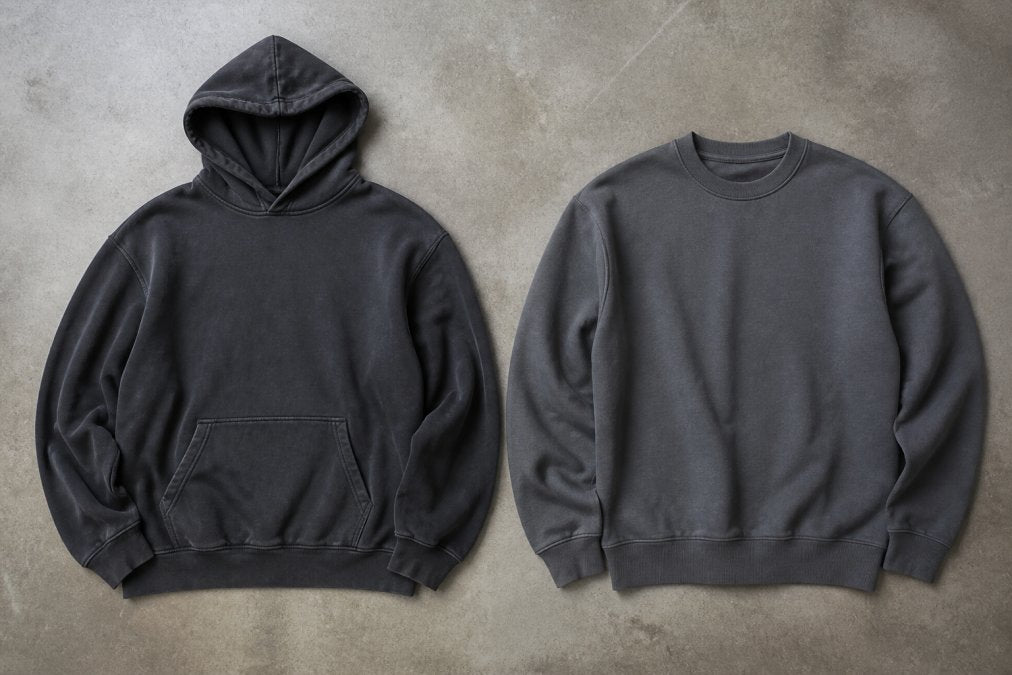
A heavyweight hoodie is the piece you reach for most, so construction quality shows fastest here. The What Broke Me Heavyweight Hoodie uses 16.5 oz French terry, roughly double a standard mid-weight hoodie, with raglan sleeves and single-needle topstitching at the neckline, the detail most brands skip, and the reason a neckline keeps its shape instead of stretching into a scoop.

For warmer days, a lighter fleece works better. The Built Stronger Fleece Hoodie - Relaxed ReFlex Fit at $85 uses 70/30 combed ring-spun cotton and recycled polyester with a structured drape. Pair either with the Built Stronger Fleece Sweatpants at $75 and you have a matched set that works at the gym or on a rest day.
3. Utility Cargo Pants and Baggy Denim: The New Silhouette
The tapered-everything era is over. Baggy denim and utility cargo pants have taken over because they balance the volume of an oversized top. A straight or relaxed leg with a slight stack at the ankle reads intentional; a skinny leg under a boxy tee reads top-heavy.
Three fit rules that hold up:
- Cargo pockets should sit flat against the thigh, not balloon outward
- Denim should break once at the shoe, no more
- Keep the waistband at your actual waist; low-rise plus volume looks like a costume
4. Timeless Sneakers and Footwear Rotation
A footwear rotation means alternating three or four pairs so no single shoe gets worn daily, extending the life of every pair and giving you options across settings. It's practical, not just aesthetic.
Build the rotation around three roles:
- A clean low-profile leather or canvas sneaker for everyday wear
- A chunkier runner or court shoe for volume under baggy denim
- A durable work or trail silhouette for weather and long days
Keep all three in neutral tones, white, black, grey, or off-white. Neutral footwear is what makes a loud graphic tee or a bold hoodie print feel deliberate.
5. Layering Essentials, Outerwear, and Headwear
Layering is where a wardrobe becomes a system instead of a pile of clothes. The formula: heavyweight tee as the base, hoodie or overshirt as the mid layer, and a structured jacket as the outer layer. Each layer should be a different length so the hems stack instead of bunching at the waist.
What separates a layer that works from one that just adds bulk comes down to three fabric and construction details:
- Base layer weight. A 9 oz tee gives the mid layer something to sit on. A thin 4-5 oz tee collapses under a hoodie and the whole stack looks deflated.
- Mid layer loft. French terry (loopback) breathes and works indoors; brushed fleece traps more heat for cold commutes. A 16.5 oz French terry hoodie is roughly double a standard mid-weight hoodie, which is why it holds a structured drape instead of sagging at the shoulders.
- Outer layer structure. A coach jacket, a waxed cotton field jacket, or a quilted liner jacket each solve a different problem. The coach jacket is the most versatile because it is unlined, so it layers over a hoodie without fighting the sleeve.
A common pattern is to build the outer layer one size up from your tee size, giving the mid layer room to move and keeping the shoulder seam from pulling forward when you raise your arms.
Seasonal transitioning: the same 12 pieces, two climates
Most guides treat the 12 essentials as a single-season list. They are not. The same pieces work in July and January if you change the fabric weight and the number of layers, not the pieces themselves.
Warm-weather build (roughly 75°F and up): (weather.gov)
- Swap the 16.5 oz French terry hoodie for a lighter fleece or a 70/30 combed ring-spun cotton and recycled polyester hoodie, which breathes better and dries faster.
- Wear the heavyweight tee on its own with baggy denim or cargo pants; the volume in the pants balances the tee without a mid layer.
- Move the structured jacket to a lightweight overshirt or leave it at home. A trucker hat with mesh back panels vents heat.
Cold-weather build (roughly 50°F and below):
- Keep the heavyweight tee as the base; it makes the rest of the stack work.
- Add the 16.5 oz French terry hoodie as the mid layer. The weight holds warmth without a puffer.
- Add a structured outer layer over the hoodie. A coach jacket or field jacket blocks wind; a quilted liner adds insulation without bulk.
- Switch headwear to a fitted cap or a beanie-style knit; mesh back panels lose heat fast in wind.
The shoulder seasons (roughly 50-75°F) are where layering earns its keep. Start with the tee and hoodie, carry the jacket, and add or remove the mid layer as the day moves. Three layers, two fabric weights, one palette.
Headwear finishes the look
Headwear solves two problems at once: it finishes the silhouette and handles bad-hair days. The Built Stronger Trucker Hat at $45 uses water-resistant Hydro mesh, useful in rain or during a workout. The FlexFit Structured Cap skips snaps for a fitted feel, and the Structured Mesh Snapback at $35 offers adjustable fit with a DTF graphic built to resist cracking.
A structured crown, meaning the front panel is stiffened so it stands up on its own, reads more deliberate than an unstructured dad cap. Match the crown and brim color to your palette and the hat stops competing with the outfit.
6. How to Style Streetwear for Men: Building a Cohesive Look
The fastest route to a cohesive look is a fixed color palette: pick three neutrals and one accent, then buy inside those lines. Black, sandstone, slate, and vintage pearl cover almost everything EVRMORE makes, so the pieces mix without effort.
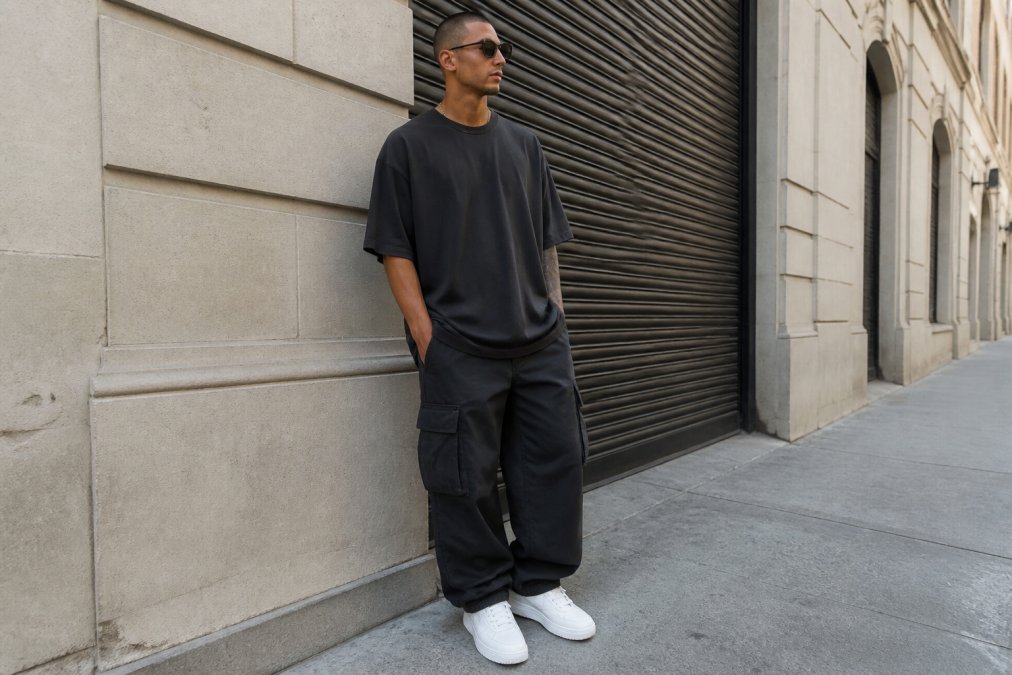
High-low styling is the other lever. Wear the $45 tee with a decent jacket and clean sneakers and the outfit reads considered; with beat-up shoes it reads careless. One statement piece per outfit, maximum: if the graphic is loud, the pants stay plain.
Styling oversized streetwear for your body type
This is the part most guides skip. Oversized cuts are not one-size-fits-all, and the same tee that looks intentional on a 6'2" frame can look like a hand-me-down on a 5'7" frame. The fix is not to avoid oversized, it is to control where the volume sits.
Shorter frames (roughly 5'4"-5'8"):
- Keep the tee hem at the hip bone, not mid-fly. Every extra inch costs visual height.
- Choose a straight or relaxed leg over wide-leg baggy denim; a slight taper at the ankle keeps the leg line long.
- Wear a low-profile sneaker rather than a chunky runner. A chunky sole adds height but also width, which shortens the leg line.
- Keep the outer layer cropped at the hip. A long jacket over a long tee stacks two horizontal lines and cuts you in half.
Taller frames (roughly 6'0" and up):
- You can carry the full mid-fly hem and wide-leg baggy denim; the length balances the frame.
- A chunky runner or court shoe adds visual weight at the bottom, keeping a tall, lean silhouette from reading thin.
- Layer more aggressively. A tee, hoodie, and jacket stack reads proportionate on a taller frame where it would overwhelm a shorter one.
Broader frames (chest and shoulders wider than the waist):
- Raglan sleeves are your friend. The diagonal seam follows the shoulder line instead of fighting it, which is why the What Broke Me Heavyweight Hoodie uses raglan construction.
- Avoid drop-shoulder tees cut too wide at the chest. A fist of space is the ceiling; more and the shirt pulls at the armpit.
- Keep the pants straight or relaxed, not wide-leg. Volume on top plus volume on the bottom reads boxy.
Slimmer frames:
- Use the oversized cut to add visual width. A drop-shoulder tee with a wider body is the single most effective piece here.
- Baggy denim and utility cargo pants add lower-body volume that balances a narrower upper body.
- A structured cap with a wider crown adds width at the head, balancing a narrow shoulder line.
Proportion rules that hold across every frame
- One volume, one anchor. If the top is oversized, the bottom should be straight or relaxed, not wide-leg. If the bottom is wide-leg, the top should be closer to true-to-size.
- Break the silhouette once. A single horizontal line, the hem of the tee, the cuff of the pants, reads intentional. Three stacked hems at the same height read accidental.
- Match the shoe to the pant leg. A wide-leg pant needs a chunky shoe to fill the opening. A straight-leg pant needs a low-profile shoe so the hem does not swallow the foot.
| Piece | Role In The Outfit | Fit Note |
|---|---|---|
| Heavyweight tee | Base layer | Dropped shoulder, hem at mid-fly |
| Hoodie or sweatshirt | Mid layer | Raglan or relaxed, roomier than standard |
| Cargo pants or baggy denim | Volume | True waist, straight or relaxed leg |
| Sneakers | Grounding | Neutral tone, one break at the shoe |
| Headwear | Finish | Structured crown, matches palette |
7. Streetwear Sizing Guide for Men: Getting the Fit Right
The boxy, dropped-shoulder fit worries a lot of guys, and the fear is fair: sized wrong, it looks baggy rather than intentional. Order your usual size for the intended oversized look; size down only if you want a standard fit from an oversized cut.
Three checks before you commit:
- Shoulder seam lands just past the natural shoulder
- Sleeve ends at or just below the wrist bone, not past the knuckle
- Body width leaves a fist of space at the chest, no more
If you're between sizes, go up for hoodies and stay true for tees. Heavyweight fabric doesn't stretch into place the way thin cotton does.
8. Is Adversity Streetwear Worth the Investment?
Adversity streetwear is apparel built around overcoming something, and whether it's worth the money comes down to construction and whether the message still means something to you in a year. A $45 tee only beats a $20 tee if the fabric weight, stitching, and print durability hold up.
Here's what separates a real investment from a gimmick, based on what we build at EVRMORE:
- Fabric weight you can feel: 9 oz tees, 16.5 oz French terry hoodies
- Construction details that survive washing, like wide ribbed collars and single-needle topstitching
- Prints engineered to resist cracking and peeling, not screen prints that fade in a month
- A design you'd still wear if the message were removed
The Never Looking Back Unisex Graphic Tee and the Rescued Redeemed Restored Christian Heavyweight Shirt both land at $45 with the same heavyweight build. For subtlety over a bold statement, start with a plain colorway and let the fit carry it.

Frequently Asked Questions
What are the essential streetwear pieces for a beginner?
Start with five core items: an oversized heavyweight tee, a quality hoodie, relaxed-fit pants like cargo or baggy denim, clean sneakers, and a structured hat. These essential streetwear pieces cover most casual situations and layer together easily. Look for heavyweight cotton construction and neutral tones like black or slate. You can add statement pieces like graphic tees as your style develops.
How should streetwear fit for a modern look?
Modern streetwear uses a relaxed, intentional fit. Oversized tees should have dropped shoulders that sit naturally, not pull across the chest. Hoodies should feel roomy but hold their shape. Pants can be baggy or tapered, but the waist must fit correctly. A streetwear sizing guide for men helps you find your measurements rather than guessing. When in doubt, size up for the intended silhouette.
Is adversity streetwear worth the investment compared to fast fashion?
Yes, when you compare cost per wear. A $45 heavyweight tee that lasts three years costs less per wear than a $15 tee that fades in three months. Adversity streetwear uses heavier fabrics, reinforced stitching, and pre-shrunk construction. These pieces hold their shape and color through repeated washing. The investment pays off in durability and consistent fit.
How do you style heavyweight streetwear pieces without looking sloppy?
Balance proportions. Pair an oversized top with a tapered or straight-leg bottom, or wear a fitted top with baggy pants. Keep colors within a tight palette like black, slate, and sandstone. Add one statement piece, such as a graphic tee or structured hat, and let the rest stay minimal. This approach creates a cohesive look that feels intentional rather than thrown together.
How do you build a streetwear wardrobe on a budget?
Buy fewer, better pieces. Start with two heavyweight tees, one hoodie, one pair of quality pants, and one versatile sneaker. Choose neutral tones that mix easily. Add accessories like a snapback hat or rope strap to change up your look without buying new outfits. This strategy keeps your wardrobe functional and reduces impulse purchases on low-quality items.
Building a wardrobe that actually lasts means choosing pieces that survive real life, not just the first week. EVRMORE makes heavyweight tees, hoodies, sweatpants, and headwear with the construction to back up the message: 9 oz ring-spun tees, 16.5 oz French terry hoodies, wide ribbed collars, and DTF graphics built to resist cracking. Get started with EVRMORE and build a rotation that holds its shape, its fit, and its meaning for years.

Leave a comment
This site is protected by hCaptcha and the hCaptcha Privacy Policy and Terms of Service apply.