

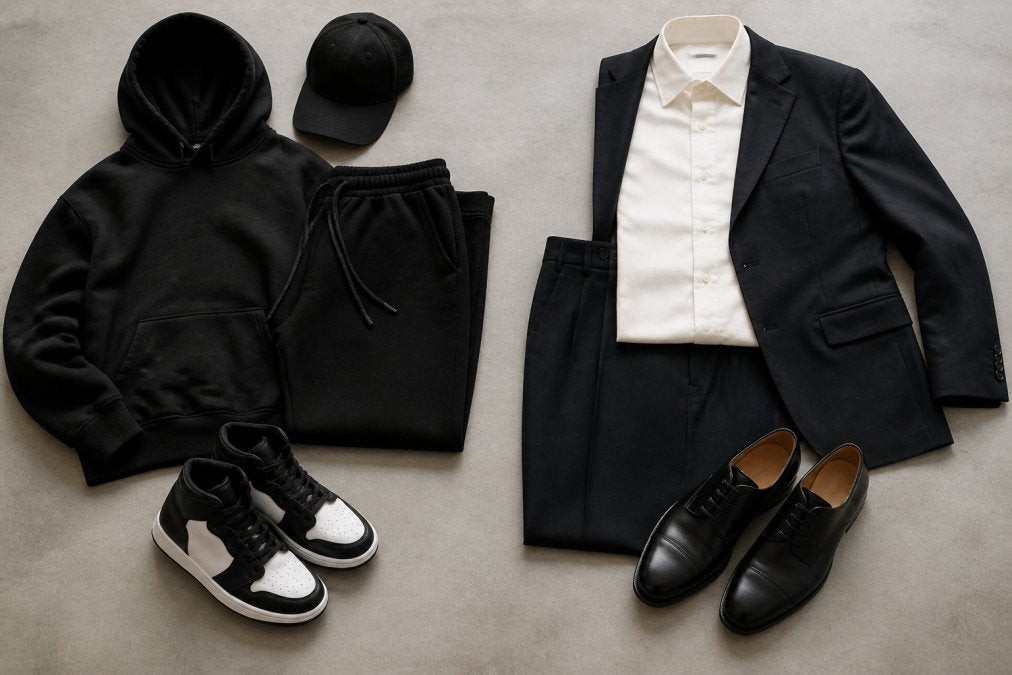
Streetwear vs High Fashion for Daily Comfort
Table of Contents
- Streetwear vs High Fashion for Daily Comfort: The Short Answer
- Key Differences in Fit, Fabric, and Construction
- The Benefits of Heavyweight Cotton in Streetwear
- How to Style Streetwear for Everyday Comfort
- Premium Streetwear Brands for Men: What to Look For
- Comfort vs Aesthetic: Where Each Style Wins
- Conclusion
- Frequently Asked Questions
Last Updated: September 14, 2026
Streetwear vs High Fashion for Daily Comfort: The Short Answer
Streetwear wins for daily comfort in almost every category that matters on a normal day: fabric weight, shoulder room, and how the garment holds up after a dozen washes. High fashion still wins when the occasion calls for structure, tailoring, and a sharp line. The real decision isn't which one is "better." It's which one earns a spot in your rotation.
This guide from EVRMORE breaks down the streetwear vs high fashion debate across fit, fabric, and construction so you can build a wardrobe that feels good on a Tuesday and still looks intentional. Below, we'll show you exactly where each style wins, where it falls short, and how to mix both without looking like you tried too hard.
The short answer: for daily comfort, streetwear's boxy fit and heavyweight cotton beat a tailored high-fashion silhouette. For dressier settings, high fashion still takes it. Most people need both, just not in equal amounts.
Key Differences in Fit, Fabric, and Construction
High fashion is built around a tailored silhouette: defined shoulders, a nipped waist, and fabric cut to follow the body. Streetwear is built around a boxy fit: dropped shoulders, a wider chest, and room to move. That single design choice drives almost every comfort difference between the two.
Fit and Silhouette: Boxy vs Tailored
A tailored jacket or trouser is cut to a specific shape and expects your body to meet it there. When it fits, it looks sharp. When you sit, reach, or eat a full meal, it fights you. A relaxed fit streetwear top does the opposite: it drapes off the shoulder and lets your torso move without pulling at the seams.
The trade-off is real. Boxy cuts can read as sloppy if the fabric is thin or the drop is too extreme. A structured, heavyweight piece keeps the shape intentional instead of collapsing.
Fabric Weight and Garment Construction
Weight is the quiet variable most shoppers ignore. A standard mid-weight hoodie feels fine in the store and goes limp after three washes. A 16.5 oz French terry holds its structure because there's more material doing the work (Materials). Single-needle topstitching at the neckline, double-layer hoods, and 2x1 ribbing at the cuffs and waistband are the construction details that decide whether a garment survives a year of daily wear.
The Benefits of Heavyweight Cotton in Streetwear
Heavyweight cotton is the single biggest reason streetwear feels better for daily wear. A 9 oz ring-spun cotton tee or a 16.5 oz French terry hoodie holds its shape, resists stretching at the neckline, and drapes instead of clinging (aatcc.org). Lighter fabrics feel soft in the store but lose structure fast.
Here's what heavier fabric actually buys you:
- Shape retention: the garment keeps its cut after repeated washing
- Neckline integrity: wide ribbed collars resist the stretch-out that ruins cheap tees
- Better drape: weight makes a boxy fit look deliberate, not baggy
- Fewer layers needed: a heavyweight piece works as an outer layer in mild weather
The catch is drying time and cost. Heavier cotton takes longer to air dry and costs more upfront. For anyone wearing the same rotation five days a week, that math usually works out in favor of the heavier piece.
How to Style Streetwear for Everyday Comfort
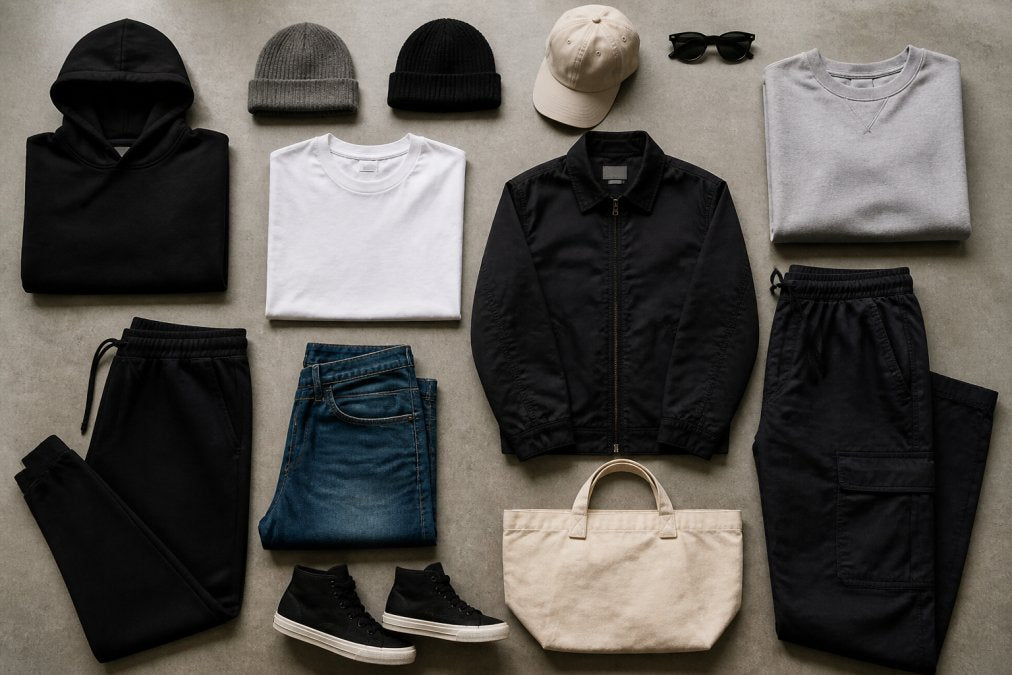
Styling for daily comfort is really an ergonomics problem dressed up as an aesthetics one. The goal is a capsule that survives a full day, sitting, walking, commuting, eating, without a single piece fighting your body. That means building around a small set of anchors and layering in high-fashion staples only where they earn their keep.
Build a Five-Piece Comfort Capsule
Start with five pieces that cover roughly 80% of a normal week:
- One heavyweight tee (9 oz ring-spun cotton) as the base layer
- One heavyweight hoodie (16.5 oz French terry) as the mid layer
- One relaxed straight-leg pant in a mid-weight twill or rigid denim
- One structured overshirt or unstructured blazer to shift formality
- One clean leather sneaker or derby for day-to-night swaps
Every other purchase should either replace one of these or extend the range (a second tee colorway, a warmer hoodie). Anything that doesn't slot into the capsule is a costume, not a wardrobe.

Where High-Fashion Staples Actually Earn a Spot
High fashion is not the enemy of comfort, it's the wrong tool for the wrong job. Three categories where a designer piece beats streetwear on daily wearability:
- Tailored wool trousers in an unlined, high-twist fabric drape better than most joggers and breathe in a way cotton twill does not.
- Merino knitwear regulates temperature across a wider range than fleece, so it works in an office and on a walk without a layer change.
- Unstructured blazers in cotton-linen blends give you a shoulder line without the canvassed weight of a suit jacket.
The rule: buy high fashion for the pieces where construction and fiber do work that streetwear can't replicate. Skip it for basics where a heavyweight cotton version is objectively more comfortable.
The Volume Balance Rule
Ergonomically, the body tolerates one oversized zone at a time. If the top is boxy, the bottom should be relaxed but not equally wide, otherwise the fabric bunches at the hip and restricts stride. If the bottom is wide, keep the top closer to the body. This is why a boxy tee with straight denim reads intentional while a boxy tee with wide-leg fleece reads sloppy: the second combination has no anchor.
Day-to-Night Without a Full Change
Swap the sneaker for a leather derby and add the unstructured blazer over the heavyweight tee. The base layer stays; the formality shifts. This is the single most useful move in the capsule because it changes the read of the outfit without changing the pieces touching your skin.
Premium Streetwear Brands for Men: What to Look For
Most buying guides stop at "check the fabric weight." That's table stakes. The brands actually worth paying for are the ones whose construction choices map to specific comfort outcomes over a full day and a full year of wear. Here's what to look at, in order of how much it affects daily comfort.
1. Fabric Weight and Fiber Blend
Weight decides drape and durability; fiber decides how the fabric behaves against skin.
- 9-10 oz ring-spun cotton for tees: heavy enough to hold a boxy cut, soft enough for all-day wear.
- 14-17 oz French terry for hoodies: the looped back gives stretch without the pilling of brushed fleece.
- Small elastane content (2-5%) in pants and ribbing: lets the garment recover its shape instead of bagging at the knee or cuff.
- Moisture-wicking blends (cotton-poly or cotton-modal) for anyone wearing the same piece through a commute and a workday.
If a brand won't state the fabric weight in ounces or GSM, that's your answer, they don't know their product well enough to sell it on construction.
2. Construction Details That Decide Longevity
- Single-needle topstitching at the neckline resists the collar stretch that kills cheap tees.
- Double-layer hoods hold shape and add warmth without bulk.
- 2x1 ribbing at cuffs and waistband recovers after stretching; 1x1 ribbing does not.
- Raglan or set-in sleeves, raglan gives more shoulder mobility, set-in gives a cleaner line. Pick based on whether you prioritize movement or silhouette.
- Side-seamed vs tubular bodies, side seams allow a closer taper; tubular bodies are more common in budget tees and twist after washing.
3. Fit Guide With Real Garment Measurements
Boxy cuts are unforgiving of guesswork. A brand that publishes chest, body length, and shoulder width in inches, not just S/M/L, is telling you they've graded the pattern. A brand that only lists "fits true to size" is telling you they haven't.
4. Cut-and-Sew Origin
Where a garment is cut and sewn signals quality control more than country of origin does. A named facility with stated labor standards is a stronger signal than a flag on a label. If the brand can't name where the piece was made, assume the cheapest available option.
5. Sustainability and Longevity
The most sustainable piece is the one you wear for five years. Heavyweight cotton and reinforced construction extend a garment's life, which is the practical answer to fast-fashion turnover (the EPA). Look for brands that publish fabric weight, construction specs, and care instructions, those are the ones whose pieces survive a real rotation.
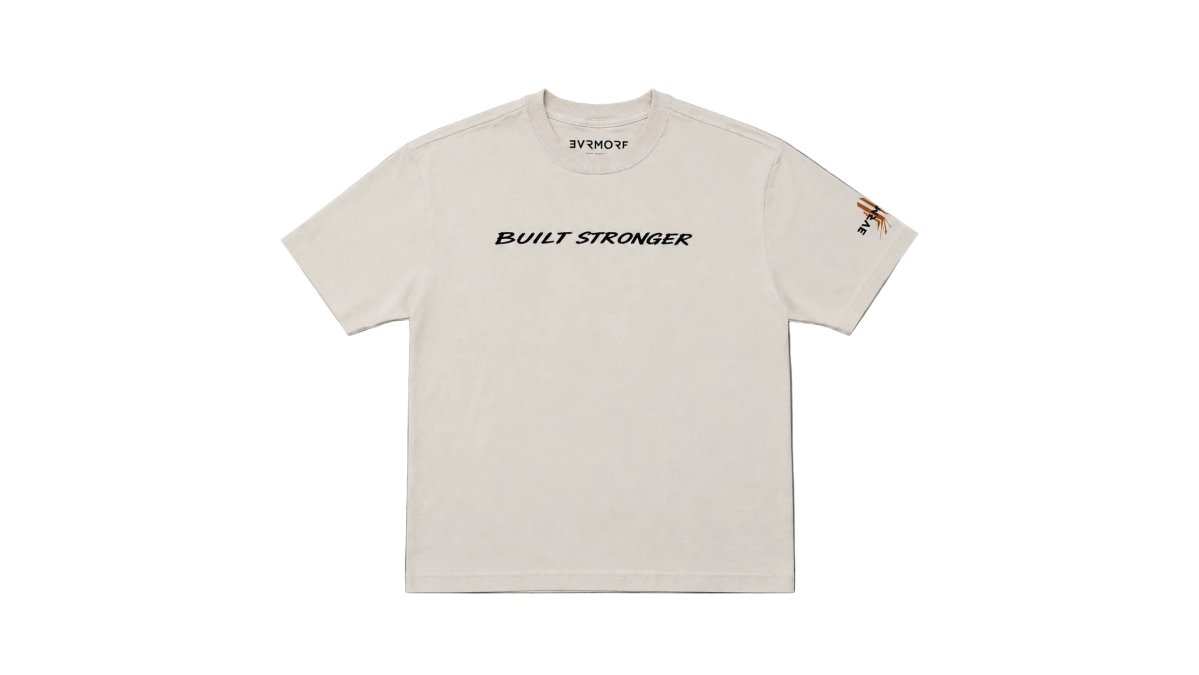
EVRMORE builds its collection around exactly those markers. The Built Stronger heavyweight tee uses 9 oz ring-spun cotton with dropped shoulders and a wide ribbed collar, and the [What Broke Me heavyweight hoodie(/products/built-stronger-hoodie-original-slate) | evrmorebrand.com] runs 16.5 oz French terry, cut and sewn in Los Angeles with single-needle topstitching at the neckline. That's the level of detail worth paying for.
| What to Check | Why It Matters | What Good Looks Like |
|---|---|---|
| Fabric weight | Decides drape and durability | 9 oz tee, 16.5 oz hoodie |
| Fiber blend | Affects stretch, recovery, moisture | 2-5% elastane in pants; cotton-modal blends |
| Construction | Prevents neckline stretch and pilling | Single-needle topstitching, 2x1 ribbing, double-layer hood |
| Fit guide | Boxy cuts need real measurements | Chest, length, and shoulder width in inches |
| Origin | Signals quality control | Named cut-and-sew facility |
| Sustainability | Longevity beats turnover | Published weight, specs, and care instructions |
Comfort vs Aesthetic: Where Each Style Wins
Streetwear wins on comfort for daily wear, and high fashion wins on aesthetic for formal settings. That's the honest split. A tailored suit still looks better at a wedding than a hoodie, and a heavyweight tee still feels better on a Saturday errand run than a structured blazer.
Where the two overlap is the interesting part. A refined streetwear piece with a clean graphic and a grounded colorway reads as intentional in casual settings and doesn't look out of place in a relaxed office. That middle ground is where most people actually live.
Conclusion
The comfort gap between streetwear and high fashion isn't about which is objectively better. It's about matching the cut and fabric to the day you're actually having. Heavyweight cotton and a relaxed fit handle most of them.
EVRMORE builds for exactly that: premium heavyweight fabric, a boxy streetwear cut with dropped shoulders, and message-driven graphics in black, vintage pearl, and slate. Pieces designed to hold their shape through daily wear, not just the first week.
Add to cart and start with one heavyweight anchor piece. Build the rest of the rotation around it.
Frequently Asked Questions
What are the primary differences between streetwear and high fashion?
Streetwear prioritizes comfort, relaxed fits, and everyday wearability. High fashion focuses on tailored silhouettes, runway-driven design, and premium materials. Streetwear uses boxy cuts and heavyweight fabrics; high fashion uses structured garments and luxury branding. For daily comfort, streetwear's relaxed fit and durable construction usually win.
Is streetwear considered acceptable for daily comfort?
Yes. Streetwear is built for daily comfort with relaxed fits, soft fabrics, and versatile styling. Heavyweight cotton tees and fleece sweatpants from premium streetwear brands for men offer all-day wearability without sacrificing style. The boxy fit and dropped shoulders allow easy movement, making streetwear a practical choice for work, errands, or lounging.
How does fabric quality differ between high fashion and premium streetwear?
High fashion often uses fine wools, silks, and tailored blends that require careful maintenance. Premium streetwear uses heavyweight cotton, French terry, and durable knits that hold up to frequent washing. For example, a 16.5 oz French terry hoodie provides warmth and structure, while a 9 oz ring-spun cotton tee resists stretching. Both can be high quality, but streetwear fabrics are built for everyday wear.
Can you mix high fashion pieces with streetwear for a comfortable look?
Yes. Pair a tailored high fashion blazer with a heavyweight streetwear tee and relaxed sweatpants for a balanced outfit. The key is to keep the silhouette cohesive: choose one structured piece and balance it with relaxed items. This mix works for day-to-night transitions and lets you enjoy comfort without losing a fashion-forward edge.
Why is heavyweight apparel preferred for daily streetwear?
Heavyweight fabrics like 9 oz cotton or 16.5 oz French terry resist stretching, hold their shape, and provide warmth without bulk. They also drape better, giving a structured look that lasts through repeated wear. For daily comfort, heavyweight cotton in streetwear means less frequent replacement and a premium feel that lighter fabrics cannot match.


Leave a comment
This site is protected by hCaptcha and the hCaptcha Privacy Policy and Terms of Service apply.