


Style Oversized Streetwear for a Professional Look
Table of Contents
- Why Oversized Streetwear Works in Professional Settings
- Balancing Volume and Fit: The Foundation of Professional Styling
- Business Casual Streetwear Outfits That Maintain a Polished Aesthetic
- How to Tuck an Oversized Shirt for a Structured Silhouette
- Layering Oversized Tees for the Office: Techniques That Work
- Fabric Weight and Tailoring: The Real Difference Between Sloppy and Sophisticated
- Accessorizing and Color Strategy for a Refined Streetwear Look
- Frequently Asked Questions
Last Updated: September 24, 2026
Why Oversized Streetwear Works in Professional Settings
Oversized streetwear projects confidence and intention when styled correctly. Many assume loose-fitting clothing reads as unprofessional, it doesn't. What matters is balancing volume with structure, fabric quality, and intentional layering.
EVRMORE designs oversized streetwear for professional environments by balancing comfort and polish. Heavyweight fabrics, dropped shoulders, and boxy cuts feel deliberate and refined when proportions are understood and tailoring is applied correctly.
Business-casual dress codes have evolved. Wearing a graphic tee with tailored trousers is now recognized as intentional self-presentation, not corporate conformity.
Balancing Volume and Fit: The Foundation of Professional Styling
The biggest mistake is treating oversized clothing as a blank canvas. Volume must be balanced: oversized tee requires tailored trousers; dropped shoulders require clean-fitting pants at the waist.
Proportions work like a visual equation: oversized tee + oversized trousers = unfocused silhouette. Oversized tee + fitted trousers = structured, intentional silhouette with visible body shape.
Volume distribution matters most. Oversized top + fitted bottom = professional. Oversized top + structured blazer = polished. The EVRMORE Oversized Heavyweight Streetwear Tee works professionally because its fabric weight and construction hold shape when paired with structured pieces below.

Business Casual Streetwear Outfits That Maintain a Polished Aesthetic
Business-casual varies dramatically by industry. Understanding your specific environment is essential to styling oversized pieces as professional rather than out-of-place.
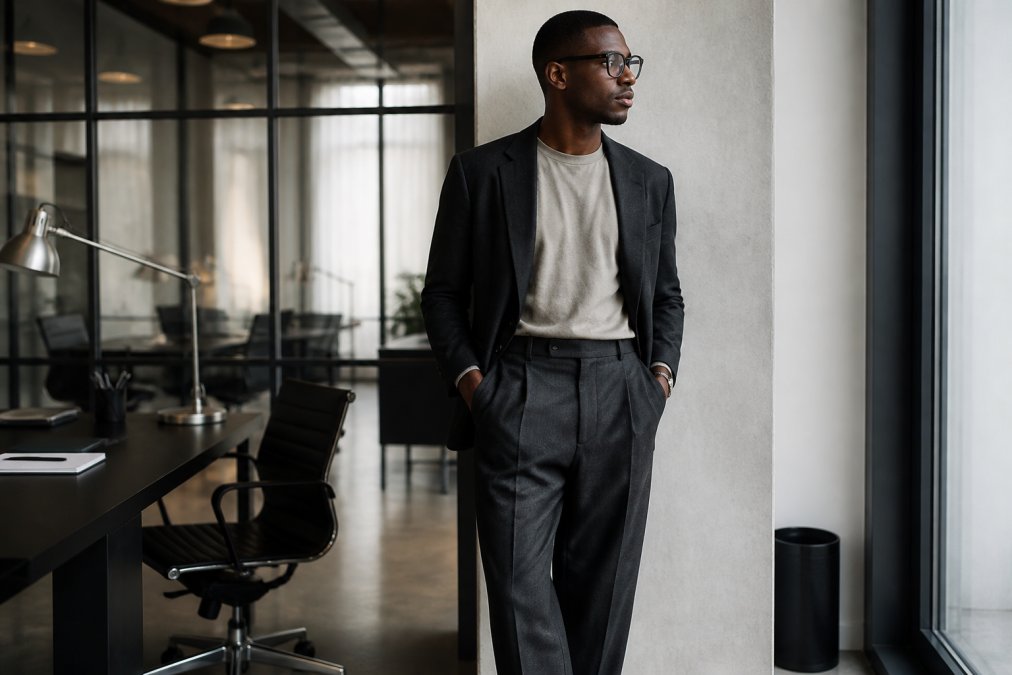
Calibrating to your industry:
Creative industries expect personality and individual expression. Oversized streetwear is standard; add intentionality without suppressing your aesthetic. Base: heavyweight oversized tee in neutral tone. Structure: casual blazer (unstructured or semi-structured). Bottom: tailored trousers or chinos. Footwear: minimalist sneakers or loafers. Accessories: simple watch, minimal jewelry, or structured cap. Example: charcoal oversized tee + linen blazer + navy chinos + white sneakers + silver watch.
Corporate environments require more structure and restraint. Base: heavyweight oversized tee in solid neutral, no graphics. Structure: tailored wool blazer (non-negotiable). Bottom: tailored trousers, clean fit. Footwear: polished leather shoes only. Accessories: watch, simple jewelry, structured bag, no caps. Example: white oversized tee + charcoal blazer + navy trousers + leather loafers + watch.
Hybrid environments require one layer of structure. Base: heavyweight oversized tee in neutral tone. Structure: structured shirt worn open or semi-structured blazer. Bottom: tailored trousers or chinos. Footwear: leather shoes, loafers, or minimalist sneakers. Accessories: watch and minimal jewelry. Example: navy oversized tee + open white shirt + khaki chinos + minimalist sneakers + watch.
Outfit construction principles across all environments:
-
Start with quality fabric. A 9-ounce ring-spun cotton blend has weight and presence; it drapes properly without clinging or billowing.
-
Balance volume with structure below. Oversized tee requires tailored or straight-leg trousers for an intentional silhouette.
-
Add one structured layer. A blazer, structured shirt, or vest signals intentional styling.
-
Maintain clean proportions. Tee hem at natural waistline, trousers with clean ankle break, sleeves ending at wrist bone.
-
Use neutral colors as foundation. Black, white, gray, navy, charcoal, olive, and tan read as intentional and professional.
Before wearing an oversized streetwear outfit to work, verify: fabric has visible weight, proportions are balanced (oversized top + fitted bottom), at least one structured layer is present, trousers fit cleanly with proper ankle break, shoes are clean and polished, and you'd feel confident in a meeting with your manager. If you hesitate on any point, adjust before wearing.
How to Tuck an Oversized Shirt for a Structured Silhouette
Tucking an oversized shirt requires technique. Avoid full tucks, which create bulk at the waistband. Use front tucks or half tucks instead to manage volume while maintaining the relaxed aesthetic.
Front tuck method: Tuck only the front 6-8 inches into your waistband, leaving back and sides untucked. This creates a clean front silhouette with defined torso while maintaining the oversized aesthetic.
Half tuck (side tuck) method: Tuck one side at the hip into your waistband, leaving the other side and back untucked. This works well with graphic tees, showing off the design while maintaining the oversized feel.
The tuck should manage volume, not eliminate it. When done correctly, a tucked oversized shirt reads as intentional and professional.
Oversized Heavyweight Streetwear Tee →
Layering Oversized Tees for the Office: Techniques That Work
Layering is how you transform a casual oversized tee into office-appropriate wear. The layers add visual interest, create structure, and allow you to adapt to different temperatures and dress codes.
The blazer layer is most effective. A structured, tailored blazer immediately elevates an oversized tee by providing shoulder definition and visual balance. Button it for formality or leave it open to show the tee's design.
The shirt layer: Wear a crisp button-up open over your oversized tee for texture and contrast. The sweater layer: A fitted sweater over an oversized tee creates clean proportions and sophistication. Vest layering: A structured vest adds definition without the bulk of a blazer.
Layering works through contrast: oversized pieces are relaxed, layers add structure, creating visual tension that reads as intentional.
Fabric Weight and Tailoring: The Real Difference Between Sloppy and Sophisticated
Fabric weight determines whether your oversized piece looks intentional or sloppy. It's measurable, not subjective.
Understanding fabric weight and construction:
Fabric weight is measured in ounces per square yard (oz/yd²). This number directly correlates to how a garment drapes, moves, and ages:
- Lightweight (4-6 oz/yd²): Billow and pill quickly; read as cheap.
- Midweight (7-8 oz/yd²): Prone to sagging in oversized cuts.
- Heavyweight (9-12 oz/yd²): Hold shape and drape with intention. Minimum threshold for professional oversized streetwear.
- Ultra-heavyweight (13+ oz/yd²): Can feel stiff in professional settings.
Check product tags for weight; if unlisted, it's a red flag. A 9-ounce ring-spun cotton blend is ideal: holds structure and remains soft.
Fiber composition matters as much as weight:
Ring-spun cotton creates softer, stronger yarn and signals quality.
How tailoring works with fabric weight:
Tailoring an oversized piece isn't about making it fitted. It's about refining proportions to match your specific frame. But tailoring only works effectively on heavyweight fabrics. A lightweight tee hemmed to a shorter length will still billow at the sides. A heavyweight tee hemmed the same way creates clean proportions because the fabric has enough body to maintain structure.
Common tailoring adjustments for oversized streetwear:
- Hemming: Shortening the tee by 1-2 inches can dramatically improve proportions. The hem should hit at your natural waistline or just below, not mid-hip.
- Sleeve shortening: Oversized sleeves that extend past your wrist can be tapered or shortened. This is more complex than hemming, but it transforms the silhouette. The sleeve should end at your wrist bone, not your knuckles.
- Side seam tapering: For pieces that feel too voluminous, a tailor can taper the side seams slightly without eliminating the oversized aesthetic. This creates subtle definition.
- Collar adjustment: Oversized crewnecks can sit too low. A tailor can raise the neckline by 0.5-1 inch for a more refined appearance.
Never taper the chest or shoulders of an oversized piece, that defeats the purpose.
Identifying quality in retail environments:
When shopping in-store or online, use these checks:
- The weight test: Hold the garment. Does it have substance? Does it feel like it will hold its shape, or does it feel flimsy? Heavyweight fabric has noticeable heft.
- The drape test: Hang the tee on your body or hold it up. Does it drape smoothly, or does it cling and wrinkle? Quality fabric drapes with intention.
- The seam test: Check the stitching. Are seams straight and even? Are they reinforced at stress points (shoulders, armholes, hem)? Poor stitching indicates low quality and premature failure.
- The tag test: Look for fiber content and weight. Reputable brands always list both. If they don't, the quality is likely compromised.
- The price-to-weight ratio: A quality heavyweight oversized tee costs $35-60. If it's significantly cheaper, the fabric is likely lightweight or the construction is poor. If it's significantly more expensive, you're paying for branding, not material quality.
Accessorizing and Color Strategy for a Refined Streetwear Look
Accessories make or break an oversized streetwear look. The right accessories signal intentionality. The wrong ones create visual chaos.
Frequently Asked Questions
How do I style an oversized shirt for the office without looking sloppy?
Start with a strategic tuck: front tuck, half tuck, or side tuck depending on your proportions and outfit. Pair oversized pieces with tailored bottoms like structured trousers or fitted denim. Choose heavyweight fabrics like the 9 oz ring-spun cotton blend in the Built Stronger tee, thicker fabric holds its shape and reads as intentional rather than baggy. Layer with a blazer or structured jacket to define your silhouette. Finish with minimal accessories and neutral colors to maintain a polished aesthetic.
Can you wear streetwear in a business casual environment?
Yes, when you focus on tailoring, fit, and fabric quality. Business casual streetwear works when you balance oversized volume with structured pieces like blazers, tailored trousers, or fitted skirts. Neutral color palettes, black, cream, slate, read as more professional than bold colors. The key is mixing streetwear silhouettes with business casual proportions through smart layering and accessorizing.
What makes oversized streetwear still relevant in 2026?
Oversized silhouettes remain a core streetwear aesthetic because they prioritize comfort and personal expression. In 2026, the trend has matured beyond novelty, it's about intentional styling rather than just wearing bigger sizes. Quality matters more than ever: heavyweight fabrics, refined graphics, and dropped shoulders create a sophisticated look when paired thoughtfully with professional pieces. The oversized streetwear style works because it allows for layering, movement, and a confident, carefree attitude while maintaining a polished appearance.
How do I choose between a front tuck, half tuck, or side tuck for oversized clothing?
Front tuck works best for balanced proportions and creates a clean, intentional line down the center. Use it when wearing fitted bottoms and want maximum definition. Half tuck (tucking only the front center portion) adds structure while keeping a relaxed vibe, ideal for office environments where you want polish without formality. Side tuck works well for asymmetrical balance and suits slightly wider silhouettes. Experiment with each method on your body type; the right tuck should create clean lines without bunching at the sides or back.

Leave a comment
This site is protected by hCaptcha and the hCaptcha Privacy Policy and Terms of Service apply.