

Sobriety Tattoo Ideas: 7 Meaningful Designs for 2026
Table of Contents
- Semicolon Tattoos and Other Core Sobriety Symbols
- Sobriety Date Tattoo Ideas: Roman Numerals, Timelines, and Milestones
- Minimalist, Fine-Line, and Script Designs for Subtle Reminders
- Lotus Flowers, Trinity Knots, and Other Spiritual Recovery Symbols
- How to Choose a Recovery Tattoo Design You Won't Regret
- Placement, Cost, and Cover-Up Options for Sobriety Tattoos
- Conclusion: Making Your Sobriety Tattoo Meaningful
- Frequently Asked Questions
Last Updated: September 23, 2026
Semicolon Tattoos and Other Core Sobriety Symbols
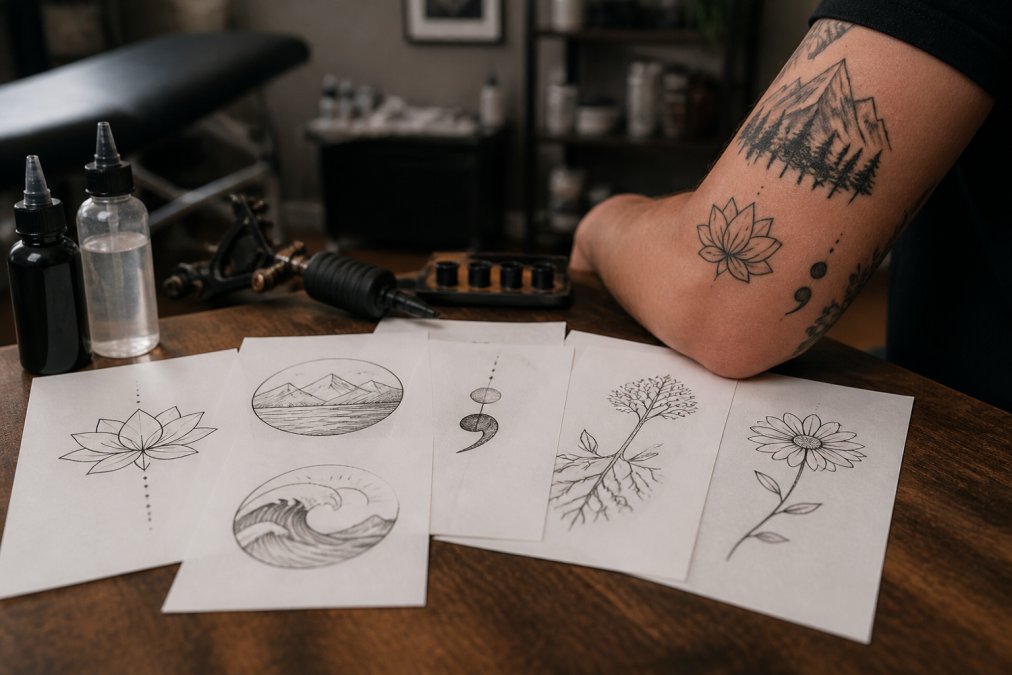
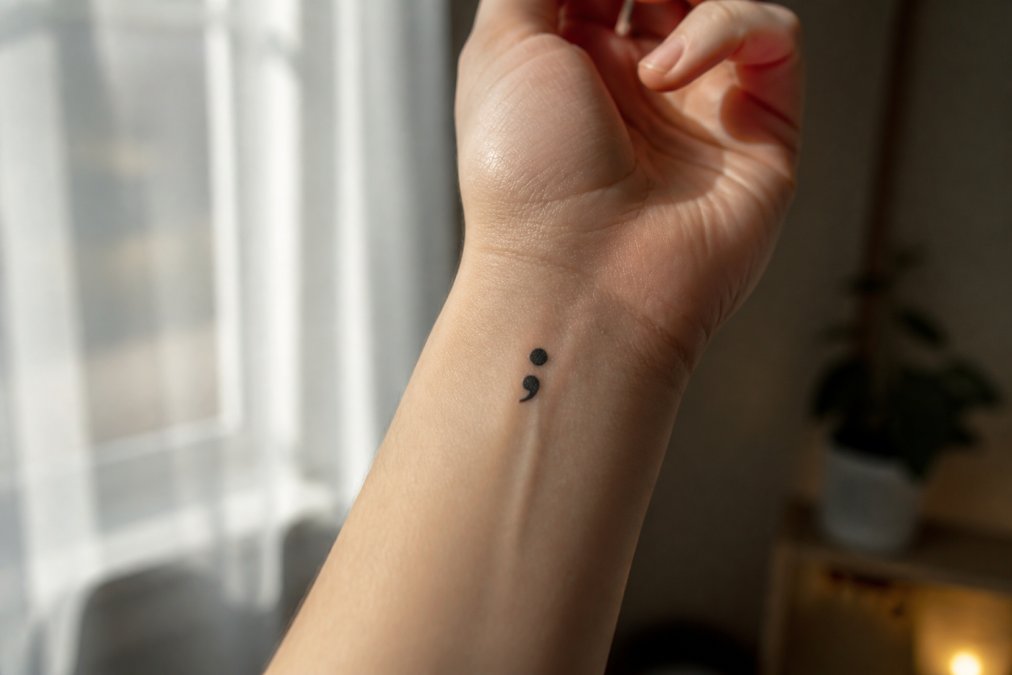
A sobriety tattoo is a permanent design that marks a person's commitment to recovery, often built around symbols that carry personal meaning. The most recognized is the semicolon, drawn from the Semicolon Project's mental health awareness work, which represents choosing to continue your story rather than end it.
That single punctuation mark has become shorthand for survival. It works because it's small enough to hide under a sleeve and heavy enough to mean everything to the person wearing it.
Other core symbols carry similar weight:
- Infinity loops for a commitment with no end date
- Broken chains for release from what held you
- Anchors for steadiness during rough stretches
- Triangles for change and forward motion
At EVRMORE, we've watched this same instinct play out in what people wear. A symbol you can see every morning does quiet work that a note on your phone never will.
Sobriety Date Tattoo Ideas: Roman Numerals, Timelines, and Milestones
A sobriety date tattoo turns a single calendar day into permanent ink, and the most common formats are Roman numerals, a small timeline, or a milestone marker. Roman numerals stay popular because they read as a date only to the person who knows it. Strangers see a design. You see the day everything changed.
Timeline designs suit people with several milestones worth honoring. A dotted line with small marks for one year, five years, and ten years gives you room to keep adding. Some people leave the line open-ended on purpose, so the design grows with the recovery journey instead of closing it off.
Numbers aren't for everyone. If a date feels too exposing, a tally mark, a moon phase, or a single dot per year does the same job quietly.
Minimalist, Fine-Line, and Script Designs for Subtle Reminders
Minimalist sobriety tattoo ideas work best when the design stays small, uses clean lines, and avoids heavy shading. Fine-line work suits this perfectly: thin needles, delicate detail, and a finished piece that reads as jewelry rather than a statement.
Script is the other reliable route. A single word, a short phrase, or a date set in a simple serif or a clean handwritten font ages well and stays legible at small sizes. Long passages in script don't. They blur together within a few years, especially on wrists and ribs where skin moves.
What most guides miss is that fine-line tattoos need more touch-up attention than bold traditional work, not less. Those thin lines can fade faster, so plan on a refresh every few years.
Popular minimalist directions include:
- A single semicolon behind the ear
- One word in lowercase script along the forearm
- A tiny geometric shape on the inner wrist
- A short phrase in a straight line across the collarbone
- A small numeral set at the base of the neck
Lotus Flowers, Trinity Knots, and Other Spiritual Recovery Symbols
Spiritual recovery symbols give a design a layer that isn't tied to a date or a word. The lotus flower is the clearest example: it grows out of mud and opens clean, which is why it shows up so often in addiction recovery art. The trinity knot carries a similar weight for people whose recovery is rooted in faith, with its three interlocking loops standing for connection that has no beginning or end.
The serenity prayer is another common source. Many people tattoo a short fragment of it rather than the whole text, which keeps the piece smaller and more personal. A single line like "one day at a time" fits neatly along a forearm or collarbone and does the job of a much longer passage.
Never Looking Back Unisex Graphic Tee →
Geometric patterns round out the category. Circles, unbroken lines, and repeating shapes suggest continuity without leaning on any single tradition, which appeals to people who want meaning without doctrine.
How to Choose a Recovery Tattoo Design You Won't Regret
Learning how to choose a recovery tattoo design comes down to more than picking a symbol you like. The two failure modes that show up most often aren't aesthetic, they're psychological and timing-related, and almost no guide addresses them directly.
The pink cloud problem. Early recovery often comes with an emotional high, sometimes called a pink cloud, where motivation feels unshakable and every decision feels permanent-worthy. A common pattern among people who regret their recovery ink is getting tattooed during that peak. The design made sense in week three and felt like a costume by month eight. Most practitioners suggest waiting until you've been through at least one hard stretch, a craving you white-knuckled, a holiday, a loss, before committing to permanent ink. If the symbol still resonates after that, it's earned its place.
The permanent-reminder effect. A sobriety tattoo isn't just decoration; it's a visual anchor you'll encounter every time you shower, dress, or glance at your wrist.
Run every idea through three filters before you book:
- Meaning: Write down why the symbol matters to you in one sentence. If you can't, it's decoration, not a milestone marker.
- Longevity: Recovery is a long road, and your design has to still feel true in ten years. Ask whether the piece would make sense if your circumstances changed.
- Placement: This is where most first-timers get it wrong.
| Decision | Ask Yourself | Common Mistake |
|---|---|---|
| Symbol | Does it mean something I can state in one sentence? | Picking a trend from social media |
| Size | Will it still read clearly at this scale in 10 years? | Going too small with too much detail |
| Placement | Can I cover it for work if I need to? | Choosing a spot that limits job options |
| Artist | Do they have healed fine-line or script work in their portfolio? | Booking on price alone |
| Timing | Have I been through at least one hard stretch in recovery? | Getting ink during an emotional peak |
Placement, Cost, and Cover-Up Options for Sobriety Tattoos
Placement and budget decisions should be made before you sit in the chair, not after.
Where you put the tattoo changes how it ages:
- Inner forearm: easy to see, easy to cover, holds detail well
- Ribcage: private, but more painful and harder to touch up
- Behind the ear: subtle, but small details blur over time
- Upper back: good for larger pieces, easy to hide
- Wrist: visible daily, but thin skin fades faster
Conclusion: Making Your Sobriety Tattoo Meaningful
Choosing a sobriety tattoo is really a question of what you want to see on your hardest days. A semicolon, a date in Roman numerals, a lotus, or a single line of script all do the same job: they put your commitment somewhere you can't misplace it.
Frequently Asked Questions
What tattoo symbolizes sobriety?
The semicolon is the most widely recognized sobriety tattoo symbol. It represents a sentence that could have ended but didn't, mirroring the choice to continue living. Other common symbols include the lotus flower (growth through hardship), the one day at a time script, and the serenity prayer. Many people combine symbols for a personal design that reflects their specific recovery journey.
Should I get a sobriety date tattoo?
A sobriety date tattoo works well if you want a permanent reminder of your milestone. Common formats include Roman numerals (like IV.XV.MMXXV), a simple date in fine-line script, or a timeline with multiple dates for relapses and recovery. Some people wait until they have at least one year of sobriety before committing, while others mark the day they entered treatment. There is no wrong time if the meaning is personal to you.
How do I choose a meaningful design for a sobriety tattoo?
Start by identifying what recovery means to you: resilience, faith, a new beginning, or a specific milestone. Then decide whether you want a public statement or a private reminder. Bring reference images to a tattoo artist consultation and discuss placement, size, and how the design will age. Avoid trends you might outgrow. The best sobriety tattoo ideas come from your own story, not from copying someone else's.
What are common symbols used in recovery tattoos?
Common symbols include the semicolon, lotus flower, trinity knot, anchor, phoenix, and geometric patterns. The one day at a time phrase is popular in script or fine-line lettering. The serenity prayer is another frequent choice. Some people incorporate their sobriety date or a visual anchor like a mountain or compass. Many designs combine two or three symbols to represent different aspects of the recovery journey.
Are there specific symbols for one day at a time?
The phrase one day at a time is often tattooed in fine-line script or minimalist lettering on the wrist, forearm, or collarbone. Some people pair it with a small symbol like a sun, wave, or semicolon. Others use a visual anchor such as a single stepping stone or a calendar mark. The goal is a permanent reminder to stay present. Placement matters: choose a spot you see daily without it being visible in every professional setting.



Leave a comment
This site is protected by hCaptcha and the hCaptcha Privacy Policy and Terms of Service apply.