

Meaningful Graphic Tees vs Plain Streetwear Basics
Table of Contents
- The Real Difference Between Graphic Tees and Plain Basics
- Fabric Weight and Construction: What Separates Premium Streetwear Brands for Men
- How to Style Heavyweight Graphic Tees Without Looking Cluttered
- Building a Capsule Streetwear Wardrobe That Actually Works
- Body Type and Silhouette: Choosing the Right Fit Profile
- Cost-Per-Wear: Why $45 Tees Can Beat $15 Fast Fashion
- Conclusion: Which Should You Choose?
- Frequently Asked Questions
Last Updated: September 10, 2026
The Real Difference Between Graphic Tees and Plain Basics
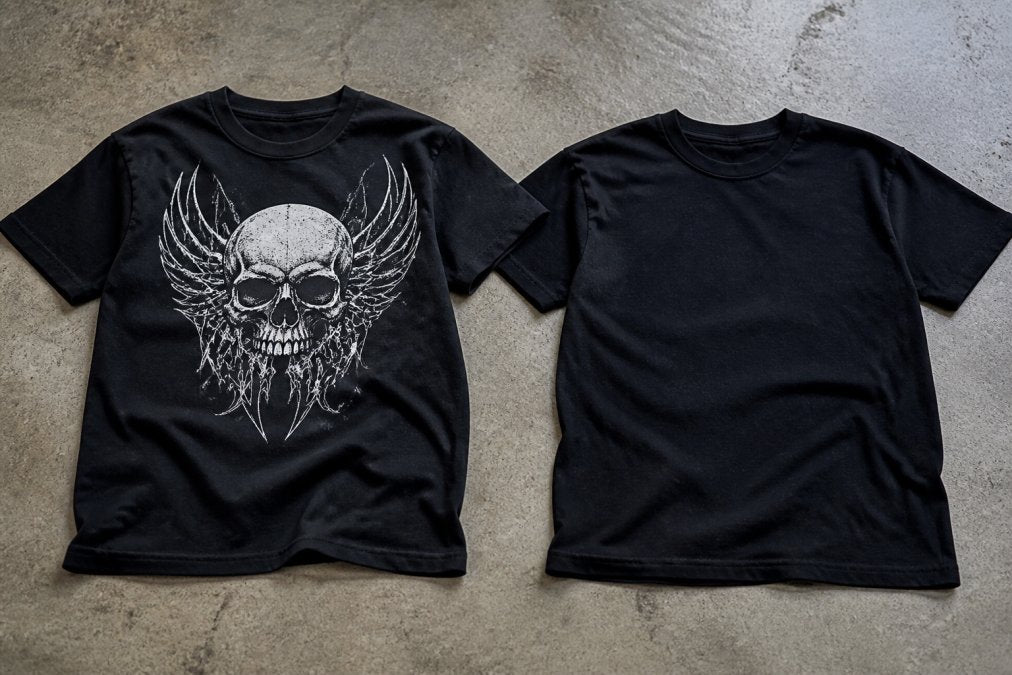
In the graphic tees vs plain debate, a meaningful graphic tee carries a message you chose on purpose; a plain basic carries only fabric, cut, and color. That distinction decides how the piece fits your wardrobe, how often you reach for it, and what it says before you speak.
This guide from EVRMORE breaks down meaningful graphic tees vs plain streetwear basics on fabric weight, fit, styling range, and cost per wear. Most comparisons stop at "graphic equals loud, plain equals safe," but a heavyweight graphic tee in a muted colorway reads quieter than a thin plain tee in bright white, and lasts twice as long.

Below: how to judge construction, style both without looking sloppy, and decide which earns its place in a capsule wardrobe.
Fabric Weight and Construction: What Separates Premium Streetwear Brands for Men
Fabric weight is the biggest quality signal in a t-shirt, and the one most shoppers never check. Premium streetwear brands for men build on heavier cotton because it holds its shape, drapes with structure, and survives repeated washing.
Here's the trade-off in plain terms:
| Factor | Lightweight Basic (under 150 GSM) | Heavyweight Premium (180+ GSM) |
|---|---|---|
| Drape | Clings, shows every fold | Structured, falls clean |
| Neckline | Stretches within months | Holds shape longer |
| Print surface | Warps and cracks | Supports crisp graphics |
| Lifespan | Often one season | Multiple years |
| Cost per wear | Low upfront, high over time | Higher upfront, lower over time |
GSM, Cotton Quality, and Why It Matters for Durability
GSM stands for grams per square meter, how much fabric sits in a given area. A 120 GSM tee feels thin and see-through in daylight; a 220 GSM tee feels substantial and keeps a boxy silhouette instead of collapsing against your body.
Cotton quality matters just as much as weight. Longer staple fibers, the kind used in ring-spun and combed cotton, resist pilling and hold dye better than short-fiber cotton. Textile Exchange's materials guidance explains how fiber length and sourcing affect both durability and environmental footprint, which is worth knowing if you care where your clothes come from.
A common mistake is buying on weight alone. A heavy tee with a cheap ribbed collar will still stretch out at the neck. Check the collar construction first.
How to Style Heavyweight Graphic Tees Without Looking Cluttered
The fix for clutter is subtraction, not addition: one graphic, one focal point, everything else neutral. A bold chest print on a heavyweight tee needs nothing competing with it.
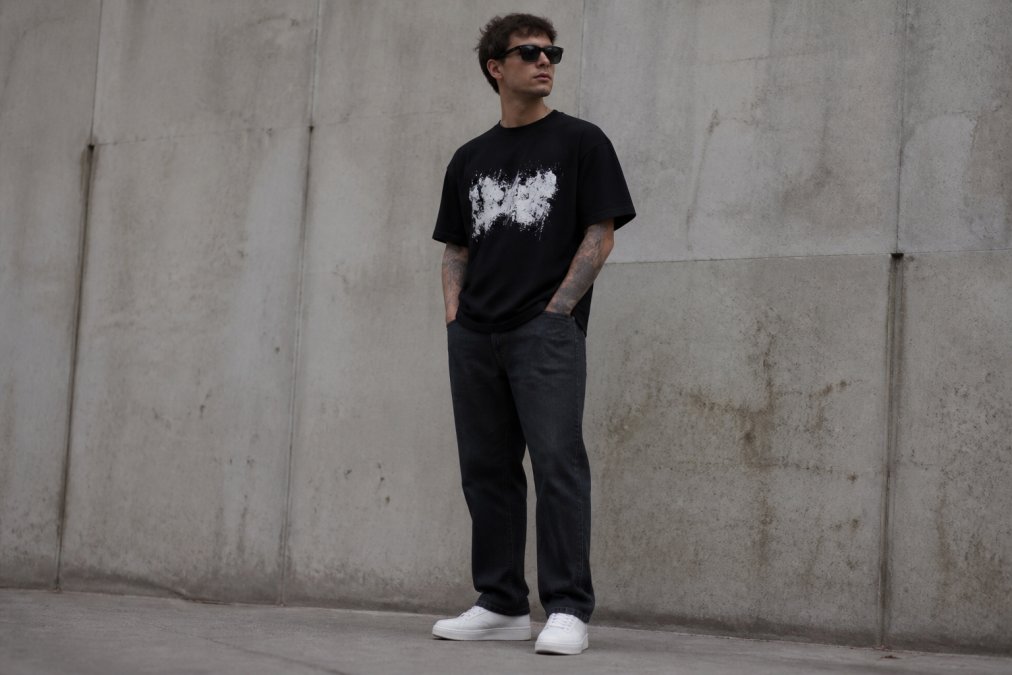
Start with these rules:
- Keep the graphic as the only loud element. Solid pants, solid shoes, no second print.
- Match the color palette. A white print pairs with white sneakers or a white cap; a muted print pairs with earth tones.
- Tuck or half-tuck to define the waist if the tee runs long.
- Skip the graphic backpack, the graphic cap, and the graphic socks in the same outfit.
For casual attire that still reads intentional, a heavyweight tee in Slate or Black does more work than three accessories combined.
The Silhouette Math Behind a Clean Graphic Look
Clutter is rarely about the graphic itself, it's about competing visual weight. A bold chest print draws the eye to a horizontal band across your torso, visually widening the upper body. A small left-chest logo or vertical back print draws the eye up and down instead, lengthening the frame.
A few practical adjustments follow from that:
- If you're broader through the chest and shoulders, a smaller or offset graphic keeps the horizontal line from dominating.
- If you're leaner, a larger centered print adds visual mass where the fabric alone won't.
- If you're shorter, a graphic placed high on the chest keeps the eye above the waistline and avoids cutting your legs.
- If you're taller, a lower or full-back print balances the longer torso line.
None of this requires a different tee, just the right graphic placement for your frame, a decision most shoppers never consciously make.
Layering Techniques for Transitional Seasons
Layering is where heavyweight tees beat thin basics outright: a structured tee sits flat under an open flannel, denim jacket, or overshirt without bunching at the shoulders.
Three combinations that work:
- Heavyweight graphic tee plus open button-down, sleeves rolled. The tee's weight keeps the shirt from clinging.
- Tee plus crewneck sweatshirt with the hem showing. The layered hems add depth without noise.
- Tee plus a hoodie worn open, graphic visible at the chest.
The thing nobody tells you: thin tees create bulk lines under outerwear because they wrinkle and shift. Heavy fabric stays put.
A few layering mechanics worth knowing:
- Collar stacking. A heavyweight tee's ribbed collar holds its shape, so it sits cleanly under an open overshirt instead of collapsing into a stretched ring. Thin collars flatten under a second layer and read as sloppy.
- Hem exposure. Aim for roughly one to two inches of tee hem showing below a sweatshirt or sweater. Less and the layer looks accidental; more and it looks like the outer piece doesn't fit.
- Sleeve break. When you roll a button-down over a tee, the tee sleeve should end above the rolled cuff. If the tee sleeve peeks out below, the proportions read off.
- Fabric weight matching. Pair a heavyweight tee with midweight outerwear. A 220 GSM tee under a paper-thin windbreaker creates a weight mismatch that looks like the jacket is too small.
When to Skip the Graphic Entirely
Some moments make a graphic tee the wrong call, however well styled. Job interviews, formal settings, and stated dress codes are obvious. Less obvious: situations where you want the room focused on you rather than your chest. A plain heavyweight tee in a muted color does that better than any print.
That's not a knock on graphics. A meaningful graphic tee is a statement, and statements work best when you choose the moment. The same tee that anchors a weekend outfit can feel like a costume at a client meeting, knowing the difference separates a wardrobe that works from one that just looks good in photos.
Building a Capsule Streetwear Wardrobe That Actually Works
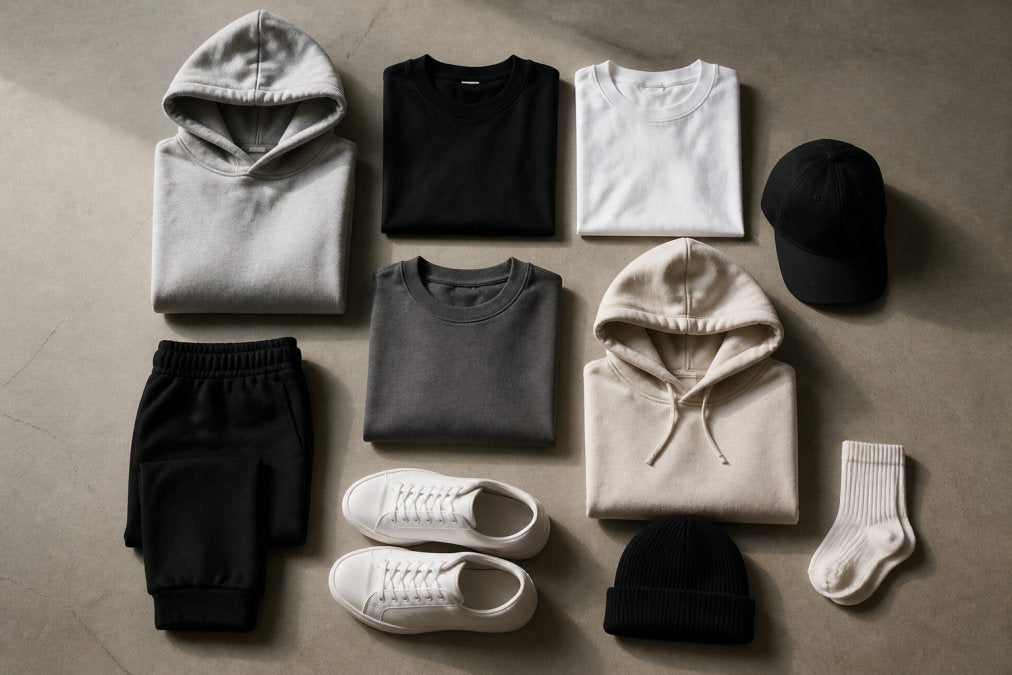
A capsule streetwear wardrobe is a small set of pieces that all work together, so getting dressed takes two minutes instead of twenty. The goal is range from a short list, not a closet of one-off purchases.
A practical starting framework:
- Two heavyweight graphic tees in different colorways, one bold, one muted
- Two solid-colored tees for the days you want zero message
- One overshirt or flannel for layering
- One pair of dark denim, one pair of neutral cargos
- One hoodie, one cap
That's ten pieces and roughly a month of outfits. The graphic tees do the personality work; the solids do the support work. It also keeps shopping decisions simple.
The Cost-Per-Wear Framework for Capsule Decisions
Most capsule guides tell you what to buy, almost none how to decide whether a piece earns its slot. Cost per wear is that decision tool.
The formula is simple: purchase price divided by the number of times you actually wear the item. A $45 tee worn 90 times costs 50 cents per wear. A $15 tee worn 12 times before it pills or loses shape costs $1.25 per wear. The cheap tee loses, and it isn't close.
But it only works if you apply it honestly. A few rules:
- Count real wears, not aspirational ones. If you haven't worn a piece in three months, it isn't part of your capsule. It's storage.
- Include care costs. A tee that needs dry cleaning or special handling carries a hidden per-wear premium. Cold wash and hang dry keeps the math clean.
- Weight the graphic tee differently. A meaningful graphic tee you wear 40 times at $45 is $1.13 per wear. A plain tee you wear 120 times at $30 is 25 cents per wear. The plain tee usually wins on pure math, which is exactly why the graphic tee has to earn its slot on meaning, not frequency.
- Re-run the math at the end of each season. Pieces that fall below your threshold get replaced, not hoarded.
FTC guidance on textile labeling and care claims is worth reading if you want to verify what a garment's label actually promises about fiber content and care.
How the Capsule Pieces Interlock
A capsule only works if the pieces actually combine. The test: every top should work with every bottom, and every layer over every top. If a piece pairs with only one other item, it's a one-off, not a capsule piece.
Run that test against the ten-piece list above. The two graphic tees should each work with both bottoms and both layers. The two solid tees should do the same. If a graphic tee only works with the dark denim and not the cargos, the colorway is too specific and it's the wrong piece for a capsule.
This is where meaningful graphic tees and plain basics play different roles. The plain tees are connective tissue, working with everything by design. The graphic tees are personality, earning their place through versatility, not volume.
Maintaining the Capsule Over Time
A capsule isn't a one-time purchase. It's a system you maintain. A few habits that keep it working:
- Replace on failure, not on boredom. A stretched collar or a cracked print is a replacement trigger. A new trend is not.
- Rotate, don't stack. Wear the full capsule before repeating. Pieces that sit unworn for a month are candidates for removal.
- Wash cold, inside out, hang dry. American Cleaning Institute laundry care resources covers the care basics that extend a tee's life, and the short version is the same as above.
- Audit once a season. Pull everything out, count wears, and cut what isn't earning its slot.
The capsule approach isn't about owning less for its own sake. It's about owning pieces that actually get worn, the only minimalism that survives real life.
Body Type and Silhouette: Choosing the Right Fit Profile
The right fit profile puts the shoulder seam at or just past your natural shoulder line, with the body hanging straight down. Boxy cuts with dropped shoulders are built wider on purpose, so sizing down defeats the design.
What most guides miss: a boxy tee flatters almost every body type when the length is right. The hem should hit between mid-fly and the top of your back pocket, longer shortens your legs, shorter breaks the line.
For broader frames, a structured heavyweight fabric adds definition instead of clinging. For leaner frames, the extra volume in the body and sleeves creates a wider silhouette. If you're coming from slim-fit basics, expect the first wear to feel loose. That's the cut working as intended.
Cost-Per-Wear: Why $45 Tees Can Beat $15 Fast Fashion
Cost per wear is purchase price divided by actual wears. A $45 tee worn 90 times costs 50 cents per wear; a $15 tee worn 12 times before it pills costs $1.25.
The cheap tee loses, and it isn't close. FTC guidance on textile labeling and care claims is worth reading if you want to verify what a garment's label actually promises about fiber content and care.
Run the math on your own closet. Most people find three or four cheap tees they never wear and one quality piece they live in. Garment longevity comes down to fabric weight, collar construction, and how you wash it. American Cleaning Institute laundry care resources covers the care basics that extend a tee's life, and the short version is: cold water, inside out, hang dry.
Conclusion: Which Should You Choose?
You don't have to pick a side. Plain basics handle the days you want to disappear into your outfit; meaningful graphic tees handle the days you want your clothes to speak first. Most well-dressed wardrobes run both, graphics doing the heavy lifting and solids keeping everything grounded.
If you're building toward pieces that last and mean something, EVRMORE makes heavyweight graphic tees with a boxy streetwear cut, dropped shoulders, and message-driven designs in colorways like Black, Vintage Pearl, and Slate. The construction is built for everyday wear, and the messaging is built for people who came through something and kept going.
Get started with EVRMORE and build a wardrobe where every piece earns its place.
Frequently Asked Questions
What are the key differences between graphic tees and plain tees?
Graphic tees carry a message or design, while plain tees rely on color, cut, and fabric quality. Graphic tees offer self-expression and visual impact, making them a focal point. Plain basics act as versatile wardrobe staples that pair with anything. The best approach often combines both: meaningful graphic tees for statement days and solid-colored basics for layering. Fabric weight and construction matter equally in both categories.
Are graphic tees out of style in 2026?
No. Graphic tees remain a core part of streetwear culture in 2026, though the aesthetic has shifted toward cleaner, more intentional designs. Bold logos and cluttered prints are giving way to minimalist graphics and message-driven pieces. Premium streetwear brands for men are focusing on heavyweight fabrics and refined prints that feel timeless rather than trend-driven. A well-made graphic tee with a meaningful message outlasts fast-fashion fads.
How do you style meaningful graphic tees without looking cluttered?
Keep the rest of your outfit simple. Let the graphic be the focal point by pairing it with solid-colored bottoms like black denim or slate chinos. Avoid layering multiple prints. For transitional seasons, add a plain overshirt or bomber jacket in a neutral tone. A boxy, dropped-shoulder cut works well with tapered pants to balance the silhouette. One statement piece per outfit is enough.
What makes a streetwear basic premium compared to standard plain tees?
Premium basics use heavier fabric, often 200 GSM or higher, which gives the garment structure and durability. Construction details like reinforced necklines, double-stitched hems, and DTF prints that resist cracking separate premium from standard. The fit profile also matters: a boxy cut with dropped shoulders holds its shape better after repeated washes. Cost-per-wear drops significantly when a $45 tee lasts years instead of months.
What is the 3-3-3 rule for building a versatile wardrobe?
The 3-3-3 rule suggests building outfits from three tops, three bottoms, and three pairs of shoes that all work together. For a capsule streetwear wardrobe, this means choosing pieces with overlapping color palettes and consistent fit profiles. Three heavyweight graphic tees, three solid-colored basics, and three layering pieces can create dozens of combinations. The rule encourages intentional buying over impulse purchases.


Leave a comment
This site is protected by hCaptcha and the hCaptcha Privacy Policy and Terms of Service apply.