

Is Premium Streetwear a Good Financial Investment?
Table of Contents
- The Investment Thesis: Why Streetwear Is Now an Asset Class
- Resale Value vs. Utility Value: What Are You Actually Buying?
- Streetwear Resale Market Trends You Need to Watch
- How to Identify Investment-Grade Clothing for Your Portfolio
- The Risks: Authentication, Depreciation, and Market Volatility
- The Hidden Costs: Storage, Climate Control, and Taxes
- The Verdict: Investing in Premium Streetwear vs. Traditional Assets
- Frequently Asked Questions
Last Updated: September 9, 2026
The question of whether premium streetwear is a good financial investment has moved from sneaker forums to serious portfolio conversations. What was once dismissed as hype culture now commands attention from collectors and financial analysts alike, with rare pieces routinely selling for multiples of their retail price on the secondary market. At EVRMORE, we build premium streetwear meant to last. Below, we break down the real economics of fashion as an asset class, separating durable value from passing trends.

The Investment Thesis: Why Streetwear Is Now an Asset Class
Premium streetwear has evolved into a recognized alternative asset because it combines scarcity, cultural significance, and measurable resale value. Unlike traditional apparel that depreciates the moment it leaves the store, select pieces appreciate when demand outpaces supply and the original drop sells out. This shift mirrors how contemporary art gained legitimacy decades ago, moving from niche collecting to institutional portfolios.

The core driver is simple economics: limited production runs create artificial scarcity, while brand storytelling builds emotional demand. When a hoodie retails for $90 and trades for several times that on the secondary market within months, it stops being clothing and starts behaving like a commodity. The Financial Conduct Authority's guidance on alternative investments notes that unconventional assets carry unique risks, which we will address directly.
Resale Value vs. Utility Value: What Are You Actually Buying?
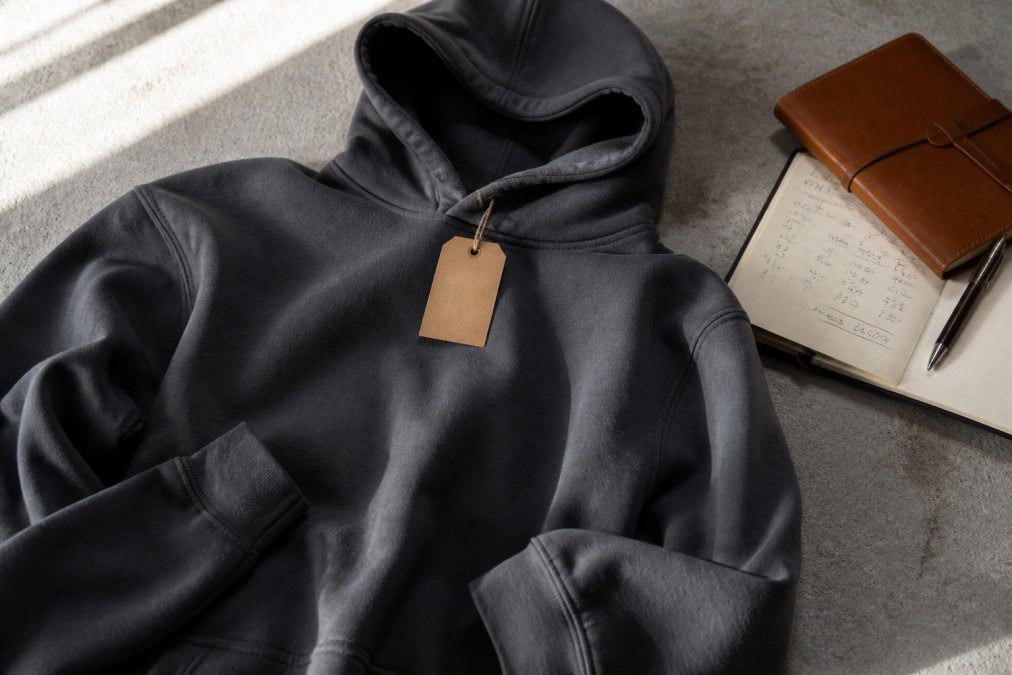
Every purchase of premium streetwear carries two distinct values: what you can sell it for later and what you get from wearing it now. Resale value depends on brand strength, drop rarity, and condition grading, while utility value comes from fabric quality, fit, and daily durability. The smartest buyers calculate both before spending.
Most guides miss that these two values often work against each other. A piece kept pristine in climate-controlled storage may appreciate, but you never enjoy it. Conversely, a hoodie worn weekly delivers comfort but loses collectibility through fading and pilling. The resolution is owning pieces that serve both purposes, which is why construction quality matters as much as logo placement. A 16.5 oz heavyweight hoodie with reinforced seams holds its shape through years of wear, preserving more of its original form than a thin, mass-produced alternative.
Streetwear Resale Market Trends You Need to Watch
The secondary market for premium streetwear has matured from informal peer-to-peer exchanges into a structured industry. Dedicated platforms like StockX, Grailed, and GOAT now provide transparent price histories and sales velocity data, effectively functioning as public market indices for sneakers and apparel. This transparency has attracted a new class of buyer who treats these platforms less like shopping destinations and more like trading desks.
A key metric to track is the average resale premium, the percentage above retail that a piece commands on the secondary market. For high-demand drops, premiums can exceed 200% in the first week. However, the more telling indicator is the premium's trajectory over 12 to 24 months. A piece that holds a 50% premium after two years demonstrates genuine, sustained demand. One that spikes to 300% and then settles at 10% reveals speculative froth that has little bearing on long-term value.
Several structural trends are shaping this market. First, the rise of authenticated resale has lowered the barrier to entry for casual sellers, increasing overall liquidity but also compressing margins on common items. Second, brands are increasingly using direct-to-consumer drops with blockchain-based authentication tags, which adds a layer of provenance that can support secondary prices. Third, the market is seeing a bifurcation: ultra-rare, 'grail' pieces from established houses like Supreme or Louis Vuitton continue to appreciate, while mid-tier hype items face faster depreciation as supply catches up with demand.
Another critical dynamic is the 're-release risk.' When a brand like Nike or Adidas re-releases a popular silhouette, the secondary market price for the original often drops by 20-30% within weeks. This is a fundamental risk that stock and bond investors do not face, and it requires constant monitoring of brand release calendars. The Federal Reserve's analysis of asset price dynamics highlights how liquidity and market depth determine whether any asset can be reliably converted back to cash, and the same principle applies here: a piece that trades frequently on multiple platforms is a more liquid asset than one that only changes hands through private Instagram deals.
To track these trends effectively, serious collectors monitor sales data on StockX and Grailed, follow brand-specific release calendars, and pay attention to auction results from houses like Sotheby's, which have begun to hold dedicated sneaker and streetwear sales. This data-driven approach is the difference between buying based on hype and buying based on evidence.
How to Identify Investment-Grade Clothing for Your Portfolio
Identifying investment-grade clothing requires evaluating five factors: brand trajectory, production scarcity, timeless design, material quality, and condition preservation. Brands with consistent demand across seasons outperform one-hit wonders, and pieces with clean, versatile aesthetics outlast loud trend-driven graphics.
| Evaluation Factor | What to Look For | Red Flags |
|---|---|---|
| Brand trajectory | Consistent demand over multiple years | Sudden hype without history |
| Production scarcity | Numbered drops, no restocks | Endless re-releases |
| Timeless design | Neutral palettes, classic silhouettes | Heavy reliance on seasonal trends |
| Material quality | Heavyweight fabrics, reinforced stitching | Thin materials, poor construction |
| Condition preservation | Easy to store and maintain | Delicate prints that crack or fade |
The most reliable approach is buying what you would wear regardless of market conditions. This protects you from the biggest risk in any collectible: holding an asset with no intrinsic usefulness if demand evaporates. Pieces built from premium heavyweight fabric with a boxy, dropped-shoulder cut tend to hold their visual appeal longer because the silhouette remains current across shifting trends.
The Risks: Authentication, Depreciation, and Market Volatility
Fashion as an asset class carries risks that stocks and bonds do not, and dismissing them is how novice collectors lose money. Authentication stands as the first hurdle, since the secondary market is riddled with counterfeits that can destroy a piece's value upon discovery. Provenance, original receipts, and third-party verification matter far more than most buyers realize.
Depreciation curves in streetwear are unforgiving for the wrong purchases. Unlike traditional assets that decline gradually, non-collectible apparel loses most of its value immediately, and even hyped pieces can crash when brands flood the market with re-releases. Market volatility compounds this, as sentiment shifts rapidly with cultural attention cycles. The Securities and Exchange Commission's investor bulletin on speculative assets reminds investors that assets driven primarily by sentiment can experience sudden and dramatic price swings.
The Hidden Costs: Storage, Climate Control, and Taxes
Most financial analyses of premium streetwear stop at the purchase price, ignoring the carrying costs that quietly erode returns. These costs fall into three categories: physical preservation, authentication, and tax treatment. Each can meaningfully reduce the net return on a 'successful' investment.
Physical Preservation
Proper storage is not optional. Heat and humidity accelerate the breakdown of natural fibers like cotton, causing yellowing and weakening the fabric's structure. Ultraviolet light fades pigments and degrades screen-printed graphics. The standard for serious collectors is a climate-controlled environment maintained at 60-70°F with 40-50% relative humidity. This often requires dedicated space or a specialized storage unit, which carries a monthly cost. Professional-grade garment bags, acid-free tissue paper for maintaining structure, and shelving that prevents creasing add another layer of expense. For a collection of 20-30 pieces, annual storage costs can easily reach several hundred dollars. These costs compound over a multi-year holding period and must be factored into any return calculation.
Authentication and Fraud Risk
The secondary market is riddled with counterfeits, and authentication is a non-negotiable cost of doing business. Professional authentication services charge between $10 and $50 per item, depending on the piece's value and the service's thoroughness. While this fee seems small relative to a $1,000 hoodie, it applies every time an item changes hands. More critically, a piece that fails authentication after purchase is worth zero on the legitimate market. Provenance, original receipts, drop confirmation emails, and packaging, adds a layer of security but does not eliminate the need for third-party verification. The cost of authentication is not just financial; it is also a time cost that many casual sellers underestimate.
Tax Treatment
The Internal Revenue Service classifies high-value apparel as a collectible, which carries a distinct tax disadvantage. Gains on collectibles held for more than one year are taxed at a maximum rate of 28%, which is higher than the long-term capital gains rate for stocks or real estate. This differential can reduce net returns by several percentage points on a profitable sale. Additionally, the IRS requires reporting of income from resale activity, and frequent sellers may be classified as dealers, subjecting them to self-employment taxes. The IRS guidance on collectibles capital gains treatment provides the current classification and rates, but the key takeaway is that a profitable resale is not simply cash in hand. Serious collectors should consult a tax professional before assuming resale profits are straightforward.
Depreciation Curves: The Unspoken Risk
Beyond these carrying costs, investors must understand the depreciation curve that applies to most streetwear. The typical pattern is a rapid spike in value immediately after a drop, followed by a steep decline over the next 6-12 months as initial hype fades and more units enter the secondary market. Only a small fraction of pieces, often those from the most established brands with strict production limits, ever recover to their peak value. A realistic expectation is that 80-90% of premium streetwear will depreciate to below retail within two years. The 10-20% that appreciate are the exceptions, not the rule. Understanding this curve is essential for any investor, because it separates the rare winners from the common losers.
The Verdict: Investing in Premium Streetwear vs. Traditional Assets
Premium streetwear can be a good financial investment, but only under specific conditions: you buy authentic, limited pieces from brands with proven longevity, store them properly, and hold them long enough to ride out volatility. For most people, it works best as a passion investment, where the utility value of wearing the piece justifies the capital even if appreciation never materializes.
Compared to traditional assets like index funds or real estate, streetwear offers higher potential percentage returns on individual pieces but far greater risk, lower liquidity, and meaningful carrying costs. The rational approach treats it as a small allocation within a diversified portfolio, not a replacement for conventional investing. Financial literacy matters more than fashion knowledge here.
For those drawn to premium streetwear, the wisest purchases balance investment potential with genuine daily utility. A heavyweight hoodie from EVRMORE, built from 16.5 oz French terry with a boxy cut and dropped shoulders, offers the durability and timeless aesthetic that holds value over time while serving its primary purpose: wearable, resilient clothing. The BUILT STRONGER collection carries messaging about overcoming adversity, making each piece a personal statement with staying power. The Federal Reserve's report on household financial stability consistently shows that diversified households weather economic shifts better than concentrated ones, a principle that applies to wardrobes as much as portfolios.
Deciding whether premium streetwear belongs in your financial strategy comes down to honest self-assessment of your goals, risk tolerance, and time horizon. The pieces that perform best are those you would proudly wear regardless of market conditions, which makes construction quality and design longevity your first filters. EVRMORE designs premium streetwear for those who have rebuilt themselves, combining premium heavyweight fabric, a refined boxy streetwear cut, and bold, meaningful graphics that endure both in style and in structure. Explore the collection and find pieces that represent your journey while standing up to the test of time and trend cycles.
Frequently Asked Questions
What clothing items are actually worth investing in for long-term value?
The pieces that hold value are those with timeless design, proven durability, and controlled scarcity. Look for heavyweight construction like 16.5 oz French terry hoodies or 9 oz ring-spun cotton tees, as these maintain their shape and resist depreciation. Items from established collections with a clear brand narrative tend to perform better than trend-driven pieces. The key is that the garment must retain its quality and aesthetic appeal over years, not just its hype.
Does streetwear hold its value like traditional luxury goods?
No, not uniformly. Traditional luxury goods like leather handbags have a longer track record of capital appreciation. Streetwear is far more sensitive to hype culture and market volatility. While some limited sneakers and jackets have outperformed traditional assets, most premium streetwear depreciates the moment you wear it. The pieces that hold value share traits with luxury goods: quality materials, timeless design, and a strong secondary market. But the asset class is younger and riskier.
What is the difference between a 'hype' piece and a timeless investment?
A hype piece relies on temporary scarcity and cultural momentum, which creates market liquidity today but risks steep depreciation when trends shift. A timeless investment is built on timeless design, utility value, and consistent quality. It has a slower but more predictable appreciation curve. When evaluating premium streetwear, ask if the piece would still be desirable in five years without the current buzz. If the answer depends on the logo rather than the construction, it is probably hype.
Is it better to invest in clothing or traditional financial assets?
For most people, traditional financial assets like index funds offer better portfolio diversification, lower entry barriers, and no storage costs. Clothing as an alternative asset can provide a hedge and personal enjoyment, but it requires authentication knowledge, climate-controlled storage, and patience through market cycles. If you are buying premium streetwear, treat it as a passion investment. Allocate only a small percentage of your portfolio to it, and focus on pieces you would be happy to wear even if the resale value drops.


Leave a comment
This site is protected by hCaptcha and the hCaptcha Privacy Policy and Terms of Service apply.