

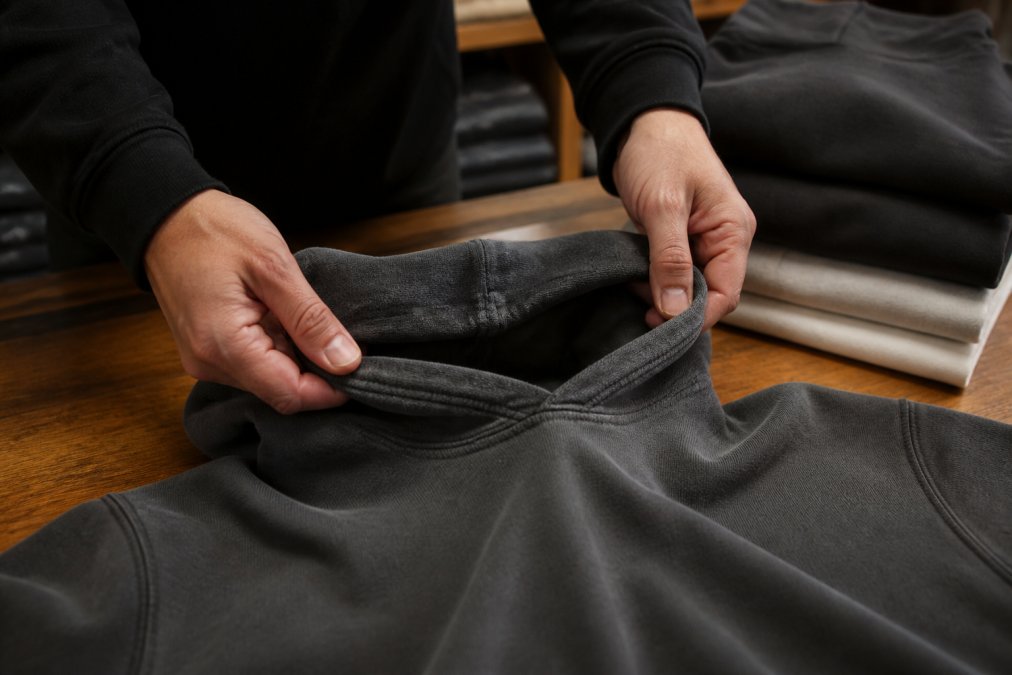
Why Hoodie Necklines Stretch: Fix and Prevention Guide
Table of Contents
- Why Hoodie Necklines Stretch Out
- How to Wash Hoodies to Maintain Shape
- Best Way to Hang Hoodies to Prevent Stretching
- How to Shrink a Stretched Hoodie Collar
- Long-Term Storage Solutions to Prevent Neckline Deformation
- Fabric Weight and Quality: Why Premium Hoodies Hold Their Shape
- Conclusion
Last Updated: August 7, 2026
Why Hoodie Necklines Stretch Out
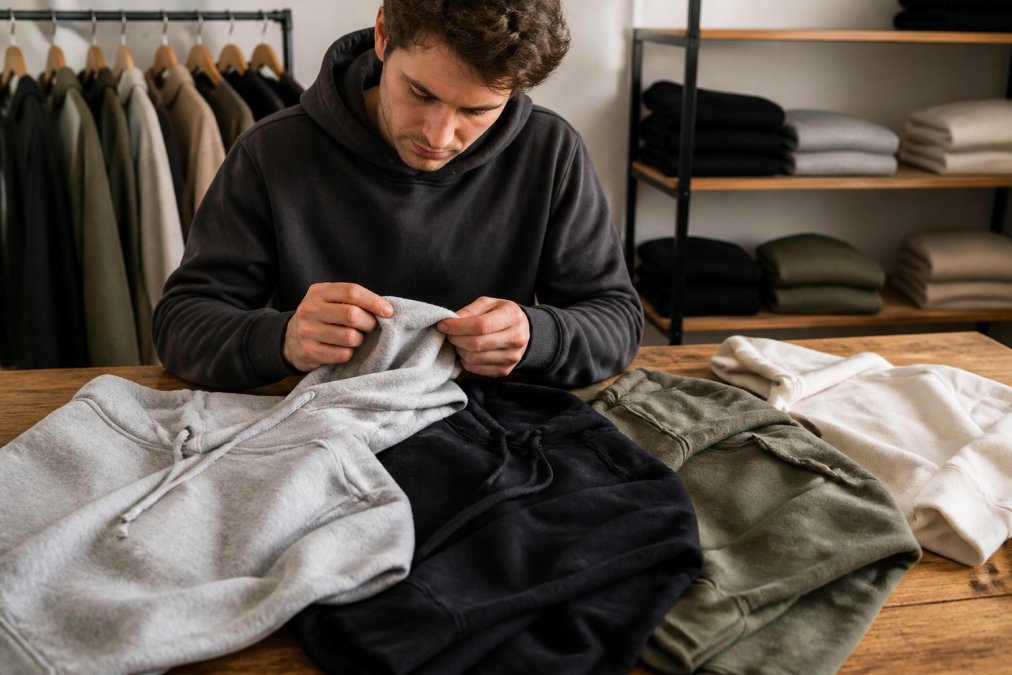
Your favorite hoodie stretches because of how the neckline is constructed and how you care for it. The collar area bears constant tension from wearing, washing, and drying. Over time, fibers lose their ability to recover their original shape.
Cotton, polyester, and cotton blends all have limits to elasticity. When you pull a hoodie over your head repeatedly, the neckline experiences mechanical stress that gradually weakens the fabric's structural integrity. Add improper washing and heat exposure, and recovery becomes impossible. Understanding these causes lets you make intentional choices about washing, drying, and storage that keep your hoodies looking new for years.
The Role of Fiber Elasticity and Recovery
Fabric recovery is the ability of fibers to return to their original shape after being stretched. When you stretch a fiber beyond its elastic limit, the molecular structure shifts permanently. Think of it like a rubber band: a new one snaps back instantly, but after years of stretching, it becomes loose. Hoodie necklines work the same way. Each repeated pull compounds stress until recovery becomes incomplete.
Fabric weight matters significantly. Lightweight hoodies with thin knit fabric lose elasticity faster than heavyweight hoodies with dense construction. Premium hoodies use thicker yarn and tighter weaves that distribute stress across more fibers. EVRMORE's heavyweight hoodies use French Terry construction, which provides superior fiber density and elasticity retention compared to standard jersey knits.

Heat accelerates fiber damage. When cotton or polyester fibers are heated while stretched, molecular bonds reset in the stretched position. This is why tumble drying a stretched neckline while damp can make the problem permanent.
How Washing Machine Cycles Cause Damage
Your washing machine's agitation is a major culprit behind neckline stretching. Standard wash cycles use high agitation that creates mechanical tension, but the neckline experiences disproportionate stress because it's thinner than the hoodie body.
Front-load washers are gentler than top-load machines because they tumble clothes rather than agitate them. Top-load washers with center agitators create the most mechanical tension. Spin speed also matters: higher speeds wring more water out but also create centrifugal force that stretches the neckline. A gentle spin at 400-600 RPM is better than 1,200 RPM.
Load size is critical. Washing a single hoodie in a full-size machine means it moves freely and experiences more agitation. A fuller load compresses the hoodie and creates less individual movement, making it gentler on the garment.
The Impact of Heat and Moisture on Fibers
Heat and moisture together create conditions for permanent fiber deformation. When fabric is wet and warm, molecular bonds become pliable. If stretched while in this state, bonds reset in the stretched position once the fabric cools and dries.
Air-drying is far superior to tumble drying for preserving shape. Gravity pulls on the neckline, but slow evaporation allows fibers to gradually reset without being locked into a deformed state by heat. Tumble drying combines heat, moisture, and mechanical agitation, the worst possible combination for fiber elasticity.
How to Wash Hoodies to Maintain Shape
Washing is where most neckline stretching happens. The right approach keeps your hoodie looking new.
Choose the Right Wash Cycle and Water Temperature
Cold water is non-negotiable for preserving shape. Hot water softens fibers and accelerates recovery loss. Use cold water every time, even for the first wash.
Gentle cycle is better than standard. Standard cycles use high agitation that stretches the neckline. Gentle cycles use slower tumbling with less mechanical stress. Water temperature matters more than people realize: room-temperature water (60-70°F) is ideal. Water above 140°F causes significant fiber relaxation.
Load size should be moderate. Wash your hoodie with similar lightweight items rather than heavy pieces like jeans or towels. A load of 5-7 lightweight items is ideal.
Detergent and Load Size Matter
Use mild detergent designed for delicate fabrics. Standard laundry detergent can be harsh on knit fabrics and may weaken fiber bonds. Use half the recommended amount, more detergent requires extra agitation to rinse out, creating additional mechanical stress.
Avoid fabric softener. It coats fibers and temporarily improves softness, but reduces natural grip and elasticity. Over time, fabric softener makes stretching worse because fibers slip more easily past each other.
Best Way to Hang Hoodies to Prevent Stretching
How you hang your hoodie matters as much as how you wash it.
Proper Hanging Techniques and Support
Use a wide, padded hanger at least 16-18 inches across. Thin wire hangers concentrate all weight on a small neckline area, stretching the fabric. Wide hangers distribute weight across a larger surface, reducing tension on any single point.
Hang the hoodie by the body, not the neckline. Position the hanger so the shoulders rest on the widest part. The neckline should sit loosely without tension. Never hang by the neck loop, which concentrates all weight on neckline fibers, the fastest way to permanently stretch a collar.
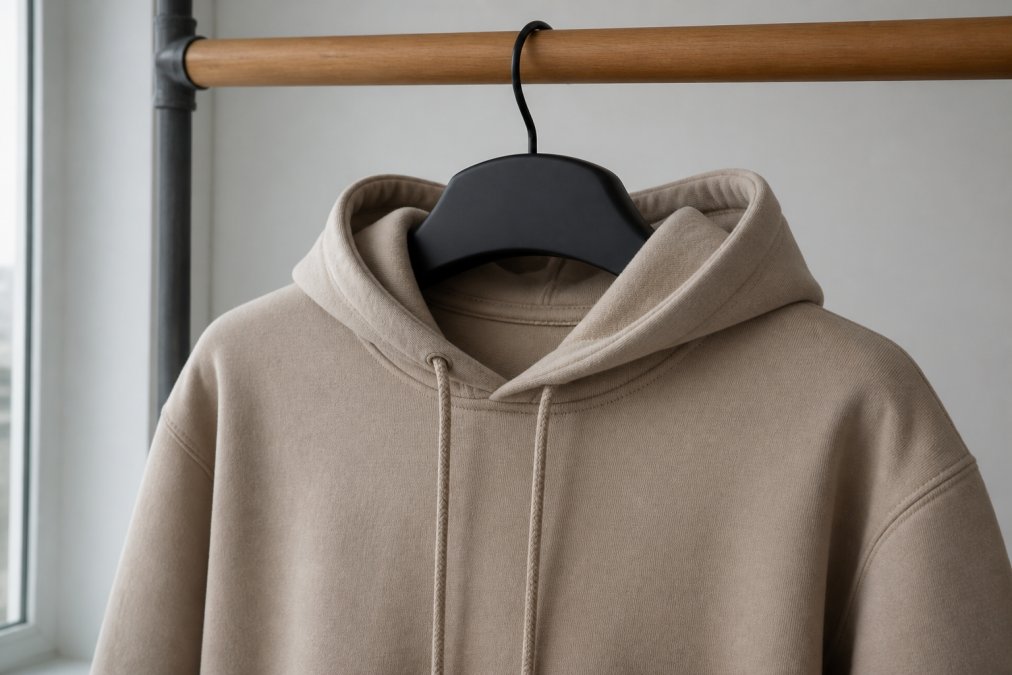
Store hoodies horizontally if possible. Folding and stacking is actually better than hanging if you have shelf space. Horizontal storage eliminates weight-induced stretching. If you must hang them, rotate which hoodies hang and which are folded every few weeks.
Air-Drying vs. Tumble Dry: Why Method Matters
Air-drying is the gold standard for preserving shape. Hang your hoodie on a wide hanger immediately after washing while still damp. Slow evaporation allows fibers to gradually reset without heat-locking deformation.
Avoid direct sunlight when air-drying. UV rays fade color and weaken fibers. Dry in a shaded area with good air circulation.
If you must use a dryer, tumble dry on low heat only. Never use high heat. Remove the hoodie while still slightly damp, hang it on a wide hanger, and let it finish air-drying. This provides dryer speed without heat damage.
How to Shrink a Stretched Hoodie Collar
If your hoodie neckline is already stretched, some recovery is possible through the boiling water method or rubber band technique.
The Boiling Water Method for Fiber Recovery
Fill a pot with water and bring it to a rolling boil. Submerge only the neckline area for 30-60 seconds. Don't submerge the entire hoodie, as this risks damaging the whole garment.
Remove the hoodie and gently squeeze out excess water without wringing. Lay it flat on a clean towel and gently reshape the neckline with your hands, pulling it back to its original size. Let it air-dry completely in this position.
This method works best on cotton and cotton-blend hoodies and is less effective on high-polyester blends. Results are not permanent, but expect some lasting improvement for moderate stretching. The risk is real: boiling water can damage dyes, weaken fibers, and cause uneven shrinkage. Test on a hoodie you're willing to potentially ruin before trying it on a favorite piece.
The Rubber Band Technique for Restoration
Start with a damp (not soaking wet) hoodie. Take a wide rubber band or hair tie and wrap it around the neckline, gathering the stretched fabric into a smaller diameter.
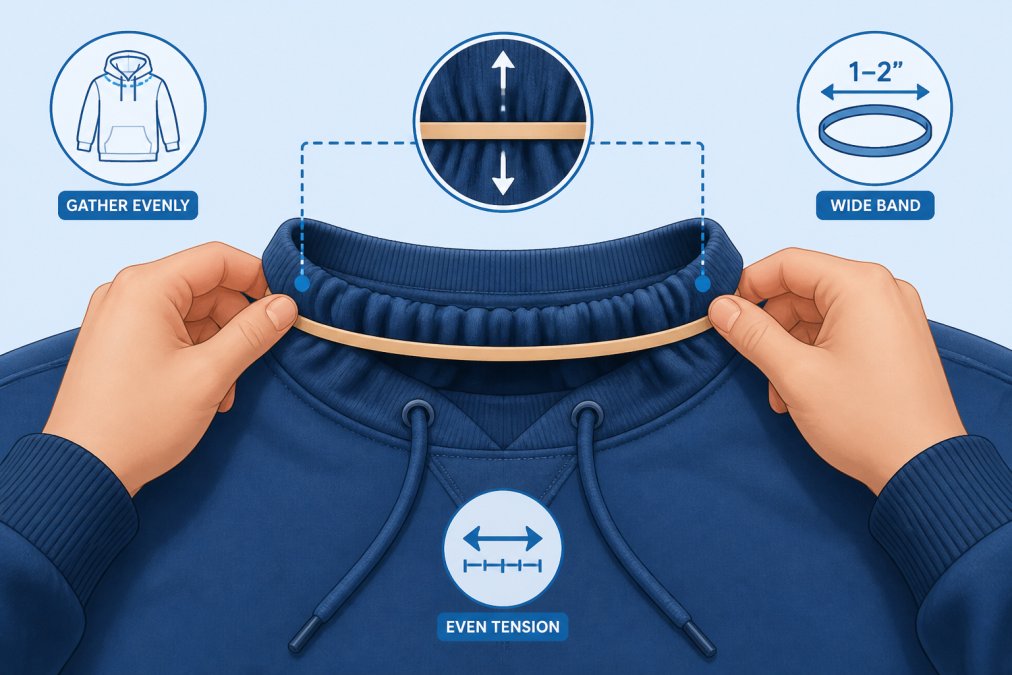
Wrap snugly but not so tight that it cuts off circulation or creates creases. Leave the rubber band in place while the hoodie air-dries completely, typically 24-48 hours depending on humidity and air circulation.
Once dry, remove the rubber band carefully. The neckline should be tighter than before. This method works because gathered fabric dries under tension, and fibers partially reset in the tighter configuration. It's gentler than boiling water and works on all fabric types, with results often permanent or semi-permanent.
Long-Term Storage Solutions to Prevent Neckline Deformation
How you store hoodies between wears determines how long they maintain their shape.
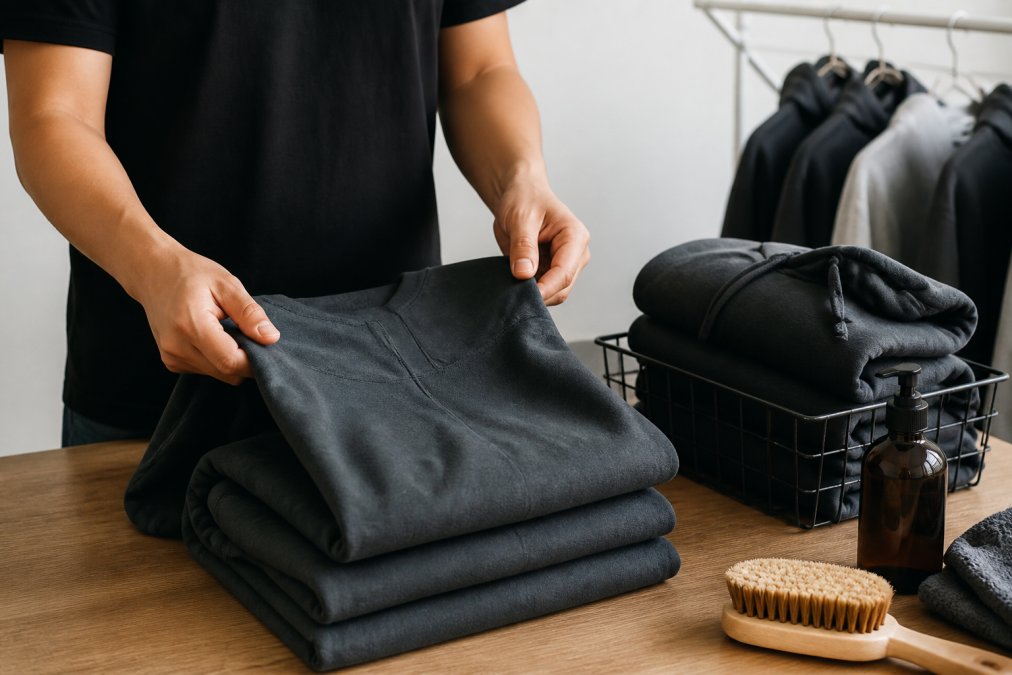
Fold hoodies instead of hanging them long-term. Hanging creates constant weight-induced tension on the neckline. Folding eliminates this stress. Use acid-free tissue paper to prevent creasing and protect fabric from dust and light damage.
Store in a cool, dry place away from direct sunlight. A dark closet at 60-70°F with 30-50% humidity is optimal. Avoid plastic storage containers, which trap moisture and create conditions for mildew. Use breathable cotton storage bags or cardboard boxes instead.
Rotate stored hoodies every few months to prevent any single hoodie from experiencing constant weight-induced stress in the same location.
Fabric Weight and Quality: Why Premium Hoodies Hold Their Shape
Not all hoodies are created equal. Fabric weight and construction quality determine how well a hoodie resists stretching.
Heavyweight hoodies (14+ ounces per square yard) have denser fiber construction that distributes stress across more fibers. When you stretch a lightweight hoodie, each fiber bears more load. When you stretch a heavyweight hoodie, the load is distributed, so no single fiber is overstressed. This is why premium hoodies maintain their shape longer.
French Terry construction, used in EVRMORE's Built Stronger Hoodie, provides superior elasticity retention compared to standard jersey knits.
Yarn quality matters. High-quality yarn is more uniform with fewer weak points. Premium yarn spreads stress evenly. Stitching quality affects neckline durability: high-quality binding uses multiple thread passes and reinforced stitching that prevents separation or stretching. Budget hoodies often use single-pass stitching that fails quickly.
A premium hoodie costs more upfront but resists stretching for years. The cost per wear is actually lower on premium hoodies because they last longer. EVRMORE's Built Stronger Hoodie is engineered to resist the stretching and deformation that ruins cheaper alternatives.
Conclusion
Hoodie necklines stretch because fibers lose elasticity under repeated mechanical stress, heat, and moisture. The stretching is not inevitable. You can prevent it through proper washing in cold water, air-drying on a wide hanger, and proper folding for long-term storage. If stretching has already happened, the boiling water method or rubber band technique can partially restore shape.
Invest in a hoodie built to last. EVRMORE's Built Stronger Hoodie uses heavyweight French Terry construction and premium stitching designed to resist neckline stretching through years of regular wear. At $90, it's a significant investment, but the durability and shape retention justify the cost. Get started with EVRMORE and experience apparel that's as resilient as you are.
Frequently Asked Questions
Can you shrink a stretched hoodie collar back to size?
Yes. Stretched necklines can recover through heat and tension methods. The boiling water technique works by relaxing fibers and allowing them to reset. Submerge the collar area in hot water (not boiling), then gently stretch it back into shape while drying. For best results, use the rubber band technique: wrap a tight rubber band around the collar to create mechanical tension as it dries. Recovery depends on fiber content, cotton blends with elastane respond better than 100% cotton. Repeated stretching reduces recovery potential, so prevention is more effective than restoration.
How do you prevent a hoodie neckline from stretching?
Prevention requires attention to washing, drying, and storage. Use gentle wash cycles with cold water, avoid high spin speeds, and never tumble dry on heat. Hang hoodies on wide hangers that support the shoulders fully, preventing neckline tension. Store folded rather than hanging for extended periods. Fabric weight matters significantly, heavyweight hoodies with quality construction and higher elastane content resist stretching better. The Built Stronger Hoodie uses premium French Terry fabric designed to maintain structural integrity through repeated wear and washing.
What causes a hoodie neckline to get wavy after washing?
Wavy or rippled necklines result from uneven mechanical tension during the wash cycle. High agitation in regular wash cycles creates mechanical stress that stretches fibers inconsistently. When the neckline is already slightly loose, centrifugal force from spin cycles pulls fabric outward unevenly. Hot water compounds this by softening fibers and reducing their temporary elasticity. To prevent waviness, use a delicate or hand-wash cycle with cold water and lower spin speeds. Front-load washers cause less agitation than top-loaders, making them gentler on knitwear.
Does hanging hoodies cause necklines to stretch?
Hanging can stretch necklines if done incorrectly. Thin hangers or hangers that don't support the full shoulder width create concentrated tension at the neckline, causing permanent deformation over time. Wide, padded hangers that distribute weight evenly across the shoulders prevent this stretching. The best practice is to fold hoodies for storage and only hang them temporarily during the drying process. If you must hang long-term, use proper hangers and ensure the neckline sits flat without pulling downward.
This article was written using GrandRanker

Leave a comment
This site is protected by hCaptcha and the hCaptcha Privacy Policy and Terms of Service apply.